


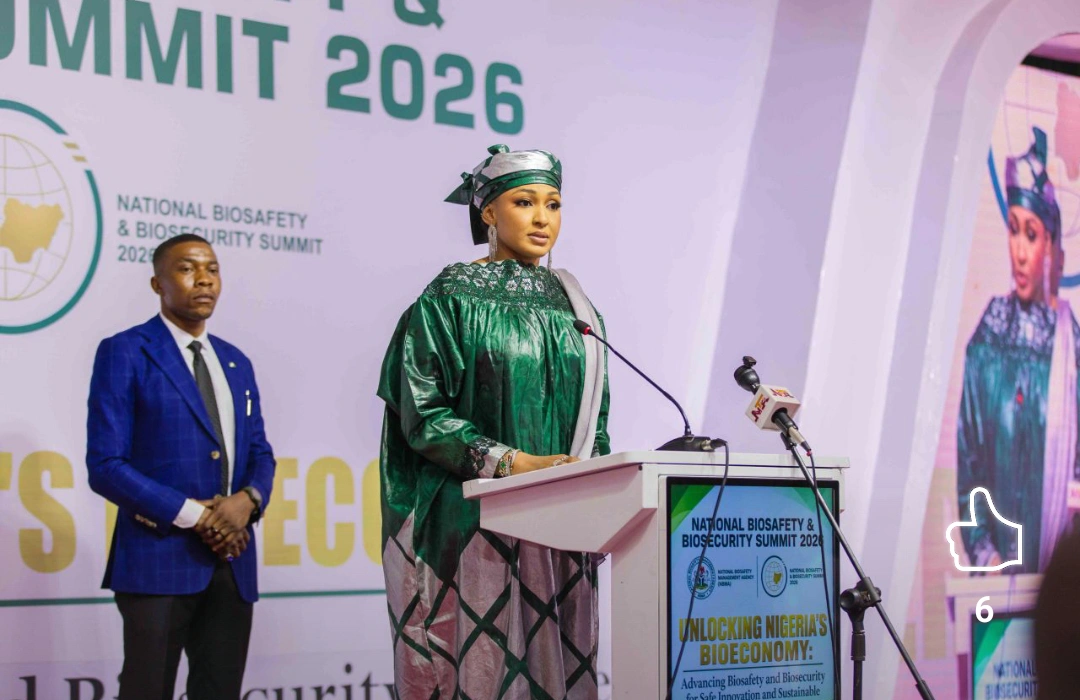
Nigeria has launched a new National Biosafety and Biosecurity Strategic Framework aimed at strengthening coordination, institutional capacity and the country’s ability to manage biological risks as it expands the use of biotechnology.
The framework was unveiled at the National Biosafety and Biosecurity Summit 2026, convened by the National Biosafety Management Agency (NBMA) under the theme, “Unlocking Nigeria’s Bioeconomy: Advancing Biosafety and Biosecurity for Safe Innovation and Sustainable Development.”
The summit brought together stakeholders to examine how Nigeria can harness biotechnology for healthcare, agriculture, research and industrial development while protecting public health, agriculture and the environment.
Delivering the President’s address, Minister of Innovation, Science and Technology, Dr Kingsley Tochukwu Udeh, stressed the need to build Nigeria’s scientific and research capacity through investment in skilled personnel and infrastructure.
He also called for regulatory systems that would support responsible innovation while ensuring that advances in biotechnology are deployed safely.
Minister of Environment, Balarabe Abbas Lawal, emphasised stronger regulatory oversight, border monitoring and inter-agency coordination to safeguard public health and the environment.
The Director-General of the NBMA, Dr Fatima Suleiman-Zuntu, said the agency remained committed to ensuring that biotechnology activities and products comply with Nigerian law without compromising the safety of Nigerians, agriculture and the environment.
She also highlighted efforts to strengthen the agency’s regulatory processes.
United Nations Deputy Secretary-General, Amina J. Mohammed, placed Nigeria’s biosafety agenda within the broader global scientific and development landscape.
She stressed the importance of investing in national capacity, partnerships and people, while strengthening regional and international cooperation to enable African countries to participate more actively in scientific advancement and benefit from emerging technologies.
Representing the Jigawa State Governor, Deputy Governor Engr. Aminu Usman Gumel highlighted biotechnology’s potential to increase agricultural productivity and improve food security.
He, however, stressed the need for greater public awareness and stronger engagement with state governments.
The summit underscored the growing importance of biosafety and biosecurity as Nigeria seeks to expand its bioeconomy, with stakeholders stressing that stronger safeguards will be critical to ensuring that biotechnology delivers benefits in healthcare, agriculture and economic development without exposing people or the environment to unacceptable risks.
