


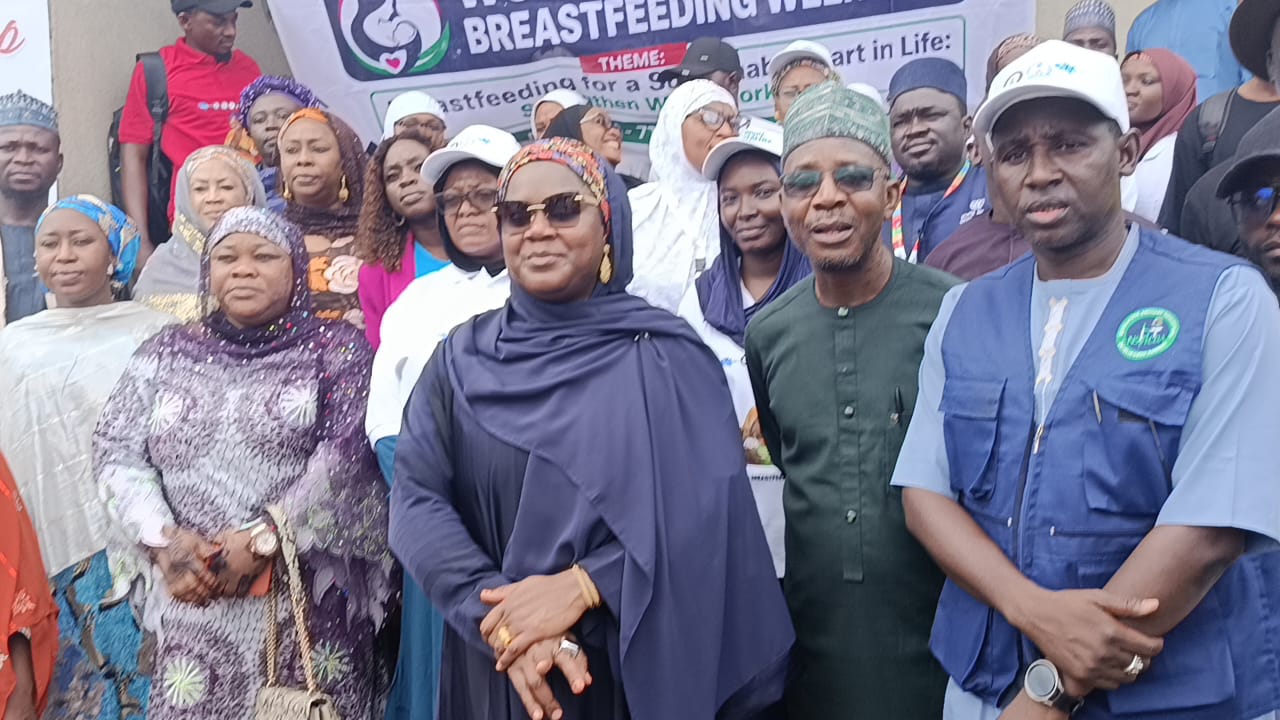
The Niger State Contributory Health Management Agency (NiCARE) on Monday flagged off the enrolment of 65,000 vulnerable residents into the Basic Health Care Provision Fund (BHCPF).
The Agency also unveiled the wife of the Governor, Hajiya Fatima Mohammed Bago, as its Health Insurance Ambassador and inaugurated 25 Local Government Vice Chairpersons as Health Insurance Ambassadors to deepen access to healthcare across the state.
The event, held in collaboration with the Niger State Primary Health Care Development Agency (NSPHCDA), also marked the commencement of activities for the 2026 World Breastfeeding Week, with stakeholders calling for greater investment in maternal and child health.
Speaking at the event, the Executive Secretary of NiCARE, Dr. Suleyman Abu-Bakr, said the enrolment drive was designed to protect vulnerable households from catastrophic health spending and move the state closer to universal health coverage.
Using the story of a rural woman, Hawa, whose family was impoverished after paying for emergency childbirth, Abu-Bakr said health insurance could be the difference between financial stability and poverty.
“That is the difference that insurance makes. It is not just a policy instrument; it is the difference between a family staying afloat and a family sinking into poverty because of a single unplanned illness. It is this difference we are here to extend to 65,000 more families today,” he said.
He disclosed that NiCARE has enrolled more than 121,000 residents since the BHCPF began in 2020, including over 80,000 vulnerable persons, 37,350 students and staff of tertiary institutions and workers in the formal sector.
According to him, the agency has facilitated more than 298,000 malaria treatments, 106,000 antenatal visits and over 68,000 childhood immunisations through the scheme.
Abu-Bakr said the enrolment exercise was deliberately aligned with World Breastfeeding Week to ensure mothers and infants visiting primary healthcare centres could simultaneously benefit from health insurance enrolment and maternal healthcare services.
He added that the newly inaugurated local government ambassadors would coordinate community mobilisation, identify vulnerable households, support enrolment and monitor implementation at the grassroots.
Representing the National Health Insurance Authority (NHIA), Pharmacist Yusuf Alhassan described the initiative as a major milestone in Nigeria’s drive towards Universal Health Coverage.
“Today represents more than the launch of a programme. It is a reaffirmation of our collective commitment to ensuring that quality healthcare is accessible and affordable for every Nigerian, especially those who are most vulnerable in our society,” the representative said.
The NHIA noted that pregnant women, children under five, elderly persons, persons living with disabilities and indigent households would benefit from the programme, while urging citizens to embrace health insurance as protection against catastrophic medical expenses.
The Commissioner for Health, Dr. Murtala Mohammed Bagana, said the enrolment of another 65,000 vulnerable persons across the state’s 25 local government areas represented “renewed hope for families who will now have access to essential healthcare without financial hardship.”
Bagana said the programme reinforced the state’s commitment to Universal Health Coverage and maternal and child health, noting that more than 121,000 residents had already benefited from the BHCPF through NiCARE and its partners.
Also speaking, the Executive Director of the Niger State Primary Health Care Development Agency, Dr. Junaidu Inuwa, said breastfeeding remains one of the most effective interventions for improving child survival and lifelong health.
He explained that exclusive breastfeeding for the first six months provides all the nutrients an infant requires while significantly reducing diarrhoea, respiratory infections and childhood malnutrition.
According to him, “Protecting the first 1,000 days of life is not only a public health priority but one of the smartest investments any society can make.”
Inuwa said achieving improved child survival requires a continuum of quality antenatal and postnatal care, skilled birth attendance, breastfeeding support, routine immunisation, nutrition services, growth monitoring and access to safe water and sanitation.
He noted that the partnership between the Primary Health Care Development Agency and NiCARE was reducing financial barriers preventing women and children from accessing essential health services.
“Our partnership with the Niger State Health Contributory Management Agency further reinforces this commitment. By integrating quality healthcare delivery with financial risk protection, we are reducing barriers that prevent women and children from accessing essential health services,” he said.
The Executive Director added that the agency remained committed to strengthening primary healthcare, improving maternal, newborn and child health services, expanding breastfeeding counselling, promoting routine immunisation and ensuring every primary healthcare facility becomes the first and most trusted point of care for families.
In her remarks after being unveiled as NiCARE Health Insurance Ambassador, the First Lady pledged to champion health insurance coverage across the state, particularly for women, children, the elderly, persons living with disabilities and vulnerable families.
“I accept this responsibility not merely as a title, but as a call to service, and I will continue to lend my voice to the campaign for greater health insurance coverage across Niger State,” she said.
She added that “seeking healthcare should not push a family into poverty, and inability to pay should never become a barrier to receiving essential medical care.”
Speaking on World Breastfeeding Week, the First Lady urged mothers to practise exclusive breastfeeding for the first six months of a child’s life while calling on fathers, employers, healthcare workers and communities to support nursing mothers.
“There is a clear connection between the programmes we are witnessing today. We are improving our hospitals. We are expanding access to healthcare. We are protecting vulnerable families. And we are promoting practices that give our children a healthy beginning,” she said, urging traditional rulers, religious leaders, community groups and the media to mobilise residents to enrol in NiCARE and support breastfeeding.

1 Comment
We are going true hardship we can’t take care of our health please help us God