

• Home
  • Agric
  • Sci & Tech
  • Health
  • Environment
  • Hausa News
  • More
    • Business/Banking & Finance
    • POLITICS
    • Entertainments & Sports
    • International
    • Investigation
    • Law & Human Rights
    • Africa
    • ACCOUNTABILITY/CORRUPTION
    • Hassan Gimba
    • Column
    • Prof. Jibrin Ibrahim
    • Prof. M.K. Othman
    • Defense/Security
    • Education
    • Energy/Electricity
    • Entertainment/Arts & Sports
    • Society and Lifestyle
    • Food & Agriculture
    • Health & Healthy Living
    • International News
    • Interviews
    • Investigation/Fact-Check
    • LAW & HUMAN RIGHTS
    • Oil & Gas/Mineral Resources
    • PRESS FREEDOM/JOURNALISM/PR
    • General News
    • Presidency
  • About Us
    • Contact Us
    • Board Of Advisory
    • Privacy Policy
    • Ethics Policy
    • Teamwork And Collaboration Policy
    • Fact-Checking Policy
    • Advertising
  • Media OutReach Newswire
    • Wire News
  • The Stories
Facebook Twitter Instagram
Trending
  • Of banditry and a shared sovereignty [II], by Hassan Gimba
  • LASTMA captures 38,000 vehicles for traffic offences in Q2 2026
  • Oye LG chairperson warns residents against building on waterways
  • Lagos residents blame urbanisation for worsening floods
  • PTA rejects concession of King’s college Lagos to Old Boys
  • Calabar landslides kill 5, destroy homes
  • Who gets to participate? Zauro and the architecture of economic citizenship, by Mohammed M. Haruna, PhD, mnipr
  • PTA calls for upward review of teachers’ salaries
Facebook Twitter Instagram YouTube
AsheNewsAsheNews
  • Home
  • Agric

    Gov Otti warns Abia farmers to register for input support

    July 11, 2026

    AFAN in Ogun dismisses impostors parading as executives

    July 11, 2026

    BOA launches 2026 wet season input distribution in Katsina

    July 11, 2026

    From scarcity to scale: What Africa can learn from India’s agricultural transformation, by Alice Ruhweza and Dr Purvi Mehta

    July 10, 2026

    Experts recommend local alternatives to cut poultry feed costs

    July 10, 2026
  • Sci & Tech

    Nigeria’s food service industry hits $11.09bn in 2025 – Moniepoint

    July 10, 2026

    Academy of medical sciences condemns maternal mortality, epidemic risks

    July 9, 2026

    NCC advances transparent pricing for fibre sharing

    July 8, 2026

    IHVN, partners launch Lassa fever research to support vaccine development in Bauchi

    July 8, 2026

    Meta rolls out first in-house AI image generator across WhatsApp, Instagram, Facebook

    July 8, 2026
  • Health

    FG expands funding, local production to improve cancer care

    July 11, 2026

    Niger targets 100 Level-2 PHCs by year-end

    July 11, 2026

    Psychiatrist urges Nigerians to prioritise brain health

    July 10, 2026

    Niger govt intensifies monitoring of PHC upgrades to level II

    July 10, 2026

    Zamfara approves 6 month maternity leave for female civil servants

    July 10, 2026
  • Environment

    LASTMA captures 38,000 vehicles for traffic offences in Q2 2026

    July 12, 2026

    Oye LG chairperson warns residents against building on waterways

    July 12, 2026

    Lagos residents blame urbanisation for worsening floods

    July 12, 2026

    PTA rejects concession of King’s college Lagos to Old Boys

    July 12, 2026

    Calabar landslides kill 5, destroy homes

    July 12, 2026
  • Hausa News

    UNA signs MoU to launch air Bissau in Guinea-Bissau

    June 15, 2026

    Otti plans 250-room 5-star hotel in Umuahia

    April 11, 2026

    Anti-quackery task force seals 4 fake hospitals in Rivers

    August 29, 2025

    [BIDIYO] Yadda na lashe gasa ta duniya a fannin Ingilishi – Rukayya ‘yar shekara 17

    August 6, 2025

    A Saka Baki, A Sasanta Saɓani Tsakanin ‘Yanjarida Da Liman, Daga Muhammad Sajo

    May 21, 2025
  • More
    1. Business/Banking & Finance
    2. POLITICS
    3. Entertainments & Sports
    4. International
    5. Investigation
    6. Law & Human Rights
    7. Africa
    8. ACCOUNTABILITY/CORRUPTION
    9. Hassan Gimba
    10. Column
    11. Prof. Jibrin Ibrahim
    12. Prof. M.K. Othman
    13. Defense/Security
    14. Education
    15. Energy/Electricity
    16. Entertainment/Arts & Sports
    17. Society and Lifestyle
    18. Food & Agriculture
    19. Health & Healthy Living
    20. International News
    21. Interviews
    22. Investigation/Fact-Check
    23. LAW & HUMAN RIGHTS
    24. Oil & Gas/Mineral Resources
    25. PRESS FREEDOM/JOURNALISM/PR
    26. General News
    27. Presidency
    Featured
    Recent

    Of banditry and a shared sovereignty [II], by Hassan Gimba

    July 12, 2026

    LASTMA captures 38,000 vehicles for traffic offences in Q2 2026

    July 12, 2026

    Oye LG chairperson warns residents against building on waterways

    July 12, 2026
  • About Us
    1. Contact Us
    2. Board Of Advisory
    3. Privacy Policy
    4. Ethics Policy
    5. Teamwork And Collaboration Policy
    6. Fact-Checking Policy
    7. Advertising
    Featured
    Recent

    Of banditry and a shared sovereignty [II], by Hassan Gimba

    July 12, 2026

    LASTMA captures 38,000 vehicles for traffic offences in Q2 2026

    July 12, 2026

    Oye LG chairperson warns residents against building on waterways

    July 12, 2026
  • Media OutReach Newswire
    • Wire News
  • The Stories
AsheNewsAsheNews
Home»Health & Healthy Living»More resources needed to combat malnutrition in northern Nigeria, By Dr. Simba Tirima
Health & Healthy Living

More resources needed to combat malnutrition in northern Nigeria, By Dr. Simba Tirima

EditorBy EditorMay 13, 2025Updated:May 13, 2025No Comments5 Mins Read
UNICEF lauds Adamawa for allocating N100m to fight malnutrition
Share
Facebook Twitter LinkedIn Pinterest Email

MSF’s outgoing country representative in Nigeria, Dr Simba Tirima, reflects on how the disruption of aid will impact the long-term response to combating malnutrition, maternal mortality, and infectious diseases.

For the last (almost) eight years, I have had the privilege of calling Nigeria home. First as a deputy head of mission and now as the country representative, I have seen first-hand how my organization, Doctors Without Borders / Médecins Sans Frontières (MSF), has responded with compassion in the face of disease outbreaks, natural disasters, and recurring crises. I have also seen how other organisations, both international and local, have stepped up to support authorities in tackling many of these same issues. We at MSF know we can’t fix every global medical issue by ourselves; partnerships are critical.

In many ways, MSF remains as stable as ever. Because 99 percent of our funding comes from individual donors, our decisions are dictated by patients’ needs and not political priorities. But with the dramatic draw-down of funding from the US and other rich countries, we will all feel those impacts.

Nigeria is about to enter the peak season of malnutrition, which continues to afflict more Nigerian children than when I first moved here. It’s a serious condition that is not only dangerous or deadly in the short term but can also lead to long term developmental issues; stunting can occur even from moderate malnutrition. Investing in the reduction of malnutrition isn’t just humane – it’s an investment in Nigeria’s future prosperity. 

In 2024, more than 250,000 children with severe acute malnutrition (SAM) were admitted to MSF- supported outpatient facilities (Out-Patient Therapeutic Program, OTP) and 76,000 acutely malnourished children with medical complications to inpatient facilities (Stabilization Centers, SC), representing an increase of 38 percent and 53 percent respectively compared to 2023.

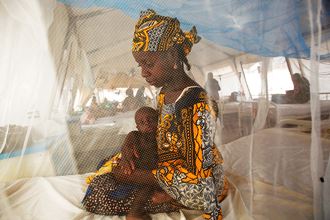
In many of our hospitals last year, our teams saw so many children that we had to increase bed capacity, open every emergency tent we had, put mattresses in corridors and every available space, and treat two or three children per bed. Just in the case of one hospital – Katsina Hospital, the largest of our hospitals focused on malnutrition – we struggled to support the more than 25,000 children admitted to hospital over the course of the year. During the malnutrition peak, we often admitted a child every 5 minutes at the hospital because of complications of acute malnutrition. Overall, the Katsina ITFC admissions were 35 percent higher than in 2024.

Late last year, a food insecurity and malnutrition analysis – led by the Nigerian government – projected that 33.1 million people will face high levels of acute food insecurity during the 2025 lean season (June to August) — seven million more people affected than in 2024.

As we near the lean season this year, these projections are already tracking. Many of our hospitals are already seeing higher numbers than last year. In the most northwestern state of Kebbi for example, just in the month of April we admitted 41.8 percent more patients than in April 2024. In Kano State, one MSF-supported Ministry of Health primary inpatient therapeutic feeding centre (ITFC) – Unguwa Uku Primary Health Centre – is at full capacity; we are projecting that the other one we support – ITFC at Murtala Mohamed Hospital – will also soon hit capacity. MSF-supported facilities across northern Nigeria are likely to face an influx of patients, as in many areas—such as Shinkafi and Zurmi in Zamfara State—MSF is the sole provider of inpatient care for malnourished children.

While we are making the necessary arrangements to treat these projected number of patients by expanding bed capacity, recruiting more health care workers, and starting mobile clinic activities, the cuts and changes in logistics around USAID will inevitably have an impact on the northern region, where we treat people. UNICEF, for example, receives most of its funding from USAID and is a leading distributor of life-saving ready-to-use therapeutic food (RUTF) to international, national, and local organizations. Many questions and concerns remain about how these drastic changes will disrupt the flow of food to those who need it most. As more children than ever are projected to suffer from malnutrition, we need more resources – not fewer – to ensure they survive the lean season. 

There are no shortages of factors contributing to this crisis. A devastating mix of rising food prices, displacement, insecurity, climate-induced crop failures, low immunisation coverage, and a lack of drinkable water and sanitation leave more children susceptible to developing malnutrition. Sustainable strategies to mitigate these factors must continue to be developed – including by MSF. But having worked on this issue for years, I know that aid funding for food alone will not solve the problem. Without it, Nigerian children will continue to die.

For decades, the humanitarian sector has operated under the assumption that if one donor withdrew, another would step in. That assumption no longer holds. New donors and solutions are critically needed at this moment to analyze RUTF needs and treatment gaps, invest in vaccination and primary health care, and tackle malnutrition in northern Nigeria.

Make no mistake, this seismic structural collapse will produce ripple effects for generations, the scale as big as pandemics. Some of those ripples will be more obvious than others, but we will all feel the impacts in one way or another. It’s up to all of us to correct the course today.

Malnutrition MSF Northern Nigeria
Share. Facebook Twitter Pinterest LinkedIn WhatsApp Reddit Tumblr Email
Editor
  • Website

Related Posts

FG expands funding, local production to improve cancer care

July 11, 2026

Niger targets 100 Level-2 PHCs by year-end

July 11, 2026

Psychiatrist urges Nigerians to prioritise brain health

July 10, 2026

Leave A Reply Cancel Reply

Of banditry and a shared sovereignty [II], by Hassan Gimba

July 12, 2026

LASTMA captures 38,000 vehicles for traffic offences in Q2 2026

July 12, 2026

Oye LG chairperson warns residents against building on waterways

July 12, 2026

Lagos residents blame urbanisation for worsening floods

July 12, 2026
About Us
About Us

ASHENEWS (AsheNewsDaily.com), published by PenPlus Online Media Publishers, is an independent online newspaper. We report development news, especially on Agriculture, Science, Health and Environment as they affect the under-reported rural and urban poor.

We also conduct investigations, especially in the areas of ASHE, as well as other general interests, including corruption, human rights, illicit financial flows, and politics.

Contact Info:
  • 1st floor, Dogon Daji House, No. 5, Maiduguri Road, Sokoto
  • +234(0)7031140009
  • ashenewsdaily@gmail.com
Facebook Twitter Instagram Pinterest
© 2026 All Rights Reserved. ASHENEWS Daily Designed & Managed By DeedsTech

Type above and press Enter to search. Press Esc to cancel.