


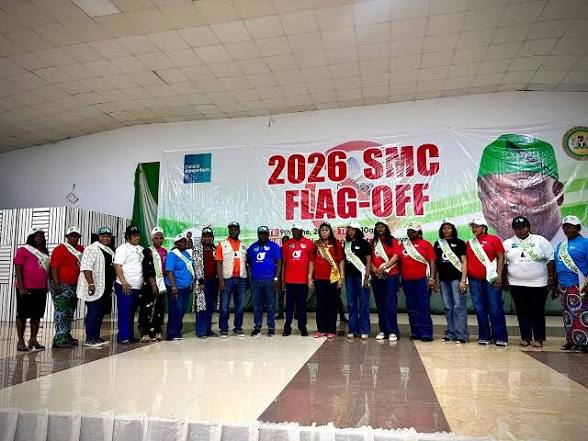
The Malaria Consortium has commenced the 2026 Seasonal Malaria Chemoprevention (SMC) campaign in June, targeting 1,007,652 children aged 3 to 59 months across Plateau State’s 17 Local Government Areas to reduce malaria cases and deaths.
Dr Mashor Mbwas, State Project Manager of Malaria Consortium in Plateau, disclosed this on Tuesday in Jos during a media parley organised to strengthen awareness and media support for the campaign.
Mbwas said the intervention, implemented in partnership with the Plateau State Government, was designed to protect children under five from malaria during the peak transmission season.
He added that studies by the World Health Organisation (WHO) show SMC could prevent up to 75 per cent of malaria cases among eligible children.
Mbwas said the 2026 campaign, which started in June, would run till October across all 17 LGAs, with special focus on reaching underserved communities and reducing malaria-related illnesses and deaths.
According to him, the consortium would also integrate Social and Behaviour Change Communication (SBCC) activities in Pankshin, Kanke and Langtang North LGAs to improve caregivers’ acceptance and increase uptake of malaria prevention services.
He said the organisation remained committed to working closely with the state government and partners to strengthen the health system and protect more children from malaria.
Mbwas noted that the programme had recorded steady progress in Plateau, with coverage of eligible children increasing consistently from 2021 to 2026.
He added that the intervention had contributed to fewer malaria cases, reduced hospital admissions and deaths, and a sharp decline in malaria prevalence in the state — from 21 per cent in 2018 to 18.8 per cent in 2021 and 2.8 per cent in 2025.
The project manager said the programme had also boosted the state and local economies through the engagement and payment of over 11,000 personnel between March and December.
He described the media as a critical partner in malaria elimination efforts, saying journalists play a vital role in disseminating accurate information, countering misinformation, promoting caregiver compliance, and highlighting the programme’s successes and challenges.
Mbwas urged media practitioners to sustain accurate and balanced reporting to mobilise community support and strengthen collaboration in the fight against malaria.
Similarly, Dr Nicholas Baamlong, Plateau State Commissioner for Health, said the state had recorded a significant decline in malaria prevalence.
Baamlong said, based on the Nigeria Malaria Indicator Survey (NMIS), Plateau’s malaria prevalence dropped from 18.8 per cent in 2021 to 2.8 per cent in 2025.
“Data from NMIS shows a dramatic and unprecedented decline in malaria prevalence from 18.8 per cent in 2021 to 2.8 per cent in 2025,” he said.
The commissioner added that in 2024 and 2025, through the State Malaria Elimination Programme (SMEP) with support from Malaria Consortium, the state achieved 100 per cent coverage in its SMC campaign, reaching one million children aged 3–59 months.
He said the prophylaxis was administered monthly from June to October during the peak malaria transmission period across over 12,000 communities in 787 catchment health facilities in the 325 wards of the state.
This, he noted, had led to a drastic reduction in the number of children presenting with fever due to malaria at health facilities.
SMEP Programme Manager, Kizito Ndak, explained that Seasonal Malaria Chemoprevention for children under five aims to reduce malaria cases, especially during the rainy season when prevalence is highest.
“No child under five should die of malaria,” he said, adding that the SMEP, in collaboration with Malaria Consortium, had prioritised prevention by deploying 12,083 community drug distributors across the 325 wards to administer the medication house-to-house.
