


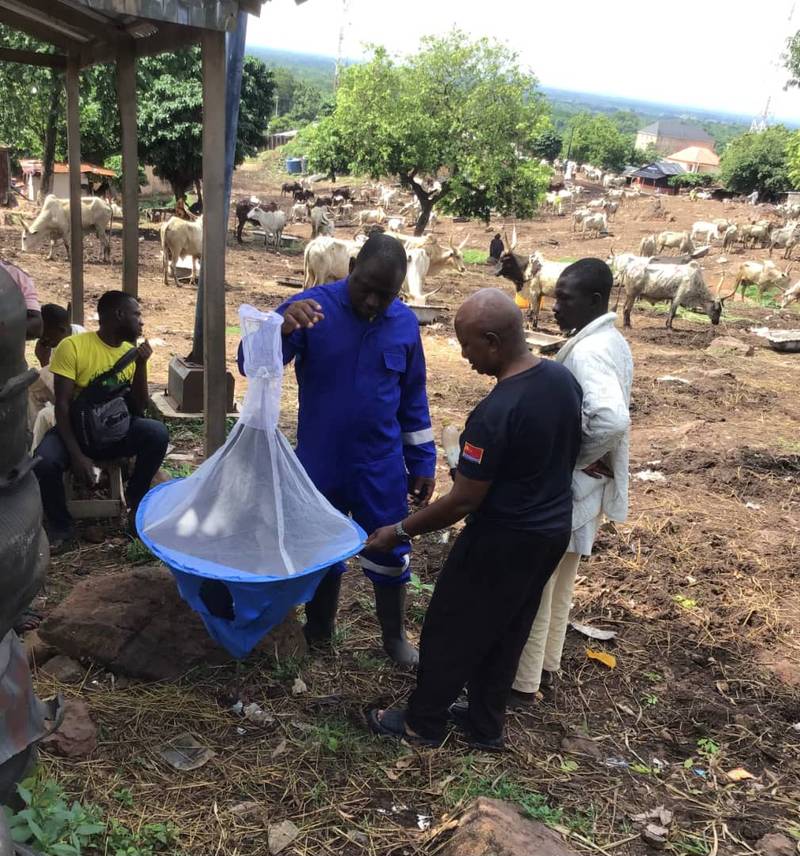
The Federal Ministry of Livestock Development (FMLD) has urged the Abia State Government to establish additional veterinary clinics to complement the existing federal clinic in the state.
This is to ensure citizens are not served diseased meat.
The Team Leader of the Tsetse Fly Surveillance and Control Project, Mr Gilbert Okoro, gave the advice on Monday after his team concluded a verification tour of the three senatorial districts to assess tsetse fly infestation.
Okoro said intelligence gathered by his team on operations at the Lokpanta Cattle Market — the largest livestock trading hub in the southern region — prompted his call to the state government.
He cited market sources who revealed that diseased livestock frequently escape into the wider Abia market ecosystem due to a critical shortage of veterinary clinics and regulatory personnel.
While praising Gov. Alex Otti for his ongoing upgrades in the state’s health sector, Okoro stressed that an unmonitored livestock market operating without a veterinary clinic and adequate manpower could undermine the administration’s healthcare achievements.
The team leader described the state’s previous failure to site the federal veterinary clinic — originally allocated for Abia — at the strategic Lokpanta Cattle Market as a dangerous political mistake.
“Lokpanta is a cattle marketing hub, and all the livestock consumed across the entire South arrive at Lokpanta before distribution to other states in the South-East and South-South.
“Consequently, there is an urgent need for continuous tsetse fly control because we recorded a high harvest of tsetse flies around these areas during our surveillance.
“Abia should replicate this control programme, especially around those axes. There is also a vital need for more veterinary clinics, which will not burden the state financially but will drastically assist its health sector in keeping the public safe,” Okoro said.
He recommended that the Abia Government establish state-owned veterinary clinics across all three senatorial districts to ensure better disease control and livestock monitoring.
According to him, the establishment of veterinary clinics across the 36 states of Nigeria is a novel intervention by the Federal Ministry of Livestock Development. He noted that the ministry cannot allocate more than one federal clinic per state.
Okoro thanked the Abia Government for its logistics support during the project and urged other state governments to replicate the model for public safety.
Earlier in the week, the team’s Veterinary Technician, Mr Chimobi Ebisike, lamented the total absence of critical safety measures at the Lokpanta market during an inspection tour.
“I am the only veterinary personnel in this whole place, and the workload is overwhelming for a single individual. To add insult to injury, I receive no incentives, no holidays, and no annual leave.
“There are no operational drugs to treat sick animals here. Because I am working completely alone, dead and diseased livestock sometimes escape my notice and enter the commercial market.
“We encounter both cooperative and hostile individuals here. Sometimes, when I want to enforce regulatory decisions that go against the economic interests of unscrupulous traders, they draw knives and threaten my life,” Ebisike said.
He decried the absence of a permanent security post at the market, noting that reliance on security reinforcements from Umuahia during emergencies leaves the facility vulnerable, as significant harm can occur before help arrives.
Ebisike emphasised that establishing a fully staffed clinic at Lokpanta would curb the dangerous practice of livestock owners indiscriminately injecting sick animals with drugs before sale.
“We have many citizens today suffering from kidney, liver, or heart failures, as well as various forms of cancer, without knowing that some of the root causes stem from consuming diseased meat and chemical drug residues.
“There is what we call a drug withdrawal period for livestock medications — the mandatory window between when an animal receives treatment and when it can be lawfully slaughtered for human consumption.
“But because there is no clinic or enforcement on site, livestock owners inject their animals in the evening and sell them to butchers the following morning, passing huge, dangerous chemical residues directly to consumers,” he warned.
Ebisike explained that because a sick animal lying down has reduced market value, livestock owners inject sick animals with drugs like procaine penicillin to make them stand, thereby increasing their market value.
“What the owner prioritises is profit maximisation, completely ignoring the health of the final consumer,” he said.
He noted that while achieving 100 per cent operational control over the massive hub might be difficult, the presence of adequate personnel and a dedicated clinic would reduce these dangerous sharp practices to the barest minimum.
Ebisike therefore called for proper budgetary allocations, prompt implementation, and strict monitoring of the Veterinary Department under the Ministry of Agriculture to protect meat consumers from preventable health hazards.
