


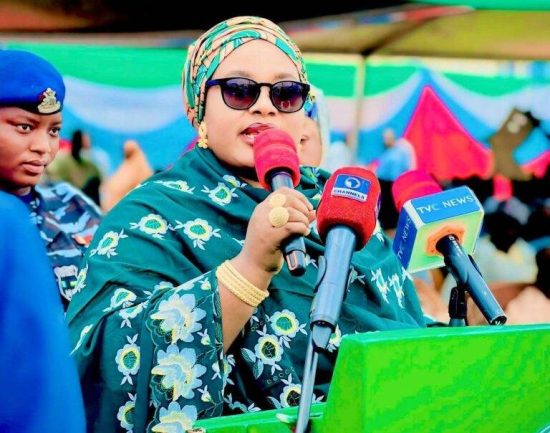
The wife of Kebbi Governor, Nafisa Idris, has urged residents to use insecticide-treated mosquito nets properly to curb malaria.
Idris made the call on Sunday in Birnin Kebbi during her investiture as the state’s Net Ambassador, alongside wives of local government chairmen, who were inaugurated as Net Advocates.
She expressed concern over the persistent threat of malaria and called for collective action to eliminate the disease in the state.
She noted that the mosquito nets, provided free by the government and development partners, would only be effective if used correctly.
Idris advised beneficiaries to visit designated distribution centers to collect their nets and strictly follow the health personnel’s instructions on proper use.
“We must all play our part to ensure a malaria-free Kebbi. These nets are meant to protect our families, especially children and other vulnerable groups,” she said.
The state Commissioner for Health, Samaila Yakubu, announced that the distribution of the insecticide-treated nets would begin on April 11 across the state.
Yakubu said no fewer than 3.15 million nets would be distributed, describing the exercise as a major intervention to reduce malaria prevalence.
He commended Governor Nasir Idris and his wife for their continued commitment to improving healthcare delivery and combating malaria in Kebbi.
“No single mosquito net will be left unaccounted for. The ministry will ensure that all nets reach the targeted beneficiaries and are used as intended,” he added.
Earlier, the Director of Public Health, Usman Magaji, said the campaign was supported by UNICEF to strengthen malaria prevention efforts in the state.
He noted that the 2026 Insecticide-Treated Net (ITN) campaign is a large-scale public health initiative aimed at reducing malaria burden in Kebbi.
Magaji stated that a total of 3,181,600 ITNs had been procured for household distribution with support from the USAID Global Health Supply Chain–Procurement and Supply Management (GHSC-PSM) project.
Approximately 12,600 personnel, including field distributors, supervisors, health workers, and community mobilizers, will ensure the effective implementation of the campaign.
He added that the exercise, with an estimated operational cost of N1.58 billion, covers logistics, training, transportation, and other essential activities.
Magaji concluded that the intervention is expected to improve access to ITNs, promote proper usage, and ultimately reduce malaria morbidity and mortality in the state.
