


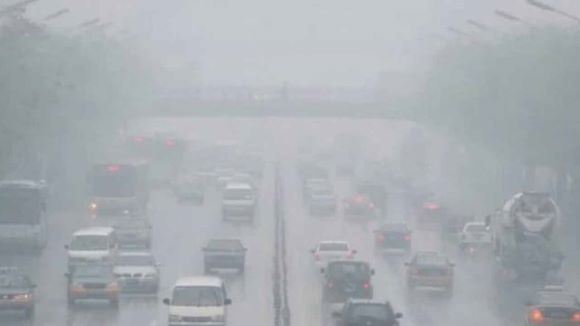
As the Harmattan season begins in Sokoto State, residents are grappling with its tough effects on their everyday lives, from home routines to business operations.
Harmattan is a cool, dry wind that blows from the northeast or east in the western Sahara.
It is strongest between late November and mid-March and often carries a lot of dust, which can travel hundreds of miles, even reaching the Atlantic Ocean.
This wind is part of the Northeast Trade Wind system, strengthened by a low-pressure area near the Gulf of Guinea and a high-pressure area in northwestern Africa during winter.
When the Harmattan arrives, temperatures in parts of western Africa can drop as low as 9°C (48°F).
As the season progresses, the Harmattan moves further north. The hotter desert air rises and mixes with cooler winds from the southwest monsoon, reaching heights of 900 to 1,800 meters (3,000 to 6,000 feet).
Harmattan blows during the dry season, which occurs when the sun is lowest in the sky. It is known for cold, dry, dusty winds and big differences in day and night temperatures.
Daytime temperatures can drop to 9°C (48°F) but may rise to 30°C (86°F) in the afternoon, with very low humidity levels, often below 5%.
This wind brings desert-like weather. It lowers humidity, clears the sky, stops rain from forming, and sometimes causes heavy dust or sandstorms. The dry, dusty wind increases fire risks and can damage crops severely.
Harmattan weather troubles for Mrs. Oluwatobi Akinrolabu and her children
Mrs. Oluwatobi Akinrolabu, also known as “Mama Twins,” who lives on Offa Road, says the harmattan weather is becoming too harsh for her and her children.
Every morning, she has to boil water so her children can bathe before going to school. When there is no electricity in the morning, she uses her gas stove to heat the water.
“The power company is not helping,” she said.
“They usually give us electricity in the evening but take it away by 3 or 4 in the morning. So I often have to use my gas to boil water for my six children, who are three sets of twins.”
Mrs. Akinrolabu added that the heat during the previous season was unbearable, and now the harmattan has brought intense cold, even though the season has just started. “The weather is already too cold,” she said.
Harmattan changes business hours for Mr. Kabir Abab
Mr. Kabir Abab, who sells noodles, bread, tea, and eggs in Dambuwa, shared how the harmattan season has changed his business routine. Before the harmattan, he used to open at 7:00 am and close by 11:30 pm. Now, he opens at 5:30 am and closes at 12:30 am to meet the needs of his customers, especially those going to work early.
“My customers who go to work in the morning always ask me to open early because of the cold weather,” he said.
“I like to satisfy my customers, so I start early and close late. The mornings are very cold, but once I drink hot tea, I feel warm. I think that’s why my customers want me to open early, so they can have something hot to warm themselves before work.”
He added that during the heat season, he sometimes didn’t open until 10 or 11 in the morning and closed by 10 pm.
“Nobody wants to eat or drink anything hot when it’s already hot outside. But with the harmattan, my opening and closing times had to change,” he explained.
New challenges for Mr. Yushau Bello, students
A teacher at Government Day Secondary School in Danbuwa, Mr. Yushau Bello shared how the harmattan season is affecting him, his family, and his students.
As a father of five, he says his children struggle to go to school each morning because of the cold, but he always finds a way to encourage them.
“Every morning, my children try very hard to avoid going to school, but I have to sweet-talk them into going,” he said.
At his school, he has noticed many students arriving late. “Some of my students don’t get to school until 9:00 am. When I ask them why, they say the weather is too cold, and they don’t have warm water to bathe. They say they can’t come to school without bathing,” he explained.
He also mentioned the effects of harmattan on the skin. “This season dries the body a lot. If someone doesn’t apply enough cream, their skin will turn white. During break time, I sometimes see students with very dry, white skin because they didn’t apply cream. I can’t help laughing when I see them,” he said.
Season eases fuel purchase for Mr. Usman Sadiq
A car owner living in Mabera, Mr. Usman Sadiq shared how the harmattan season has made it easier for him to buy fuel at the NNPC station. Unlike during the heat season, there are no long queues at the filling station.
“During the heating season, even if I got to the filling station by 5:30 am, I would find many cars already lined up. But now, even by 7:00 am, I don’t see more than five or six cars in line,” he said.
He believes the cold weather discourages people from coming out early to rush for fuel. “The harmattan has made some people stay indoors longer,” he added.
Unexpected cold for new arrivals
Miss Blessing Oluwaseun, who rents an apartment in the Area Commander neighbourhood, shared how the harmattan weather has made her room unusually cold in the mornings and evenings.
Unlike during the heating season, when she kept her windows and doors open, she now keeps them closed, yet her room still feels cold.
“I moved to Sokoto State this year for my service. When I arrived, the heat was intense, and the whole place was hot. Now, I’m so surprised to see the same town this cold,” she said.
She also mentioned how the harmattan brings sandy wind. “The cold comes with wind and sand all the time. I now mop my room three times a week, but during the heat season, I only mopped once a week,” she added.
Reduced sales for Mr. Musa Hassan
Mr. Musa Hassan, a water seller (maruwa) on Gusau Road, shared how the harmattan season has affected his business.
During the heat season, he bought water from the water board 15 to 16 times a day, but since Harmattan began, he only bought 10 times because residents are not purchasing as much water.
“I wake up as early as 6:00 am and go to the water board on Offa Road to fill my gallons. During the heat season, once I left the water board and got to the first junction, I could sell 4 to 5 gallons or even the entire wheelbarrow. But now, I move around for 20 to 30 minutes before I sell just 2 gallons,” he said.
He explained that many residents now fetch water themselves.
“Their taps usually work from afternoon to evening, so everyone fills their buckets and gallons then. Only those who weren’t around when the taps were flowing buy from us. Also, the harmattan has made people use less water compared to the heat season,” he added.
Use of nose masks gains popularity
Mrs. Aisha Suleman, who owns a pharmacy opposite Dango Danji House, shared her experience with the harmattan season, which started at the beginning of the month.
She noted that the weather comes with strong winds carrying sand and dirt, leading to an increase in the sale of cough medicines at her pharmacy.
“This harmattan weather makes it important for everyone to wear nose masks when going out. The masks help protect the nose and mouth from the breeze,” she said.
Mrs. Suleman added that during the heat season, there was little need for nose masks.
“But now, I strongly advise everyone to use masks because we don’t know what diseases the wind might carry,” she warned.
