


Shortness of breath isn’t always the result of a lung disease like asthma, pneumonia, or emphysema. Sometimes, medications can cause it.
Key takeaways:
- Rarely, medications can cause new breathing problems or worsen lung conditions you already have.
- Some people are at a higher risk than others — especially those with lung disease, a history of smoking, and folks taking chemotherapy or rheumatological medications.
- If you notice shortness of breath after starting a new treatment, let your healthcare professional know. You might need to stop and/or change the medication to protect your lungs.
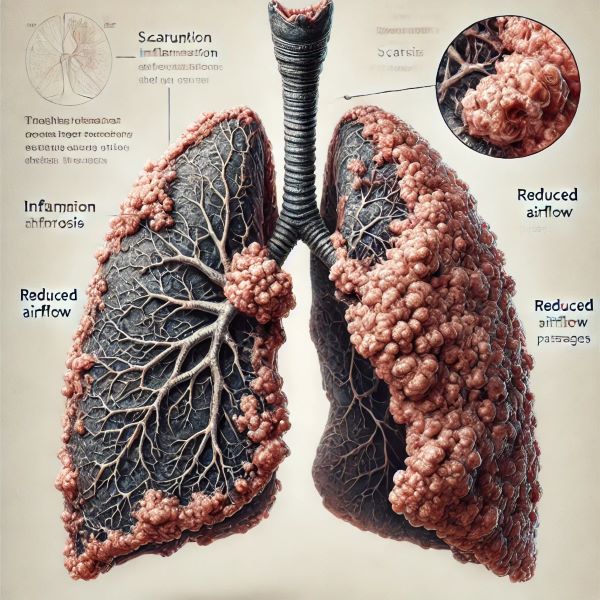
Although it’s rare, a small list of medications can lead to symptoms like shortness of breath, coughing, and low oxygen levels. Sometimes this happens because the medications trigger pre-existing conditions like asthma. In other cases, medications can cause allergic reactions. Rarely, medications can cause inflammation and scarring in the lung tissue. This condition is called drug-induced interstitial lung disease (DIILD).
Here, we’ll cover over 10 medications that can harm your lungs. If you’re taking any of these medications and have an existing lung-related condition, talk to your prescriber about how to stay safe. If it’s possible, taking the lowest effective dose for the shortest amount of time may help.
1. Macrobid (nitrofurantoin)
Macrobid (nitrofurantoin) is an antibiotic that’s often used to treat urinary tract infections (UTI). It has been linked to both short-term and long-term lung problems. But these reactions are rare, and only affect 1% of people who take it.
2. Amiodarone
ALSO READ [EXPLAINER] 17 medications that may harm your eyes
Amiodarone (Pacerone) is used to treat abnormal heart rhythms like atrial fibrillation (AFib). It’s the heart medication that’s most commonly linked to lung problems, including DIILD. Lung problems caused by amiodarone may occur in about 2% of those who take 400 mg or less of the medication. This is why people who take it need careful monitoring with regular blood work. If lung problems are detected early and the medication is stopped, people generally recover well. Besides stopping amiodarone, treatment may also include steroids to lower inflammation.
3. NSAIDs
Aspirin and other nonsteroidal anti-inflammatory medications (NSAIDs) are used to treat pain and inflammation. But in rare cases, NSAIDs can cause aspirin-exacerbated respiratory disease (AERD) — a condition with a combination of asthma symptoms, nasal polyps, and sinus congestion.
AERD affects up to 1% of the general population. In people with asthma and chronic sinus problems, it’s more common, affecting between 10% and 40% of these groups.
4. Beta blockers
Beta blockers are a common class of medications used to lower blood pressure and treat heart conditions. They don’t cause DIILD, but some beta blockers may cause wheezing in people with underlying asthma or chronic obstructive pulmonary disease (COPD). This risk mainly applies to the non-selective beta blockers like propranolol (Inderal LA), carvedilol (Coreg), and labetalol. This is because non-selective beta blockers target receptors in the lungs as well as in the heart. This may cause sudden airway tightening (also called bronchospasm).
This side effect is much less likely with cardioselective beta blockers like metoprolol (Lopressor, Toprol XL), atenolol (Tenormin), and bisoprolol. These medications primarily target receptors in your heart, so they don’t have as much of an effect on your lungs. Either way, it’s worth having a conversation with your care team if you have asthma or COPD and think your beta blockers are making your breathing worse.
5. Methotrexate
Methotrexate (Trexall) is a treatment for rheumatoid arthritis, psoriasis, and other autoimmune and skin conditions. It can cause lung problems in some people who take it. While methotrexate can cause lung problems, so can rheumatoid arthritis and some of the other conditions that methotrexate treats. So, it’s not always clear what — the methotrexate, an underlying autoimmune disorder, or both — is causing your breathing problems.
6. Leflunomide
It’s a similar situation with leflunomide, although this medication isn’t used as often as methotrexate. Leflunomide is a treatment for rheumatoid arthritis that can be helpful for people who don’t tolerate the side effects of methotrexate. In people with preexisting lung disease, leflunomide can make things worse in about 6% of cases. But in people without lung issues, it only causes new lung problems in about 1% of those who take it.
7. Bleomycin
Bleomycin is a chemotherapy medication that treats lymphoma, head and neck cancers, and cervical and testicular cancer. People with poor kidney function, especially those over 40 years old, are at a higher risk of DIILD. Symptoms usually occur in the first 8 months after beginning treatment.
8. Gemcitabine
Gemcitabine is another chemotherapy medication that can cause DIILD. It’s used to treat pancreatic, breast, lung, and ovarian cancers. The timing of lung problems linked to gemcitabine is less predictable. But one study showed DIILD was more likely to occur in people taking gemcitabine for lung cancer, especially in those over 80 years old.
9. Busulfan
Busulfan (Busulfex, Myleran) is also a chemotherapy medication. It’s usually prescribed as a treatment for a type of leukemia called chronic myelogenous leukemia. Sometimes, a person may take this medication before a stem cell or bone marrow transplant. DIILD can affect up to 8% of people who receive busulfan. The symptoms usually begin within the first year of starting the medication.
10. Other chemotherapy medications
Several other chemotherapy medications are known to cause DIILD. These include epidermal growth factor receptor inhibitors (EGFR inhibitors) like gefitinib (Iressa), and erlotinib (Tarceva).
Another class of chemotherapy drugs — mammalian target of rapamycin inhibitors (mTOR inhibitors) — can also damage the lungs. Examples include emsirolimus (Torisel), everolimus (Afinitor), and sirolimus (Rapamune, Fyarro).
Can prednisone cause shortness of breath?
Prednisone (Prednisone Intensol) doesn’t typically cause breathing difficulties. In fact, prednisone is a treatment for many conditions that affect the lungs, including asthma, COPD, some types of lung fibrosis, and autoimmune disorders. Very rarely, prednisone may cause an allergic reaction or fluid buildup in the lungs (called pulmonary edema). Both of these side effects could lead to prednisone-related breathing difficulties like shortness of breath. But such reactions would be extremely unusual.
What is drug-induced interstitial lung disease?
Drug-induced interstitial lung disease (DIILD) is a condition where medication causes scarring (fibrosis) in the lungs. This scarring causes the lung tissues to stiffen. The main symptoms of this type of lung disease is shortness of breath, cough, and low oxygen levels. While other things can cause it, between 3% and 5% of all cases of interstitial lung disease are linked to medications.
As we’ve seen, the biggest group of medications to cause DIILD is cancer treatment medications. In fact, chemotherapy causes between one-quarter and one-half of all DIILD cases. And the risk of DIILD goes up when you combine more than one chemotherapy medication.
Why does DIILD happen?
DIILD happens when a medication damages the air pockets in the lungs. Scientists don’t understand exactly how this happens, but they think the medication triggers inflammation. As the body tries to heal this inflammation, it heals it through scarring. The scarring destroys many of the small air pockets, making the lungs rigid.
As a result, people with lung fibrosis can’t breathe properly. Their lungs can’t supply oxygen to their bodies, and they can’t get rid of the waste product, carbon dioxide.
Effects of low oxygen
Symptoms of DIILD can begin days, weeks, or even months after starting a new medication. Low oxygen levels can make you feel short of breath. You may notice this when walking, exercising, or climbing stairs. Very low oxygen levels can make you feel breathless even while sitting still and doing nothing.
With low oxygen levels you may also notice that:
- You’re breathing faster than usual
- You feel fatigued
- You have a headache
- Your heart is racing
- You have a dry cough
Treatment for drug-induced lung fibrosis
The main treatment for DIILD is to stop the medication that’s causing the problem. If it’s not safe to completely stop the medication, you may be able to reduce the dose. Your healthcare professional may also recommend steroids to decrease inflammation and speed up recovery.
In general, how much damage is caused will depend on which medication caused your lung problems and any existing medical problems you have. Many people fully recover from medication-induced lung damage.
Are these medications worth the risk?
Just about every medication comes with some risk of side effects. But the benefits often outweigh the risks. Many medications that can cause DIILD and other lung problems are used to treat serious, sometimes life-threatening, illnesses. Since most people don’t experience the most severe side effects, it’s often worth the risk to treat your health condition. The key is to watch for any side effects closely.
The bottom line
All medications have potential side effects. Some side effects are more serious than others, including those that affect your lungs and breathing. Drug-induced interstitial lung disease (DIILD) is one of these serious lung complications. But receiving treatment and making a full recovery is possible. Being aware that it can happen helps you to spot the signs early on. So, be sure to discuss any new breathing symptoms you develop with your prescriber — especially if you’ve recently started a new medication that’s known to cause lung issues.
By Drug-induced interstitial lung disease (DIILD) is a condition where medication causes scarring (fibrosis) in the lungs. This scarring causes the lung tissues to stiffen. The main symptoms of this type of lung disease is shortness of breath, cough, and low oxygen levels. While other things can cause it, between 3% and 5% of all cases of interstitial lung disease are linked to medications.
As we’ve seen, the biggest group of medications to cause DIILD is cancer treatment medications. In fact, chemotherapy causes between one-quarter and one-half of all DIILD cases. And the risk of DIILD goes up when you combine more than one chemotherapy medication.
Why does DIILD happen?
DIILD happens when a medication damages the air pockets in the lungs. Scientists don’t understand exactly how this happens, but they think the medication triggers inflammation. As the body tries to heal this inflammation, it heals it through scarring. The scarring destroys many of the small air pockets, making the lungs rigid.
As a result, people with lung fibrosis can’t breathe properly. Their lungs can’t supply oxygen to their bodies, and they can’t get rid of the waste product, carbon dioxide.
Effects of low oxygen
Symptoms of DIILD can begin days, weeks, or even months after starting a new medication. Low oxygen levels can make you feel short of breath. You may notice this when walking, exercising, or climbing stairs. Very low oxygen levels can make you feel breathless even while sitting still and doing nothing.
With low oxygen levels you may also notice that:
- You’re breathing faster than usual
- You feel fatigued
- You have a headache
- Your heart is racing
- You have a dry cough
Treatment for drug-induced lung fibrosis
The main treatment for DIILD is to stop the medication that’s causing the problem. If it’s not safe to completely stop the medication, you may be able to reduce the dose. Your healthcare professional may also recommend steroids to decrease inflammation and speed up recovery.
In general, how much damage is caused will depend on which medication caused your lung problems and any existing medical problems you have. Many people fully recover from medication-induced lung damage.
Are these medications worth the risk?
Just about every medication comes with some risk of side effects. But the benefits often outweigh the risks. Many medications that can cause DIILD and other lung problems are used to treat serious, sometimes life-threatening, illnesses. Since most people don’t experience the most severe side effects, it’s often worth the risk to treat your health condition. The key is to watch for any side effects closely.
The bottom line
All medications have potential side effects. Some side effects are more serious than others, including those that affect your lungs and breathing. Drug-induced interstitial lung disease (DIILD) is one of these serious lung complications. But receiving treatment and making a full recovery is possible. Being aware that it can happen helps you to spot the signs early on. So, be sure to discuss any new breathing symptoms you develop with your prescriber — especially if you’ve recently started a new medication that’s known to cause lung issues.
By Khama Ennis, MD, MPH, FACEP, a board-certified emergency physician based in western Massachusetts. She is the medical staff president and associate chief of emergency medicine at Cooley Dickinson Hospital.
