

• Home
  • Agric
  • Sci & Tech
  • Health
  • Environment
  • Hausa News
  • More
    • Business/Banking & Finance
    • POLITICS
    • Entertainments & Sports
    • International
    • Investigation
    • Law & Human Rights
    • Africa
    • ACCOUNTABILITY/CORRUPTION
    • Hassan Gimba
    • Column
    • Prof. Jibrin Ibrahim
    • Prof. M.K. Othman
    • Defense/Security
    • Education
    • Energy/Electricity
    • Entertainment/Arts & Sports
    • Society and Lifestyle
    • Food & Agriculture
    • Health & Healthy Living
    • International News
    • Interviews
    • Investigation/Fact-Check
    • LAW & HUMAN RIGHTS
    • Oil & Gas/Mineral Resources
    • PRESS FREEDOM/JOURNALISM/PR
    • General News
    • Presidency
  • About Us
    • Contact Us
    • Board Of Advisory
    • Privacy Policy
    • Ethics Policy
    • Teamwork And Collaboration Policy
    • Fact-Checking Policy
    • Advertising
  • Media OutReach Newswire
    • Wire News
  • The Stories
Facebook Twitter Instagram
Trending
  • Of banditry and a shared sovereignty [II], by Hassan Gimba
  • LASTMA captures 38,000 vehicles for traffic offences in Q2 2026
  • Oye LG chairperson warns residents against building on waterways
  • Lagos residents blame urbanisation for worsening floods
  • PTA rejects concession of King’s college Lagos to Old Boys
  • Calabar landslides kill 5, destroy homes
  • Who gets to participate? Zauro and the architecture of economic citizenship, by Mohammed M. Haruna, PhD, mnipr
  • PTA calls for upward review of teachers’ salaries
Facebook Twitter Instagram YouTube
AsheNewsAsheNews
  • Home
  • Agric

    Gov Otti warns Abia farmers to register for input support

    July 11, 2026

    AFAN in Ogun dismisses impostors parading as executives

    July 11, 2026

    BOA launches 2026 wet season input distribution in Katsina

    July 11, 2026

    From scarcity to scale: What Africa can learn from India’s agricultural transformation, by Alice Ruhweza and Dr Purvi Mehta

    July 10, 2026

    Experts recommend local alternatives to cut poultry feed costs

    July 10, 2026
  • Sci & Tech

    Nigeria’s food service industry hits $11.09bn in 2025 – Moniepoint

    July 10, 2026

    Academy of medical sciences condemns maternal mortality, epidemic risks

    July 9, 2026

    NCC advances transparent pricing for fibre sharing

    July 8, 2026

    IHVN, partners launch Lassa fever research to support vaccine development in Bauchi

    July 8, 2026

    Meta rolls out first in-house AI image generator across WhatsApp, Instagram, Facebook

    July 8, 2026
  • Health

    FG expands funding, local production to improve cancer care

    July 11, 2026

    Niger targets 100 Level-2 PHCs by year-end

    July 11, 2026

    Psychiatrist urges Nigerians to prioritise brain health

    July 10, 2026

    Niger govt intensifies monitoring of PHC upgrades to level II

    July 10, 2026

    Zamfara approves 6 month maternity leave for female civil servants

    July 10, 2026
  • Environment

    LASTMA captures 38,000 vehicles for traffic offences in Q2 2026

    July 12, 2026

    Oye LG chairperson warns residents against building on waterways

    July 12, 2026

    Lagos residents blame urbanisation for worsening floods

    July 12, 2026

    PTA rejects concession of King’s college Lagos to Old Boys

    July 12, 2026

    Calabar landslides kill 5, destroy homes

    July 12, 2026
  • Hausa News

    UNA signs MoU to launch air Bissau in Guinea-Bissau

    June 15, 2026

    Otti plans 250-room 5-star hotel in Umuahia

    April 11, 2026

    Anti-quackery task force seals 4 fake hospitals in Rivers

    August 29, 2025

    [BIDIYO] Yadda na lashe gasa ta duniya a fannin Ingilishi – Rukayya ‘yar shekara 17

    August 6, 2025

    A Saka Baki, A Sasanta Saɓani Tsakanin ‘Yanjarida Da Liman, Daga Muhammad Sajo

    May 21, 2025
  • More
    1. Business/Banking & Finance
    2. POLITICS
    3. Entertainments & Sports
    4. International
    5. Investigation
    6. Law & Human Rights
    7. Africa
    8. ACCOUNTABILITY/CORRUPTION
    9. Hassan Gimba
    10. Column
    11. Prof. Jibrin Ibrahim
    12. Prof. M.K. Othman
    13. Defense/Security
    14. Education
    15. Energy/Electricity
    16. Entertainment/Arts & Sports
    17. Society and Lifestyle
    18. Food & Agriculture
    19. Health & Healthy Living
    20. International News
    21. Interviews
    22. Investigation/Fact-Check
    23. LAW & HUMAN RIGHTS
    24. Oil & Gas/Mineral Resources
    25. PRESS FREEDOM/JOURNALISM/PR
    26. General News
    27. Presidency
    Featured
    Recent

    Of banditry and a shared sovereignty [II], by Hassan Gimba

    July 12, 2026

    LASTMA captures 38,000 vehicles for traffic offences in Q2 2026

    July 12, 2026

    Oye LG chairperson warns residents against building on waterways

    July 12, 2026
  • About Us
    1. Contact Us
    2. Board Of Advisory
    3. Privacy Policy
    4. Ethics Policy
    5. Teamwork And Collaboration Policy
    6. Fact-Checking Policy
    7. Advertising
    Featured
    Recent

    Of banditry and a shared sovereignty [II], by Hassan Gimba

    July 12, 2026

    LASTMA captures 38,000 vehicles for traffic offences in Q2 2026

    July 12, 2026

    Oye LG chairperson warns residents against building on waterways

    July 12, 2026
  • Media OutReach Newswire
    • Wire News
  • The Stories
AsheNewsAsheNews
Home»Health & Healthy Living»Experts urge innovative financing to strengthen Africa’s Lassa fever R&D
Health & Healthy Living

Experts urge innovative financing to strengthen Africa’s Lassa fever R&D

EditorBy EditorSeptember 3, 2025Updated:September 3, 2025No Comments4 Mins Read
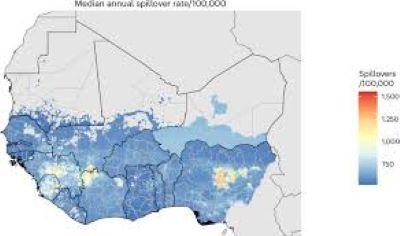
Predicted geospatial distribution of Lassa fever
The heat map shows the median annual incidence of zoonotic Lassa virus infection per 100,000 population across the 15 countries of continental West Africa included in our analysis (Benin, Burkina Faso, Côte d’Ivoire, The Gambia, Ghana, Guinea, Guinea Bissau, Liberia, Mali, Mauritania, Niger, Nigeria, Senegal, Sierra Leone and Togo). Known transmission hotspots are highlighted in the Mano River Region and Nigeria. © 2024, Smith, D. R. M. et al., CC BY 4.0
Share
Facebook Twitter LinkedIn Pinterest Email

Ahead of the ECOWAS Lassa Fever International Conference 2025 (ELFIC2025), public health experts have called on African governments to adopt innovative financing models to support health research and vaccine development.

The call was made during a preparatory webinar held on Wednesday, titled “Financing the Future: Integrating Vaccine R&D Preparedness into Sustainable Health Policy”, moderated by Ms. Oyeronke Oyebanji, Head of Lassa Engagement at CEPI.

ELFIC2025, scheduled for September 8–11 in Abidjan under the theme “Beyond Borders: Strengthening Regional Cooperation to Combat Lassa Fever and Emerging Infectious Diseases,” seeks to reaffirm regional commitment, mobilise political will, and drive collective action against Lassa fever and other emerging infectious diseases.

Experts warned that Africa’s heavy reliance on external donors undermines epidemic preparedness, stressing the need for locally tailored financing mechanisms combining government investment, philanthropy, and private sector participation to sustain research and development (R&D).

Prof. Nicaise Ndembi, Deputy Director General of the International Vaccine Institute (IVI) Africa Office and Head of Mission in Rwanda, cited South Korea’s model where governments guarantee 50% of funding for promising R&D projects, with additional contributions from foundations like the Gates Foundation and other domestic sources.

“Africa cannot retain research financing solely within the line of external sources. We need to customize models that suit our local context,” Ndembi said. He added that such frameworks would not only strengthen epidemic preparedness for Lassa fever, chikungunya, and dengue, but also stimulate innovation and job creation in Africa’s bio-industry sector.

He further noted that despite repeated commitments to invest at least 1% of GDP in research, most African countries fall short, leaving critical R&D initiatives underfunded. “The continent must move from donor dependency to a value-driven bio-industry ecosystem that creates jobs, supports local manufacturing, and ensures sustainability,” he stressed.

Dr. Pétronille Zengbé, Director-General of Research and Innovation at Côte d’Ivoire’s Ministry of Higher Education and Scientific Research, highlighted competing health priorities in West Africa—including maternal health, nutrition, and recurrent outbreaks—that often divert resources away from long-term vaccine R&D.

She proposed an innovative domestic financing model that allocates a small percentage of revenue from agricultural exports such as coffee and cocoa to fund health research, linking economic productivity to scientific reinvestment.

Zengbé also emphasized the need for inter-epidemic funding, urging Africa to save and allocate resources during calm periods between outbreaks. “Political leadership, supported by regional bodies like the Organisation Africaine de la Santé (OAS), is crucial to mobilise local funds and implement sustainable R&D solutions,’’ she said.

Dr. Kwasi Nyarko cited the MenAfriVac success story, developed with just $70 million—far below the usual $500 million—through collaborative partnerships and strategic planning. He suggested the model could guide Lassa fever vaccine development, emphasising blended financing, collaboration, and early market engagement.

“Doing research and development is more important to us in Africa than to the West, because we don’t have opportunities to make mistakes. We must make informed decisions and that comes from research,” Nyarko said. He urged leaders to invest in researchers, universities, and innovation ecosystems during “quiet times” between crises.

Nigeria’s Coordinating Minister of Health and Social Welfare, Prof. Muhammad Ali Pate, is expected to participate as special guest at ELFIC2025. Other key participants include Dr. Maria Van Kerkhove of WHO, Dr. Amadou Sall of CEPI, Dr. Sita Kroman Savane of Côte d’Ivoire’s One Health Platform, and Dr. Abdou Salam Gueye, WHO Africa Regional Emergency Director.

Experts such as Prof. Oyewale Tomori and other regional specialists will also present findings on viral transmission, community interventions, and long-term containment strategies.

Lassa fever affects between 100,000 and 300,000 people annually in West Africa, with Nigeria, Benin, Guinea, Liberia, Mali, and Sierra Leone most affected—particularly pregnant women and healthcare workers.

Organisers of ELFIC2025 stressed the importance of a One Health approach, building on lessons from the first ELFIC in Abuja, and emphasised collaboration, innovation, and preparedness as key to strengthening ECOWAS’s collective capacity to prevent and respond to epidemics.

The five-day event will bring together ministers, researchers, and global experts to mobilise resources, advance sustainable solutions, and protect Africa against Lassa fever and other viral haemorrhagic fevers that threaten the region’s health security.

African governments Beyond Borders: Strengthening Regional Cooperation to Combat Lassa Fever and Emerging Infectious Diseases ECOWAS Financing the Future: Integrating Vaccine R&D Preparedness into Sustainable Health Policy government investment health research and vaccine development International Vaccine Institute (IVI) Africa Lassa fever Lassa Fever International Conference 2025 (ELFIC2025) Philanthropy private sector participation to sustain research and development (R&D) WHO
Share. Facebook Twitter Pinterest LinkedIn WhatsApp Reddit Tumblr Email
Editor
  • Website

Related Posts

FG expands funding, local production to improve cancer care

July 11, 2026

Niger targets 100 Level-2 PHCs by year-end

July 11, 2026

Psychiatrist urges Nigerians to prioritise brain health

July 10, 2026

Leave A Reply Cancel Reply

Of banditry and a shared sovereignty [II], by Hassan Gimba

July 12, 2026

LASTMA captures 38,000 vehicles for traffic offences in Q2 2026

July 12, 2026

Oye LG chairperson warns residents against building on waterways

July 12, 2026

Lagos residents blame urbanisation for worsening floods

July 12, 2026
About Us
About Us

ASHENEWS (AsheNewsDaily.com), published by PenPlus Online Media Publishers, is an independent online newspaper. We report development news, especially on Agriculture, Science, Health and Environment as they affect the under-reported rural and urban poor.

We also conduct investigations, especially in the areas of ASHE, as well as other general interests, including corruption, human rights, illicit financial flows, and politics.

Contact Info:
  • 1st floor, Dogon Daji House, No. 5, Maiduguri Road, Sokoto
  • +234(0)7031140009
  • ashenewsdaily@gmail.com
Facebook Twitter Instagram Pinterest
© 2026 All Rights Reserved. ASHENEWS Daily Designed & Managed By DeedsTech

Type above and press Enter to search. Press Esc to cancel.