


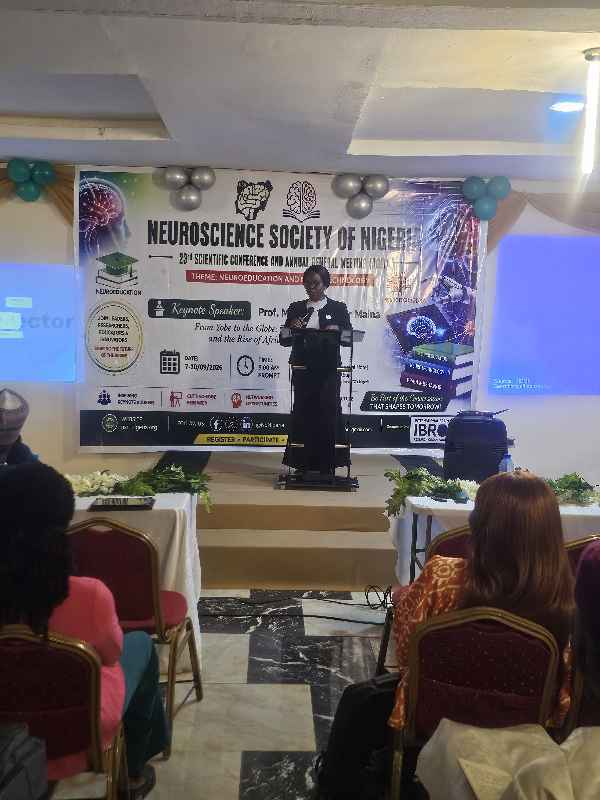
The President of the Neuroscience Society of Nigeria (NSN), Professor Angela Danborno, has urged Nigeria to move from being a consumer of knowledge generated elsewhere to becoming a producer of neuroscience research addressing the country’s health and social realities.
Danborno made the call while declaring open the 23rd Scientific Conference and Annual General Meeting of the society in Abuja with the theme “Neuroeducation and Neurotechnology.”
She said rapid developments in artificial intelligence, neurotechnology, neuroimaging, computational neuroscience, neurogenetics, brain-machine interfaces and precision medicine were transforming understanding of the brain and creating opportunities for Nigeria.
“For Nigeria, this presents both challenges and enormous opportunities,” Danborno said.
“We must ensure Nigerian neuroscience does not remain merely a consumer of knowledge generated elsewhere, but becomes an active contributor, generating knowledge that addresses our own populations and the unique realities of Africa.”
The NSN president said the conference was intended to strengthen scientific exchange, collaboration, mentorship and professional networks among Nigerian neuroscientists.
She said strengthening the next generation of scientists had been a major focus of her tenure, noting that increased travel awards for delegates would provide opportunities for researchers to advance their careers.
“The future of neuroscience in Nigeria will be determined not only by what we accomplish today, but by the scientists we develop for tomorrow,” she said.
Danborno also called for neuroscience to become more accessible to the Nigerian public, announcing that the society was strengthening brain-awareness activities and introducing neuroscience to secondary school students through the Nigerian Brain Bee competition.
She said public engagement was necessary to build scientific curiosity and develop the next generation of neuroscientists.
“Our greatest achievement will ultimately be measured not by conferences organised or awards given, but by the knowledge we generate, the scientists we inspire, and the lives we improve through better understanding of human brain,” Danborno said.
She also disclosed that the society had recorded improved conference registration and membership-dues compliance, while thanking institutions and organisations supporting its activities.
The Chairman of the Conference, Professor Sadiq Yusuf who was represented by Professor Nuhu Danjuma commended the Neuroscience Society of Nigeria for holding the conference annually and making it a point where professionals and students come together to relate, learn and share ideas.
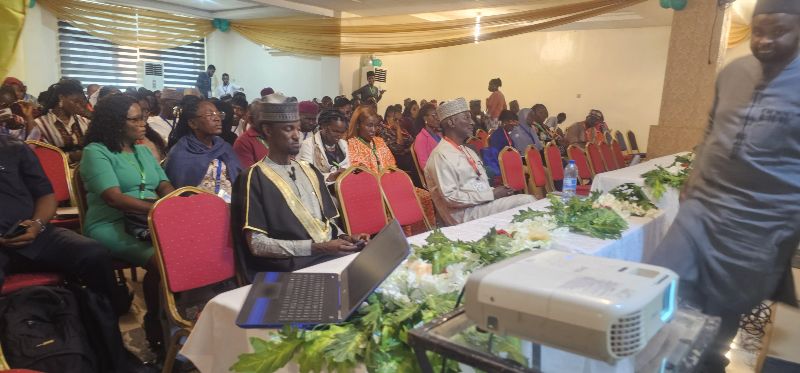
The Chairman of the Local Organizing Committee, Professor Barnabas Danborno in his welcome address said that the Neuroscience Society of Nigeria is expanding practical training in artificial intelligence, brain imaging, electroencephalography and neuroinformatics as emerging technologies transform neuroscience research.
He said that the conference’s practical sessions included training on imaging in neuroscience and African bioimaging, neuroinformatics, EEG, scientific visualisation and generative AI for neuroscientists.
Danborno added that the conference was designed to give participants skills they could immediately apply to research, teaching and professional development.
“This year’s theme, Neuroeducation and Neurotechnology, arrives at the very important moment as advances in artificial intelligence, neuroinformatics, computer interfaces and neuroimaging are changing the way scientists understand the brain.”
He said the conference was also designed to encourage collaborations, mentorship and research partnerships among neuroscientists.
“May new collaborations emerge, new universities, find mentors, establish institutions, find partners, and everyone at home with knowledge, experiences, their teaching, research and clinical practise,” Danborno said.
