


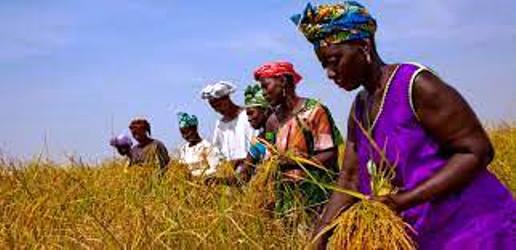
Women farmers in Biu Local Government Area, Borno, have urged state and local authorities to invest in value-added agriculture, stating it would empower women, increase incomes, and strengthen livelihoods.
They made this plea in interviews with reporters on Friday in Biu town, emphasizing that local processing of farm produce would create jobs and significantly boost earnings.
According to them, such investments would help women process harvested crops into higher-value products, allowing them to earn better returns than selling raw produce immediately after harvest.
Mrs. Sarah Suleiman, a groundnut farmer, said rising production costs meant many women farmers barely earned enough profit to support their households and cover daily expenses.
She explained that agriculture was no longer sufficiently rewarding for women who only sold harvested crops, highlighting the need for government training, equipment, and skills development to support value-added processing enterprises.
Suleiman shared that embracing agricultural value chains had become essential for profitability. She now processes groundnuts manually into kulikuli and groundnut oil to access wider markets and generate better income.
“By processing and adding value, I started making more profit selling kulikuli and groundnut oil in Maiduguri and Gombe State. Today, I earn enough because I process before selling.
“We need modern equipment, training, and improved processing facilities to strengthen our businesses, increase productivity, expand markets, and sustainably raise women farmers’ profit margins,” she said.
Supporting Suleiman, Hauwa, a 24-year-old masa seller, said marketing harvested crops alone keeps farmers poor and unable to sustain farming activities. She called for government support for processing, packaging, and value-addition initiatives nationwide.
Fatima Hamisu, a maize farmer, noted that she often sold harvested crops without processing because she lacked the means to add value, which she described as surrendering profits to others.
She pointed out that many women cultivate small plots, making knowledge of value addition, modern processing equipment, and packaging facilities critical to reducing poverty and improving household economic security.
Ms. Rebecca John, who produces ‘awara’ (tofu made from soya beans), said cultivating the crop specifically for processing increased her earnings and helped her maintain a viable small business.
She recounted benefiting from a government and NGO training program four years ago, which taught her produce processing techniques that improved household nutrition and inspired her entrepreneurial journey.
“That’s how I started making ‘awara’ for my family, and it later became a business that helps me meet my needs, earn income, and support myself through agriculture-based entrepreneurship,” she said.
John called on governments at all levels to invest more in value-added agriculture, describing it as an effective tool for empowering women and girls toward self-reliance, economic inclusion, sustainable livelihoods, and prosperity.
