


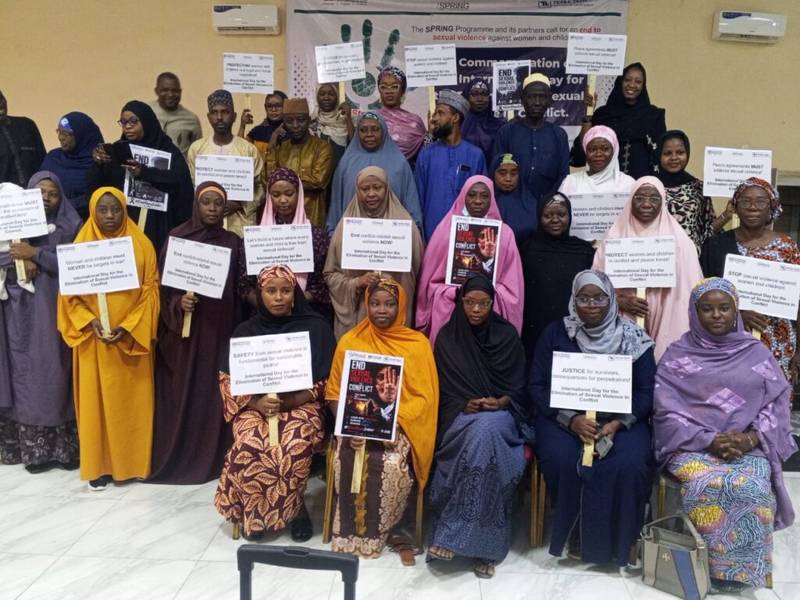
Stakeholders in the humanitarian and security sectors have called for strong action to prevent conflict-related sexual violence (CRSV) in Katsina State.
They urged the domestication of the Violence Against Persons Prohibition (VAPP) Act and better support for survivors.
The stakeholders made this appeal on Saturday during a policy dialogue organized by the Strengthening Peace and Resilience in Nigeria (sPRiNG) programme in partnership with the Mother of Inmates Support and Humanitarian Aid.
The dialogue was part of activities marking the 2026 International Day for the Elimination of Sexual Violence in Conflict.
Miss Hajara Yusuf, an official of the Katsina Ministry of Women Affairs, described conflict-related sexual violence as a growing concern worsened by banditry and displacement. She stated that the ministry is working with partners to strengthen prevention and ensure survivors receive medical, legal, and psychosocial support.
Mr. Lawal Alhassan, Director of Administration and Supply at the Katsina Ministry of Internal Security and Home Affairs, said the ministry is collaborating with security agencies to improve protection in vulnerable communities through intelligence-led operations and community policing.
Additionally, Maimuna Musa-Gani, a representative of the International Federation of Women Lawyers (FIDA), called for the domestication of the VAPP Act and the provision of free legal services for survivors.
Sabo Abdulkadeer, Regional Manager of the sPRiNG programme, reaffirmed the commitment to protecting vulnerable groups and strengthening peace-building efforts in the state.
Participants identified rape, abduction, forced marriage, sexual exploitation, and limited access to justice services as major challenges facing women and girls in conflict-affected communities.
They recommended the domestication of the VAPP Act, increased funding for Sexual Assault Referral Centres, enhanced coordination among relevant agencies, more awareness campaigns, and better support services for survivors.
“The state government must strengthen policies and institutions to prevent conflict-related sexual violence and ensure justice for survivors.”
The event was attended by government officials, security agency representatives, civil society organizations, development partners, women’s groups, and others.
