


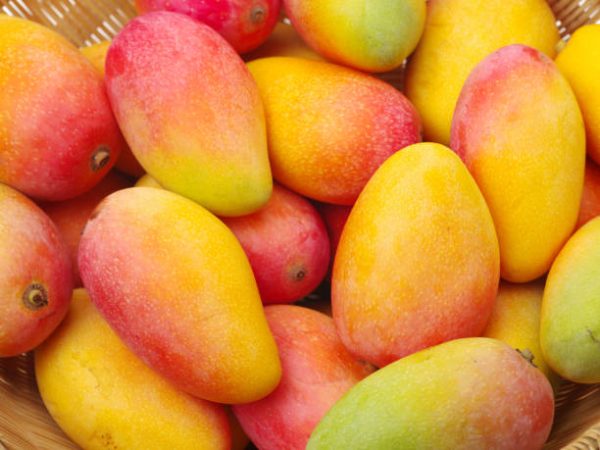
The National Association of Mango Producers, Processors and Marketers of Nigeria (NAMPPMAN) has said that Nigeria produces about one million metric tonnes of mangoes annually, placing the country 11th among the world’s leading producers.
The association disclosed this in Abuja during the inauguration of its newly elected national executives, where stakeholders called for greater investment in production, processing and marketing to unlock the economic potential of the mango industry.
According to NAMPPMAN’s outgoing National President, Abdulkadir Nasir, the country’s current output is generated from about 120,000 hectares of mango orchards.
He said Nigeria could more than quintuple its production to over five million metric tonnes annually through the adoption of improved varieties and professional orchard management.
Nasir pointed to Egypt’s estimated annual production of about 1.5 million metric tonnes as evidence of the untapped potential of Nigeria’s mango industry, noting that the country could surpass that figure with better production practices.
The new NAMPPMAN President, Dr Garba Kangiwa, said the association would shift its focus from traditional orchard management to a technology-driven and industrialised mango value chain.
Kangiwa said the transformation would target the reduction of post-harvest losses while creating new opportunities for wealth generation, employment and foreign investment.
He also highlighted the potential for full utilisation of mango by-products, noting that mango seed kernels are already being processed into cosmetic creams by some local women, while farm waste can be converted into organic fertiliser.
Kangiwa further advised smallholder farmers establishing new mango orchards to intercrop with short-duration crops such as vegetables to generate income during the three-to-four-year period required for mango trees to mature.
The Federal Government, represented at the event by the Deputy Director of Horticulture, Federal Ministry of Agriculture and Food Security, Afusatu Babalda, pledged continued support for the sector through extension services, modern agricultural technology and access to concessionary financing.
The government also stressed the importance of climate-smart agriculture as irregular rainfall, flooding and pest outbreaks increasingly threaten agricultural productivity.
The Director of the Department of Climate Change, Federal Ministry of Environment, Dr Iniobong Adiola-Awe, represented by Dr Asmau Jibril, urged NAMPPMAN to integrate climate resilience into mango production and invest in improved processing and storage facilities.
She said climate-responsive projects could also position the industry to attract international climate finance.
NAMPPMAN’s newly elected National Secretary, Chief Oji Aso’a, described mango production as an underutilised economic opportunity with significant potential to contribute to Nigeria’s economic diversification.
He called for the distribution of high-yield mango seedlings across the states, arguing that increased cultivation, coupled with improved processing and marketing, could strengthen Nigeria’s export capacity.
The association’s renewed focus on improved varieties, technology, climate-smart production and value addition is aimed at turning Nigeria’s sizeable mango production base into a more competitive domestic and export-oriented industry.
