


The Managing Director and CEO of the Northwest Development Commission (NWDC), Prof. Shehu Ma’aji, affirms that the Northwest region is not in decline.
He said the region is experiencing a transition powered by the resilience and potential of its youths.
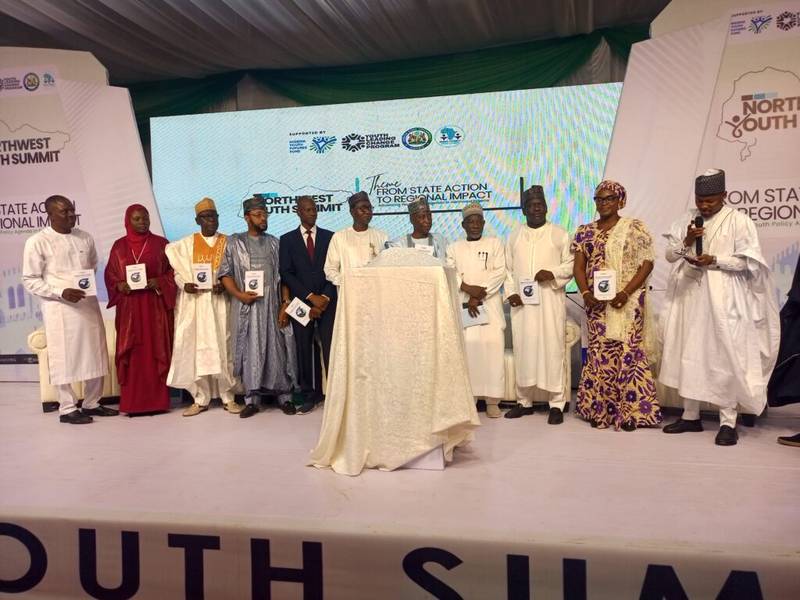
Ma’aji made this statement on Saturday in Kaduna at the Northwest Youth Summit 2026, themed “From State Action to Regional Impact,” organised by Bridge Connect Africa Initiative.
The summit was supported by the Nigeria Youth Futures Fund, Youth Leading Change Programme, among others.
Ma’aji acknowledged that while the region faces genuine development challenges, it remains on the cusp of transformation driven by its young population.
He highlighted that Nigerian youths have demonstrated leadership in governance reforms, entrepreneurship, innovation, and community development.
According to him, young people no longer wait for opportunities but create solutions and drive change within their communities.
He identified development challenges such as out-of-school children, unemployment, insecurity, poverty, and limited access to basic services.
The managing director stressed that youths need coordination, policy support, and strategic investments rather than just motivation.
He urged state governments to make measurable commitments toward youth development and ensure adequate budgets for youth-focused programmes.
Ma’aji added that the commission would establish a mechanism to monitor commitments made during the summit.
Earlier, Mr. Sani Muhammad, Executive Director of Bridge Connect Africa Initiative, said the summit marked the culmination of the Youth Leading Change Programme implemented across Northwest Nigeria.
Muhammad explained that the programme aimed to strengthen youth leadership, support youth-led organisations, and promote collaboration between young people and public institutions.
He noted that 35 fellows were trained in civic engagement, policy advocacy, stakeholder coordination, and democratic participation.
The programme also supported 21 youth-led organisations to advance governance and youth development priorities across the region.
Muhammad mentioned that youth policy dialogue workshops held in Jigawa, Kaduna, Kano, Katsina, Kebbi, Sokoto, and Zamfara identified gaps and practical pathways for action.
He added that the summit brought together young people, government agencies, civil society, development partners, and community stakeholders to discuss a shared development agenda.
The summit focused on the Northwest Youth Policy Agenda, developed through consultations across the seven states, which outlined shared priorities, implementation pathways, and a framework for regional coordination.
Muhammad emphasized that engaging young people as partners in governance and development demonstrated their capacity to contribute through policy dialogue, community initiatives, and accountability processes.
He stressed that creating spaces for collaboration between government and youth is vital for sustainable development.
“The success of this summit will be judged not just by discussions but by our ability to turn commitments into tangible outcomes for young people,” he said.
The Minister of Youth Development, Ayodele Olawande, praised the summit for promoting coordinated youth development, represented by Mr. Despan Kwardem, Director of Education and Youth Development.
Kaduna State Commissioner for Youth Development, Gloria Ibrahim, called the summit a defining moment for the Northwest, emphasizing the region’s enormous youth potential that must be harnessed for sustainable progress.
Ibrahim noted that state-level dialogues laid the foundation for a regional youth policy agenda to enhance collaboration and accountability across the region.
It was reported that the highlight of the event was the launch of the Northwest Youth Policy Agenda, developed by Bridge Connect Africa Initiative with support from the Nigeria Youth Futures Fund.
This regional framework aims to advance youth policy development, adoption, implementation, and coordination across Northwest Nigeria.
Participants included youth leaders, government officials, civil society representatives, and private sector stakeholders from the region.
