


African women innovators are increasingly turning to artificial intelligence (AI) and smart technologies to address pressing challenges in healthcare and agriculture, with researchers in Uganda and Rwanda developing solutions tailored to local needs.
The innovations were showcased by two African women during a webinar hosted through the Africa Science Dialogue, highlighting the growing contribution of women to the continent’s digital transformation in health and food systems.
In Uganda, Dr. Rose Nakasi, a researcher at the Makerere AI Health Lab and lecturer at Makerere University, is leading a team developing AI-powered diagnostic tools aimed at making the detection of diseases such as malaria, tuberculosis and cervical cancer faster and more reliable.
Nakasi said the lack of simple, rapid, accessible and accurate diagnostic tools contributes to the severity of the disease burden, particularly in health facilities with limited laboratory expertise.
The researchers’ ocular system combines microscopes, smartphones and artificial intelligence to automate disease diagnosis. A 3D-printable adapter connects a smartphone to a microscope, enabling patient-sample images to be captured and analysed using AI models trained to identify disease-causing pathogens.
According to the researchers, early results have been encouraging, with the malaria model recording 92 per cent specificity and the cervical cancer model achieving more than 94 per cent accuracy.
The technology is also being integrated into Uganda’s healthcare system. More than 150 laboratory technicians and 10 pathologists have been trained to use the system, while the project is operating across more than 35 health facilities in the country.
Meanwhile, in Rwanda, agroforester and innovator Clémence Uwamutarambirwa is using smart technology to improve potato production and help farmers manage greenhouse operations more efficiently.
Her Smart Potato Greenhouse Technology combines sensors, cloud-based analytics and a mobile application, allowing farmers and greenhouse managers to monitor production conditions remotely.
Sensors installed in greenhouse beds continuously measure temperature, humidity and soil moisture, with the data transmitted to a cloud platform for analysis. Farmers receive updates and alerts on their mobile phones and can remotely manage irrigation.
The system also facilitates hydroponic potato production, a soil-less method that uses water-based nutrient solutions. Uwamutarambirwa said the approach can increase potato seed output, conserve water and protect crops from soil-borne pathogens.
Feedback from greenhouse managers indicated that the technology had made remote monitoring easier while improving the management of temperature and humidity and strengthening the security of produce.
The two projects demonstrate how African innovators are adapting emerging technologies to solve challenges within their communities rather than relying solely on solutions developed elsewhere.
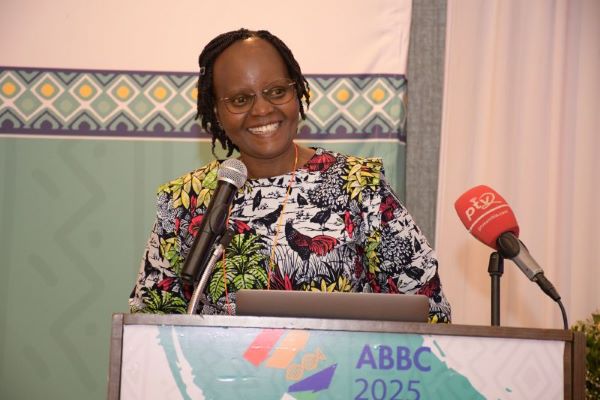
Dr. Margaret Karembu, Director of ISAAA AfriCenter and Chair of Africa Women for Biosciences (AWfB), said greater participation by women in science and emerging technologies would require broader institutional and societal support.
She stressed that supporting women in science and technology should not be regarded as a responsibility for women alone, noting that men, institutional leaders, policymakers, colleagues, supervisors, mentors and partners all have important roles to play.
More than 50 participants, including scientists, agricultural researchers, policymakers, farmers, journalists, academics and industry representatives, attended the webinar.
