


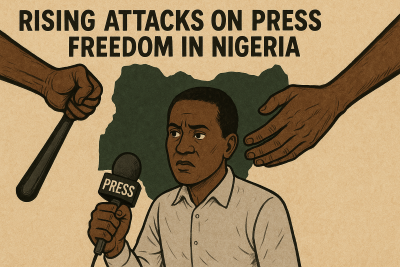
The Nigeria Union of Journalists (NUJ) has called on the Federal and state governments, security agencies and relevant institutions to guarantee legal protection for journalists and end systemic intimidation, unlawful arrests and physical assaults against media professionals.
The union also demanded independent and transparent investigations into unresolved cases of harassment, attacks and unlawful detention of journalists, insisting that perpetrators must be brought to justice.
The NUJ made the demands in a statement signed by its President, Alhassan Yahya, to mark the International Day to End Impunity for Crimes Against Journalists, observed globally on November 2.
It said journalists in Nigeria and across the world continued to face intimidation, arbitrary arrests, physical assaults, cyberbullying and other forms of violence for carrying out their professional responsibilities.
According to the union, the persistent failure to prosecute those responsible for crimes against journalists creates a climate of fear that undermines democratic discourse and weakens the rule of law.
It warned that when perpetrators of attacks against media professionals escape legal consequences, public trust in institutions is eroded, while the suppression of truth and growing self-censorship threaten society.
The union urged government and security agencies to enforce existing legislative frameworks and legal safeguards to protect journalists from arbitrary arrests, censorship and administrative abuses carried out under the guise of security regulations.
It also called on law enforcement agencies and security personnel to recognise journalists as essential contributors to democracy rather than adversaries.
The NUJ further advocated collaboration among media organisations, civil society groups and international partners to establish effective safety protocols and emergency support networks for journalists working in high-risk environments.
Reaffirming its commitment to press freedom and the protection of media workers, the union called on civil society organisations, human rights groups and citizens to support efforts to create an environment where journalists can work without fear or intimidation.
It maintained that threats against journalists constitute a broader threat to democratic governance, stressing that no media professional should lose their safety, freedom or life for reporting the truth.
