


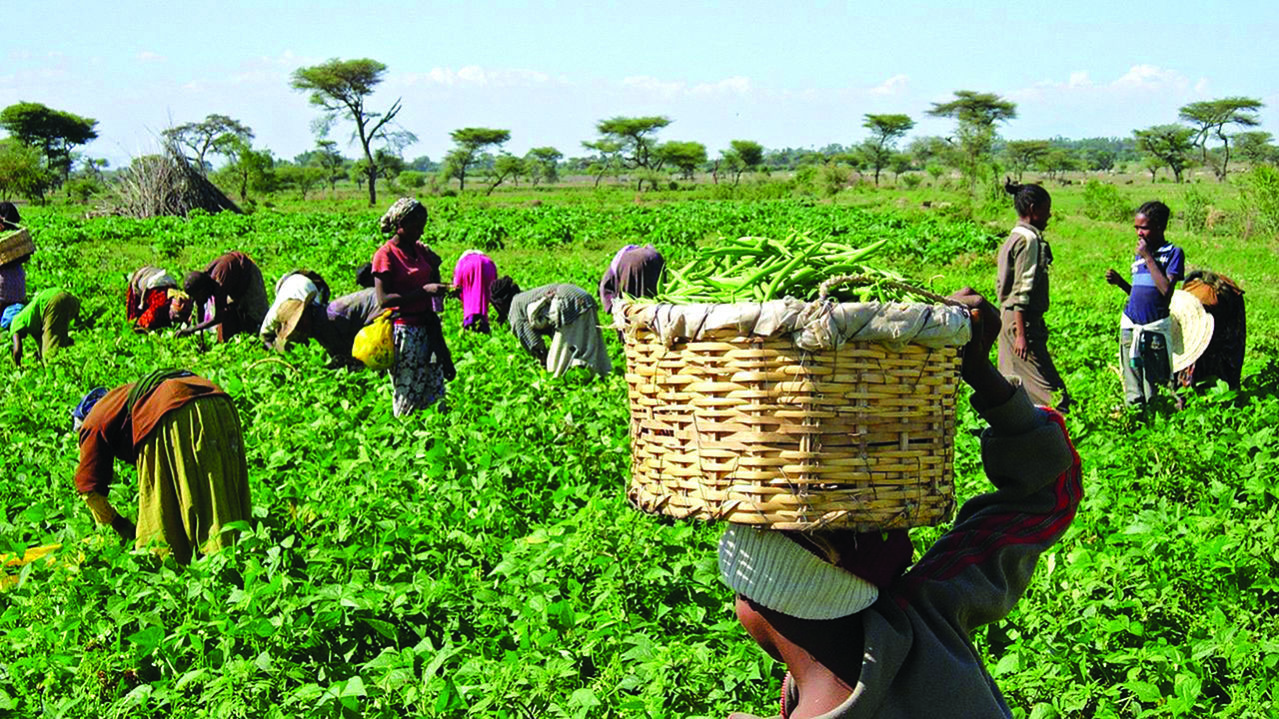
The Federal Ministry of Agriculture and Food Security has conducted training sessions for over 250 crop farmers in Taraba, focusing on innovative cultivation techniques to enhance productivity and address food scarcity in their localities.
Addressing participants at the training in Jalingo on Wednesday, Mr. Temitope Fadeshemi, the Ministry’s Permanent Secretary, explained that the training became imperative to assist farmers in improving yields and adding value to the crops.
The farmers who participated in the one-day training were given bags of maize and rice, treated seeds, and improved varieties of pepper, okra and tomatoes for dry-season cultivation.
Dr Ayuba Zira, the State Coordinator of the Taraba office, represented by Fadeshemi, said the training comes with empowerment, targeted at verified and validated beneficiaries of the National Poverty Reduction with Growth Strategy (NPRGS) of the ministry.
“Today marks a significant milestone in our collective commitment to uplifting the lives of our smallholder farmers and fostering sustainable agricultural practices. These farmers are not just the backbone of our agricultural sector. They are also the heartbeat of our nation’s prosperity, “he said.
According to Fadeshemi, the NPRGS collaboration with the Federal Department of Agricultural Extension Services (FDAE) has diligently enumerated and validated farmer’s participation in the transformation programme.
In his remarks, Mr John Pavali, the state Permanent Secretary of the Ministry of Agriculture and Food Security, commended the Federal Government for the support given to farmers in the state.
“The programme is not merely an investment in agriculture. It is an investment in the future of our state. As we equip these farmers with tools to enhance productivity, improve resilience and embrace sustainable practices, we are laying the foundation for a more functional and prosperous agricultural sector,” Pavali said.
He warned the beneficiaries against selling the inputs or cooking the maize and rice seeds given to them for planting.
NAN
