


The Federation Account Allocation Committee (FAAC) has distributed a total of ₦2.300 trillion to the three tiers of government from May 2026 revenue. This marked an increase of ₦43 billion compared to the ₦2.257 trillion distributed in April.
The allocation was approved during the committee’s monthly meeting in Abuja, where members reviewed inflows and agreed on the sharing formula for the three tiers of government.
The distributable revenue was drawn from statutory revenue, Value Added Tax (VAT) proceeds, and other revenue sources, reflecting an improvement in government earnings compared to previous months.
ALSO READ FG, states, LGs share N2.257trn from April 2026 FAAC allocation
ALSO READ FAAC receives full PSC oil revenues as NNPCL implements Executive Order 9
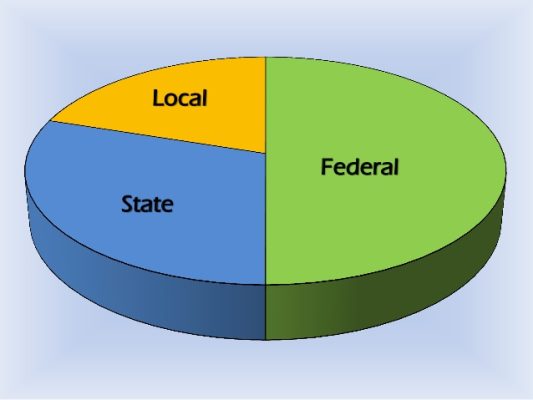
A breakdown of the allocation showed that the Federal Government received the largest share, while state governments and local government councils also received substantial allocations to support governance, infrastructure development, and public service delivery.
Total distributable revenue breakdown
The ₦2.300 trillion total distributable revenue was drawn from a gross statutory revenue of ₦2.651 trillion and Value Added Tax (VAT) receipts.
- Statutory revenue: ₦1.611 trillion
- Value Added Tax (VAT): ₦688.785 billion
Allocation to the three tiers of government
The disbursed revenue was divided as follows:
- Federal government: ₦818.680 billion
- State governments: ₦759.141 billion
- Local government councils: ₦534.277 billion
- Oil-producing states (13% derivation): ₦188.132 billion
Statutory revenue allocations
- Federal government: ₦749.801 billion
- State governments: ₦380.309 billion
- Local governments: ₦293.202 billion
VAT revenue allocations
- Federal government: ₦68.879 billion
- State governments: ₦378.832 billion
- Local government Councils: ₦241.075 billion
FAAC noted that improvements in key revenue streams, including Companies Income Tax, import duties, oil and gas royalties, and VAT collections, contributed to the increase in distributable revenue.
The committee further observed that stronger non-oil revenue performance helped offset declines recorded in some petroleum-related taxes, thereby boosting the overall revenue pool available for distribution.
The latest allocation is expected to provide additional fiscal support to governments at all levels as they continue to implement development projects and meet recurrent expenditure obligations.
Analysts say the sustained rise in FAAC distributions could enhance the capacity of governments to fund infrastructure, social services, and economic development programmes across the country.
