

• Home
  • Agric
  • Sci & Tech
  • Health
  • Environment
  • Hausa News
  • More
    • Business/Banking & Finance
    • POLITICS
    • Entertainments & Sports
    • International
    • Investigation
    • Law & Human Rights
    • Africa
    • ACCOUNTABILITY/CORRUPTION
    • Hassan Gimba
    • Column
    • Prof. Jibrin Ibrahim
    • Prof. M.K. Othman
    • Defense/Security
    • Education
    • Energy/Electricity
    • Entertainment/Arts & Sports
    • Society and Lifestyle
    • Food & Agriculture
    • Health & Healthy Living
    • International News
    • Interviews
    • Investigation/Fact-Check
    • LAW & HUMAN RIGHTS
    • Oil & Gas/Mineral Resources
    • PRESS FREEDOM/JOURNALISM/PR
    • General News
    • Presidency
  • About Us
    • Contact Us
    • Board Of Advisory
    • Privacy Policy
    • Ethics Policy
    • Teamwork And Collaboration Policy
    • Fact-Checking Policy
    • Advertising
  • Media OutReach Newswire
    • Wire News
  • The Stories
Facebook Twitter Instagram
Trending
  • Of banditry and a shared sovereignty [II], by Hassan Gimba
  • LASTMA captures 38,000 vehicles for traffic offences in Q2 2026
  • Oye LG chairperson warns residents against building on waterways
  • Lagos residents blame urbanisation for worsening floods
  • PTA rejects concession of King’s college Lagos to Old Boys
  • Calabar landslides kill 5, destroy homes
  • Who gets to participate? Zauro and the architecture of economic citizenship, by Mohammed M. Haruna, PhD, mnipr
  • PTA calls for upward review of teachers’ salaries
Facebook Twitter Instagram YouTube
AsheNewsAsheNews
  • Home
  • Agric

    Gov Otti warns Abia farmers to register for input support

    July 11, 2026

    AFAN in Ogun dismisses impostors parading as executives

    July 11, 2026

    BOA launches 2026 wet season input distribution in Katsina

    July 11, 2026

    From scarcity to scale: What Africa can learn from India’s agricultural transformation, by Alice Ruhweza and Dr Purvi Mehta

    July 10, 2026

    Experts recommend local alternatives to cut poultry feed costs

    July 10, 2026
  • Sci & Tech

    Nigeria’s food service industry hits $11.09bn in 2025 – Moniepoint

    July 10, 2026

    Academy of medical sciences condemns maternal mortality, epidemic risks

    July 9, 2026

    NCC advances transparent pricing for fibre sharing

    July 8, 2026

    IHVN, partners launch Lassa fever research to support vaccine development in Bauchi

    July 8, 2026

    Meta rolls out first in-house AI image generator across WhatsApp, Instagram, Facebook

    July 8, 2026
  • Health

    FG expands funding, local production to improve cancer care

    July 11, 2026

    Niger targets 100 Level-2 PHCs by year-end

    July 11, 2026

    Psychiatrist urges Nigerians to prioritise brain health

    July 10, 2026

    Niger govt intensifies monitoring of PHC upgrades to level II

    July 10, 2026

    Zamfara approves 6 month maternity leave for female civil servants

    July 10, 2026
  • Environment

    LASTMA captures 38,000 vehicles for traffic offences in Q2 2026

    July 12, 2026

    Oye LG chairperson warns residents against building on waterways

    July 12, 2026

    Lagos residents blame urbanisation for worsening floods

    July 12, 2026

    PTA rejects concession of King’s college Lagos to Old Boys

    July 12, 2026

    Calabar landslides kill 5, destroy homes

    July 12, 2026
  • Hausa News

    UNA signs MoU to launch air Bissau in Guinea-Bissau

    June 15, 2026

    Otti plans 250-room 5-star hotel in Umuahia

    April 11, 2026

    Anti-quackery task force seals 4 fake hospitals in Rivers

    August 29, 2025

    [BIDIYO] Yadda na lashe gasa ta duniya a fannin Ingilishi – Rukayya ‘yar shekara 17

    August 6, 2025

    A Saka Baki, A Sasanta Saɓani Tsakanin ‘Yanjarida Da Liman, Daga Muhammad Sajo

    May 21, 2025
  • More
    1. Business/Banking & Finance
    2. POLITICS
    3. Entertainments & Sports
    4. International
    5. Investigation
    6. Law & Human Rights
    7. Africa
    8. ACCOUNTABILITY/CORRUPTION
    9. Hassan Gimba
    10. Column
    11. Prof. Jibrin Ibrahim
    12. Prof. M.K. Othman
    13. Defense/Security
    14. Education
    15. Energy/Electricity
    16. Entertainment/Arts & Sports
    17. Society and Lifestyle
    18. Food & Agriculture
    19. Health & Healthy Living
    20. International News
    21. Interviews
    22. Investigation/Fact-Check
    23. LAW & HUMAN RIGHTS
    24. Oil & Gas/Mineral Resources
    25. PRESS FREEDOM/JOURNALISM/PR
    26. General News
    27. Presidency
    Featured
    Recent

    Of banditry and a shared sovereignty [II], by Hassan Gimba

    July 12, 2026

    LASTMA captures 38,000 vehicles for traffic offences in Q2 2026

    July 12, 2026

    Oye LG chairperson warns residents against building on waterways

    July 12, 2026
  • About Us
    1. Contact Us
    2. Board Of Advisory
    3. Privacy Policy
    4. Ethics Policy
    5. Teamwork And Collaboration Policy
    6. Fact-Checking Policy
    7. Advertising
    Featured
    Recent

    Of banditry and a shared sovereignty [II], by Hassan Gimba

    July 12, 2026

    LASTMA captures 38,000 vehicles for traffic offences in Q2 2026

    July 12, 2026

    Oye LG chairperson warns residents against building on waterways

    July 12, 2026
  • Media OutReach Newswire
    • Wire News
  • The Stories
AsheNewsAsheNews
Home»Food & Agriculture»[VIEWPOINT] Enhancing food security through collaboration, partnerships
Food & Agriculture

[VIEWPOINT] Enhancing food security through collaboration, partnerships

EditorBy EditorJuly 2, 2024Updated:July 2, 2024No Comments6 Mins Read
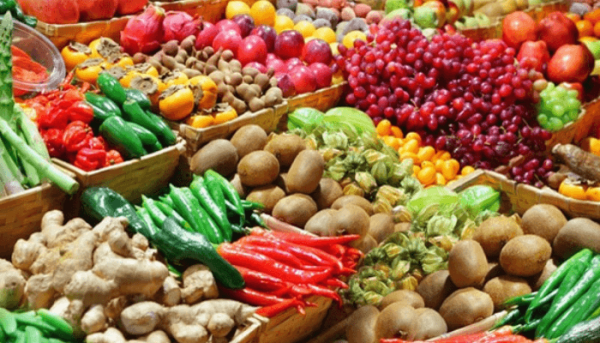
Food items
Share
Facebook Twitter LinkedIn Pinterest Email

According to the World Bank Food Security report of June 3, 2024, domestic food price inflation remains high in low- and middle-income countries. The bank said inflation higher than 5 per cent is experienced in 59.1 per cent of low-income countries (2.0 percentage points higher since the last update of the report on April 25, 2024).

By Kayode Adebiyi

Food price inflation is put at 63 per cent for lower-middle-income countries and 31 per cent for upper-middle-income countries.

For some time now, the World Bank has raised concern over rising food prices, especially in low- and middle-income countries.

The bank previously warned that, “High food prices have triggered a global crisis that is driving millions more into extreme poverty, magnifying hunger and malnutrition.”

The bank and other international multilateral institutions believe that the COVID-19 pandemic is responsible for a major setback in global poverty reduction.

They also identify climate change and insecurity as key factors in rising food and energy prices, which is making recovery difficult.

Russia’s invasion of Ukraine, which has disrupted global food supply, has also caused a surge in trade-related policies imposed by countries.

ALSO READ [VIEWPOINT] Food security and government’s real sector initiatives

“The global food crisis has been partially made worse by the growing number of food and fertilizer trade restrictions put in place by countries with a goal of increasing domestic supply and reducing prices.

“As of May 28, 2024, 16 countries have implemented 22 food export bans, and 8 have implemented 15 export-limiting measures,” the World Bank said.

In Nigeria, the National Bureau of Statistics (NBS) said Nigeria’s inflation rate rose to 33.95 per cent in May 2024, as prices of food and non-alcoholic beverages continued to surge.

The NBS said food inflation rose to 40.66 per cent in May, compared to the 24.82 per cent reported in the same month last year, indicating an increase of 15.84 percentage points.

The rising cost of food in Nigeria has been made much worse by insecurity and tough economic reforms which saw the removal of subsidy on petroleum.

Exasperated by the situation, angry youths and women took to the streets in some cities to protest the rising cost of living in the country, especially of food commodities.

As part of efforts to address the challenge of food insecurity, the USAID embarked on a five-year West Africa Trade & Investment Hub (Trade Hub) project.

Started in 2019, Trade Hub is a $116-million trade and investment facilitation activity designed to improve private sector productivity, profitability, and competitiveness in West Africa through market-based approaches.

USAID said it went into partnerships with the private sector to foster co-investments through its Co-Investment Fund.

At a trade and investment summit held recently in Abuja, USAID’s Chief of Party, West Africa Trade & Investment Hub, Robin Wheeler, said since the Trade Hub was launched in 2019, its unique model has catalyzed private-sector investments.

“It successfully unlocked $447.8 million in new private investments – surpassing the target of $400 million – and creating 77,710 new jobs in the West African region.

“Using the blended finance approach to engage a grant portfolio of nine private-sector co-investment partnerships funded through USAID/Nigeria, the Trade Hub has achieved remarkable results.

“The Trade Hub has awarded $26.6 million in co-investment grants to 33 private-sector companies in Nigeria, and the grants have sparked $171.2 million in new private investments, generating $399.6 million in sales of agricultural commodities.

“Together, we have created 26,152 jobs in Nigeria, with 7,088 jobs for women and 13,958 for youths,” Wheeler said.

He emphasised the project’s commitment to inclusion and empowerment, highlighted in the involvement of 174,563 women out of 288,043 individuals engaged in co-investment projects across the country.

Ms. Michelle Corzine, Office Director, Economic Growth, Agriculture and Power Office, USAID/Nigeria, noted that Nigeria is currently experiencing an unprecedented food crisis.

She said the food crisis has been exacerbated by multiple internal and external factors, despite the country being blessed with abundant natural resources, a favourable agricultural landscape, and a vibrant population.

Corzine said the US government is deeply invested in the prosperity of Africa because it recognises the immense potential for growth and development of the continent.

“USAID has invested almost $200 million in agriculture over the last five years to improve food security and build household resilience to shocks in Adamawa, Benue, Borno, Cross River, Delta, Ebonyi, Gombe, Kaduna, Kebbi, Niger, and Yobe states.

ALSO READ [COLUMN] Emergency on Food Security: Policy Dereliction, Consequences and Possible Solutions, By Prof MK Othman

“During this period, USAID supported over five million farmers with better farming techniques and access to seeds and fertilizer and leveraged over $340 million in private-sector funds to increase production and income,” she said.

Through Trade Hub, USAID has been able to support agribusinesses and smallholder farmers in rice, maize, soybeans, and aquaculture value chains.

It does so by introducing them to modern agricultural technologies and climate-smart practices for enhanced productivity.

It also builds farmers’ and agribusinesses’ capacity by providing training on sustainable land management and disaster risk reduction strategies.

One of the beneficiaries of the project, OCP Fertilizer, was able to build and equip a 200,000-metric-tonne Bulk Blending Plant in Kaduna State with advanced technology from the US.

Mr Oluwatobi Asana, OCP Africa Country Director, whose company got a grant award of over $1.5 million and $2 million in co-investment, said the project helped his company build a fertilizer “centre of excellence”.

Managing Director, Coscharis Farms, Chinedu Okere, said Trade Hub helped in maximising the capacity utilisation of his organisation, having been operating within 50 per cent capacity before the scheme.

As the Trade Hub project winds down, many participants at the summit called for continuity of the partnerships and collaboration it has fostered.

Some of the challenges Trade Hub identified as impediments to food security are not too different from those from the World Bank – insecurity, COVID-19, Russia-Ukraine war, climate change, etc.

However, a lack of adequate investment in agribusiness and economic instability are additional challenges facing the sector in Nigeria.

Stakeholders say for Nigeria to surmount its current food security challenge, the government should be willing to invest in agribusiness by collaborating with the private sector and multinational development partners.

NANFeatures

Food security Partnership World Bank
Share. Facebook Twitter Pinterest LinkedIn WhatsApp Reddit Tumblr Email
Editor
  • Website

Related Posts

Who gets to participate? Zauro and the architecture of economic citizenship, by Mohammed M. Haruna, PhD, mnipr

July 11, 2026

Gov Otti warns Abia farmers to register for input support

July 11, 2026

AFAN in Ogun dismisses impostors parading as executives

July 11, 2026

Leave A Reply Cancel Reply

Of banditry and a shared sovereignty [II], by Hassan Gimba

July 12, 2026

LASTMA captures 38,000 vehicles for traffic offences in Q2 2026

July 12, 2026

Oye LG chairperson warns residents against building on waterways

July 12, 2026

Lagos residents blame urbanisation for worsening floods

July 12, 2026
About Us
About Us

ASHENEWS (AsheNewsDaily.com), published by PenPlus Online Media Publishers, is an independent online newspaper. We report development news, especially on Agriculture, Science, Health and Environment as they affect the under-reported rural and urban poor.

We also conduct investigations, especially in the areas of ASHE, as well as other general interests, including corruption, human rights, illicit financial flows, and politics.

Contact Info:
  • 1st floor, Dogon Daji House, No. 5, Maiduguri Road, Sokoto
  • +234(0)7031140009
  • ashenewsdaily@gmail.com
Facebook Twitter Instagram Pinterest
© 2026 All Rights Reserved. ASHENEWS Daily Designed & Managed By DeedsTech

Type above and press Enter to search. Press Esc to cancel.