


The Federal Government will facilitate the establishment of a professional cadre in food science and technology to strengthen food safety monitoring.
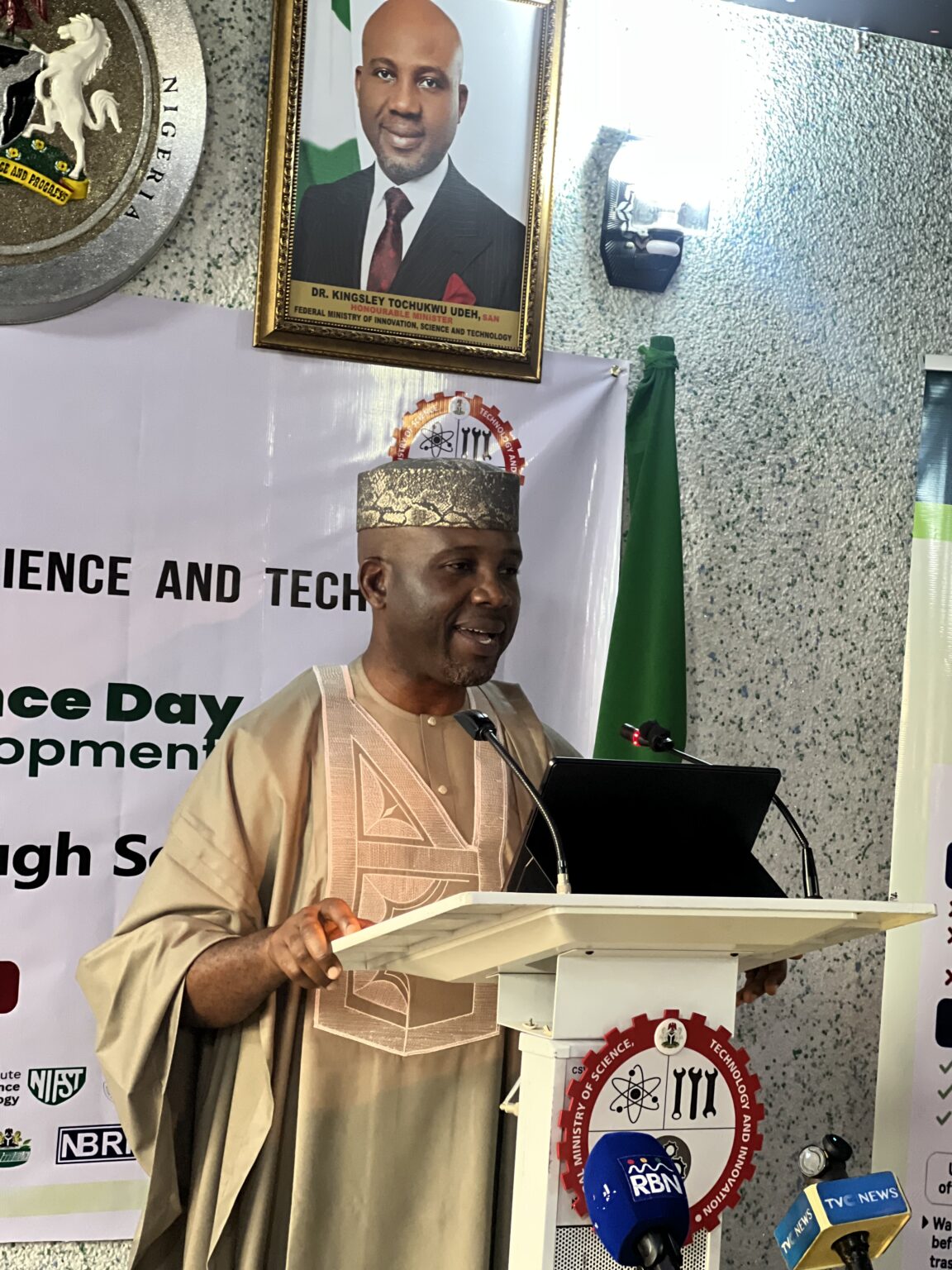
The Minister of Innovation, Science and Technology, Kingsley Udeh, disclosed this at a news conference in Abuja marking the 2026 World Science Day for Peace and Development.
Udeh said the cadre would help curb unsafe food-handling practices across the country by ensuring that qualified food science and technology professionals are deployed across government institutions.
He said their deployment was particularly important at state and local government levels, where they could monitor food processing, preservation, storage and distribution.
“Nigeria produces about 3,000 food science and technology professionals annually from approximately 70 tertiary institutions, but their expertise is not being adequately utilised.
“The absence of an established professional cadre has constrained the effective deployment of these professionals, particularly in the public service.
“We have sufficient hands to handle food processing and safety, but we are not utilising them effectively.”
The minister acknowledged the efforts of the Nigerian Council of Food Science and Technology (NiCFoST) and the Nigerian Institute of Food Science and Technology to secure the establishment of the cadre.
He urged relevant government institutions to complete outstanding approvals and administrative processes to support the council’s regulatory mandate.
Udeh expressed concern about unsafe food practices, including using calcium carbide to ripen fruit, dichlorvos (Sniper) to preserve beans and grains, and paracetamol to soften meat.
Other unsafe practices include using prohibited colourants, such as Sudan IV, to adulterate palm oil.
Citing World Health Organisation figures, Udeh said unsafe food could cause more than 200 diseases, while foodborne illnesses remained a major global health and economic concern.
“Food must sustain life, not endanger it. One of the most important common grounds of humanity is food,” he said.
He urged food businesses and regulatory institutions to engage NiCFoST-licensed professionals in food production management, quality assurance, raw-material handling, processing and storage.
He also called on state and local governments to strengthen food inspections in markets, restaurants, abattoirs and other food outlets.
“They should adopt the council’s food safety operational manual and provide the personnel and logistics required for effective enforcement,” he said.
The minister said the ministry was promoting locally developed technologies for safer food processing, preservation, storage and packaging.
He added that shared community processing facilities would be promoted to give small-scale food operators access to appropriate technologies at affordable prices or no cost.
Udeh also called for affordable, hygienic packaging methods, particularly for garri, which he said was often exposed to dust, insects and other contaminants in open market containers.
He announced plans to convene a high-level national food systems stakeholders’ meeting to strengthen coordination among government institutions and stakeholders across the food value chain.
The Registrar of NiCFoST, Veronica Ezeh, demonstrated a simple screening procedure for detecting Sudan IV, a prohibited industrial dye used to adulterate palm oil.
Ezeh said the demonstration showed how the colourant could be detected, stressing the need for trained food science and technology professionals to conduct appropriate tests and inspections at the grassroots level.
She called for food science and technology professionals to be employed and deployed across all three tiers of government to strengthen food inspections, promote safe storage and processing practices, and protect consumers.
The 2026 World Science Day is being celebrated under the theme “Common Ground Through Science Diplomacy.”
