


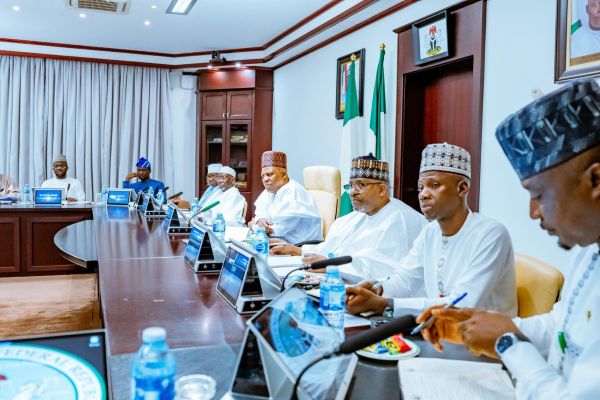
Vice President Kashim Shettima has called for tighter monitoring and greater accountability in the implementation of major Federal Government food and agriculture programmes, including the $500 million Nigeria Sustainable Agricultural Value-Chains for Growth (AGROW) Project.
Shettima made the call at the seventh meeting of the Presidential Food Systems Coordinating Unit Steering Committee held at the State House, Abuja, where government officials, state governors, private-sector players and development partners reviewed the country’s food security situation.
The Vice President, who chairs the committee, stressed that government spending on food-system interventions must produce measurable benefits for farmers, markets and households.
He also called for stronger visibility around ongoing programmes to ensure that resources allocated to agriculture and food security are properly deployed and produce tangible results.
Among the initiatives reviewed was the AGROW programme, which received a $500 million financing approval from the World Bank in April 2026.
The programme is designed to improve agricultural productivity, strengthen value chains and enhance food security by addressing some of the structural constraints affecting Nigeria’s agricultural sector.
The committee also reviewed the National Agribusiness Policy Mechanism, the proposed National Agro-Productivity System and the National Food and Nutrition Crisis Preparedness Framework.
According to the Presidential Food Systems Coordinating Unit, the initiatives are intended to improve the government’s ability to track agricultural production, identify emerging risks and coordinate interventions between the federal and state governments.
Shettima said the government must strengthen Nigeria’s ability to produce enough food domestically while ensuring that consumers have access to food at affordable prices.
The meeting also examined challenges affecting the movement of agricultural commodities from production areas to consumers, including transportation, logistics, market access and levies.
The committee identified the main harvest season as an opportunity to intensify support for farmers, improve domestic production and strengthen strategic food reserves.
Jigawa State Governor Umar Namadi urged policymakers to keep farmers at the centre of agricultural planning, particularly through sustained access to irrigation, inputs, financing, production support and markets.
Minister of Finance and Coordinating Minister of the Economy, Taiwo Oyedele, meanwhile, called for better alignment between domestic production and Nigeria’s trade policies.
The committee also noted that trade measures could help address verified supply shortages, but stressed that such measures should be balanced against market conditions, strategic reserves and the need to maintain incentives for local farmers and agribusinesses.
