


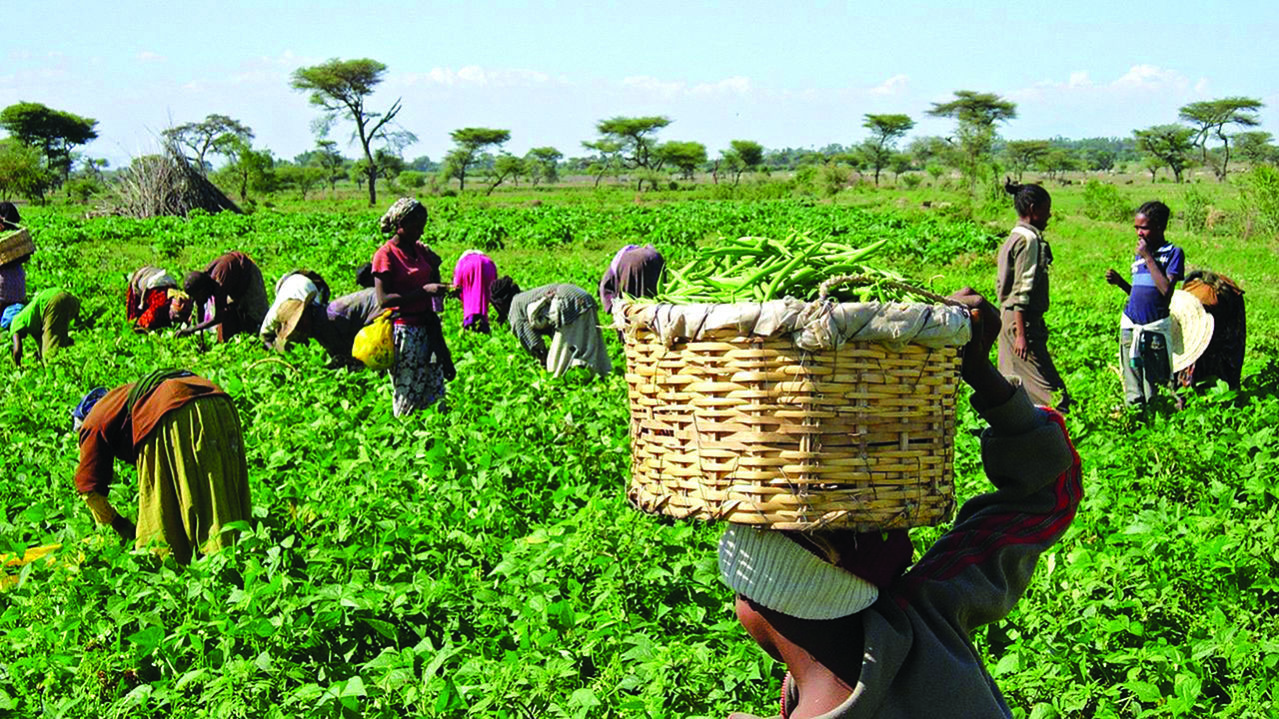
The Oyo State Government has commenced the training of 880 farmers and agricultural extension officers across the state on Climate-Smart Agriculture.
The training is part of efforts to boost food production, strengthen resilience to climate change and cut post-harvest losses.
According to a statement issued on Thursday in Ibadan by the Commissioner for Information and Civic Orientation, Mr Dotun Oyelade, the three-day training began on Aug. 26 in Oyo Town.
Oyelade stated that participants at the training were drawn from the various geopolitical zones of the state.
“The programme is being implemented under the 2025 Business Enabling Reform Action Plan (BERAP), through the State Action on Business Enabling Reforms (SABER).
“SABER seeks to improve the ease of doing business and create more business opportunities in Oyo State,” the commissioner said.
Oyelade also quoted the Commissioner for Agriculture and Rural Development, Mr Olasunkanmi Olaleye, as saying Climate-Smart Agriculture is critical to the future of food production, the economy and society.
“With the global population projected to approach 10 billion by 2050, there is an urgent need to produce more food with fewer resources.
“Traditional farming methods alone may not be sufficient to meet the increasing demand for food,” Olaleye said.
He further explained that Climate-Smart Agriculture involves the application of modern technologies, innovation and scientific knowledge to improve efficiency, productivity and sustainability while protecting the environment.
Olaleye added that smart practices would enable farmers to apply fertilisers and pesticides more efficiently, reduce waste and production costs, increase profitability and minimise environmental pollution.
The commissioner called for continuous investment in rural infrastructure, supportive policies, access to digital technology, agricultural education and financial support for smallholder farmers.
He also said the state government would ensure farmers are equipped with the knowledge and tools required for the transformation.
Olaleye urged participants to apply the knowledge gained to improve production and extension services across the state.
