


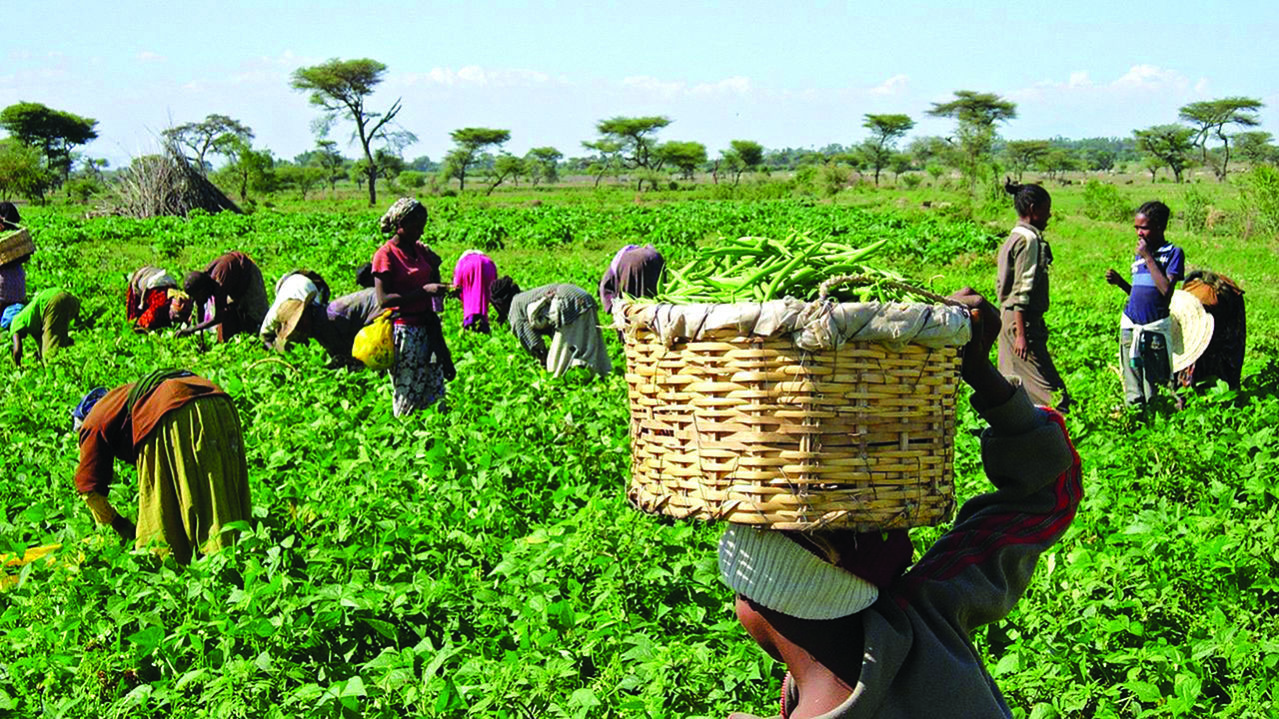
The Kaduna Agricultural Development Agency (KADA) says it has deployed climate-smart technologies, improved seeds and farm inputs to boost productivity among farmers across the state.
The Director, Agricultural Services, KADA, Usman Mohammed, disclosed this on Wednesday at a quarterly sector coordination meeting under the Policy and Agricultural Systems Strengthening (PASS) project in Kaduna.
It was reported that PASS is supported by the Alliance for a Green Revolution in Africa (AGRA), with technical assistance from Synergos.
Synergos is a global organisation that advances bridging leadership and builds trust and collaboration to solve complex problems.
Mohammed said the interventions were designed to expose farmers to practical technologies capable of improving yields, managing pests and strengthening climate resilience.
“We are taking technologies to farmers through demonstration plots and practical training, so they can see what works under their own conditions,” he said.
He said KADA, in partnership with the East-West Seed Knowledge Transfer Programme, established a vegetable production learning centre in the Maigana Zone area of the state.
The centre, he said, covered Soba, Zaria, Ikara, Sabon Gari, Kudan, Makarfi and Giwa Local Government Areas, targeting 500 farmers, including 30 per cent women.
Mohammed said the farmers were receiving training on improved vegetable production technologies and good agronomic practices.
He said KADA, in partnership with Seed Co., established 10 demonstration trials across the state to test climate-smart hybrid seed varieties.
“The agency also distributed 800 micro-trial packs to assess the adaptability of the varieties under local conditions,” he said.
The director further explained that the trials would give farmers access to evidence-based options for improving production.
“Our objective is to ensure that farmers have access to technologies that can deliver better yields, while responding to the changing climate,” he said.
He said that under the KADA-Farmatrix Farm for the Future Initiative, 400 farmers in Soba and Ikara cultivated 0.25 hectares each of maize or soybean.
“The farmers received improved seeds, herbicides and fertilisers, alongside market linkages, warehouse access and grain-repayment input financing,” Mohammed said.
Mohammed said the agency also conducted three trials with Contec Global Agro Ltd. in Lere and Jaba Local Government Areas to assess the performance of biofertilisers and biopesticides among maize and ginger farmers.
He said another trial was established in Dan Lawal community, Ikara, to assess Maghamani Nano Liquid Urea Fertiliser for foliar application.
The director said KADA later held a validation workshop to review field performance, trial results and farmers’ observations.
“The results from these trials will help us identify technologies that can improve crop performance, nutrient utilisation and farmers’ productivity,” he said.
Mohammed said the agency would continue to collaborate with private sector operators, development partners and farmers to accelerate technology adoption in agriculture across the state.
