

• Home
  • Agric
  • Sci & Tech
  • Health
  • Environment
  • Hausa News
  • More
    • Business/Banking & Finance
    • POLITICS
    • Entertainments & Sports
    • International
    • Investigation
    • Law & Human Rights
    • Africa
    • ACCOUNTABILITY/CORRUPTION
    • Hassan Gimba
    • Column
    • Prof. Jibrin Ibrahim
    • Prof. M.K. Othman
    • Defense/Security
    • Education
    • Energy/Electricity
    • Entertainment/Arts & Sports
    • Society and Lifestyle
    • Food & Agriculture
    • Health & Healthy Living
    • International News
    • Interviews
    • Investigation/Fact-Check
    • LAW & HUMAN RIGHTS
    • Oil & Gas/Mineral Resources
    • PRESS FREEDOM/JOURNALISM/PR
    • General News
    • Presidency
  • About Us
    • Contact Us
    • Board Of Advisory
    • Privacy Policy
    • Ethics Policy
    • Teamwork And Collaboration Policy
    • Fact-Checking Policy
    • Advertising
  • Media OutReach Newswire
    • Wire News
  • The Stories
Facebook Twitter Instagram
Trending
  • Farmers push for better pineapple value-chain development
  • Lagos consumers switch to cheaper food options amid rising prices
  • IHVN, partners launch Lassa fever research to support vaccine development in Bauchi
  • FG boosts Kano dam projects for food security
  • Kogi distributes farm inputs, tricycles to 572 farmers
  • Senate rejects motion to investigate allocation of N1.3bn to controversial PFIPC
  • Standard ₦100 banknote remains legal tender, CBN clarifies
  • Akara: Africa’s bean cake driving nutrition and trade – Fakunle Aremu
Facebook Twitter Instagram YouTube
AsheNewsAsheNews
  • Home
  • Agric

    Farmers push for better pineapple value-chain development

    July 8, 2026

    Lagos consumers switch to cheaper food options amid rising prices

    July 8, 2026

    FG boosts Kano dam projects for food security

    July 8, 2026

    Kogi distributes farm inputs, tricycles to 572 farmers

    July 8, 2026

    High tomato prices blamed on low harvests, rising costs

    July 8, 2026
  • Sci & Tech

    IHVN, partners launch Lassa fever research to support vaccine development in Bauchi

    July 8, 2026

    Meta rolls out first in-house AI image generator across WhatsApp, Instagram, Facebook

    July 8, 2026

    Nigeria begins enforcement of new identity law, phases out physical ID cards

    July 7, 2026

    Czech ambassador calls for investment in Nigeria’s youth innovation

    July 6, 2026

    China’s smart pet care market booms with AI innovations

    July 6, 2026
  • Health

    Akara: Africa’s bean cake driving nutrition and trade – Fakunle Aremu

    July 8, 2026

    UN human rights council adopts first resolution on neglected tropical diseases

    July 8, 2026

    Malaria consortium launches 2026 SMC campaign in Plateau

    July 8, 2026

    Kano tops Nigeria in BHCPF enrolment

    July 8, 2026

    Nigeria pledges stronger collaboration on maternal, child health

    July 8, 2026
  • Environment

    NAMA urges FG to protect local auto industry

    July 8, 2026

    COREN unveils new strategy to boost engineering regulation

    July 8, 2026

    NCAA warns against reducing Its revenue share

    July 8, 2026

    NiMet issues flood alert for Sokoto, 25 other states [SEE LIST]

    July 7, 2026

    IPI Nigeria secures release of journalist from police custody

    July 7, 2026
  • Hausa News

    UNA signs MoU to launch air Bissau in Guinea-Bissau

    June 15, 2026

    Otti plans 250-room 5-star hotel in Umuahia

    April 11, 2026

    Anti-quackery task force seals 4 fake hospitals in Rivers

    August 29, 2025

    [BIDIYO] Yadda na lashe gasa ta duniya a fannin Ingilishi – Rukayya ‘yar shekara 17

    August 6, 2025

    A Saka Baki, A Sasanta Saɓani Tsakanin ‘Yanjarida Da Liman, Daga Muhammad Sajo

    May 21, 2025
  • More
    1. Business/Banking & Finance
    2. POLITICS
    3. Entertainments & Sports
    4. International
    5. Investigation
    6. Law & Human Rights
    7. Africa
    8. ACCOUNTABILITY/CORRUPTION
    9. Hassan Gimba
    10. Column
    11. Prof. Jibrin Ibrahim
    12. Prof. M.K. Othman
    13. Defense/Security
    14. Education
    15. Energy/Electricity
    16. Entertainment/Arts & Sports
    17. Society and Lifestyle
    18. Food & Agriculture
    19. Health & Healthy Living
    20. International News
    21. Interviews
    22. Investigation/Fact-Check
    23. LAW & HUMAN RIGHTS
    24. Oil & Gas/Mineral Resources
    25. PRESS FREEDOM/JOURNALISM/PR
    26. General News
    27. Presidency
    Featured
    Recent

    Farmers push for better pineapple value-chain development

    July 8, 2026

    Lagos consumers switch to cheaper food options amid rising prices

    July 8, 2026

    IHVN, partners launch Lassa fever research to support vaccine development in Bauchi

    July 8, 2026
  • About Us
    1. Contact Us
    2. Board Of Advisory
    3. Privacy Policy
    4. Ethics Policy
    5. Teamwork And Collaboration Policy
    6. Fact-Checking Policy
    7. Advertising
    Featured
    Recent

    Farmers push for better pineapple value-chain development

    July 8, 2026

    Lagos consumers switch to cheaper food options amid rising prices

    July 8, 2026

    IHVN, partners launch Lassa fever research to support vaccine development in Bauchi

    July 8, 2026
  • Media OutReach Newswire
    • Wire News
  • The Stories
AsheNewsAsheNews
Home»Food & Agriculture»GMOs, Seed System, and Food Security Question in Nigeria [I], By Prof. MK Othman
Food & Agriculture

GMOs, Seed System, and Food Security Question in Nigeria [I], By Prof. MK Othman

EditorBy EditorSeptember 1, 2025Updated:September 7, 2025No Comments6 Mins Read
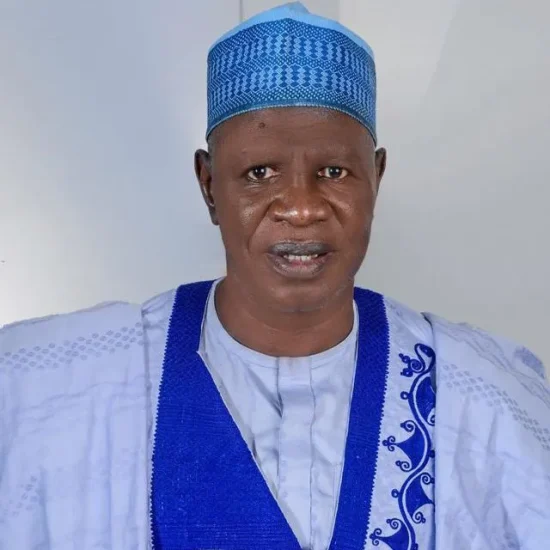
Nigeria - Prof. MK Othman
Prof. MK Othman
Share
Facebook Twitter LinkedIn Pinterest Email

I have received many requests for information on GMO seeds and their safety, and I have watched several video clips that criticize GMOs with serious accusations. I decided to update my previous articles on GMOs and food security. Over the past seven years, I have written multiple articles on this subject, and this will be the fifth in a series about GMOs, covering their origins, threats, biosafety, and the launch of Tela maize and Pod Bora cowpea, the first GMOs in Nigeria. The goal of this article is not to promote or discredit GMOs but to present facts about the Nigerian seed system, including GMOs, challenges, and the way forward. What is GMO?

A Genetically Modified Organism is a byproduct of biotechnology. In medicine, biotechnology has existed for many centuries as a source of innovation. Hitherto, biotechnology was a non-issue or, like any other technological breakthrough, until it widened its scope to include the latest globally controversial product: a genetically modified organism, GMO, or transgenic organism. This recent status has brought biotechnology to the forefront of contemporary limelight, accompanied by hype and sensationalism, and elevated it to a global footing on a multilateral agenda. The first stage of biotechnology is breeding crops or animals. Traditionally, breeding plants and animals aims to tailor the plant or animal for a particular character or trait improvement. For example, a new crop variety might be bred for drought tolerance or disease resistance.

Traditional breeding involves using germplasm from a pool of ancestors with desirable traits of interest and crossing them to produce progeny that carry the heritability of both parents and exhibit favorable traits from both. Since the progeny carries half of the desired and undesired hereditary characteristics from the parents, they will be passed on. It takes several breeding cycles (backcrossing) to eliminate the undesired traits and build on the desired traits. This certainly takes time. The final new plant variety or breed of animal, after several years of selection, will have the desired characteristics.

Thanks to Genetic engineering, which offers the means to breed crops with sexual incompatibility barriers. It also enables the transfer of genes between entirely unrelated organisms, such as bacteria and plants. This cutting–edge technology allows scientists to silence genes in viruses, bacteria, or pests that attack plants or animals, thereby retarding growth and productivity or even ultimately killing such organisms. 

While this incredible innovation can advance the cause of human progress, it can potentially have adverse effects on humanity, prompting concern among people. Those manipulating a gene from one organism to another can also introduce a harmful gene for ulterior motives. Nothing stops an insane person from using this novel technology as biological warfare to wipe out certain people.  The world must protect itself from this murderous insanity, not by shying away from using the technology, but by adopting a foolproof strategy for the safe utilization of the technology. In line with this thinking, a biosafety international agreement called the “Cartagena Protocol” was signed by 173 United Nations member countries to address the safe transfer, handling, and use of Genetically Modified Organisms (GMOs) and their products.  Thus, all GMO products in countries with a Biosafety law go through a series of stringent food toxicity and environmental safety tests that include assessment of homology to known allergens and toxins of the target genes, protein digestibility, acute oral gavage study toxicity (in mice), compositional analysis for unintended effects on carbohydrate, protein, and minerals, gene flow studies, and impact on non-target insects, etc., before they can be used commercially for food or feed.

Safety was the main reason for adopting the Cartagena Protocol. Nigeria, along with other countries that signed the protocol, was advised to implement it domestically to ensure the protection of its citizens. The government has a clear and unwavering duty to safeguard people from food poisoning, contamination, and adulteration. 

Food must be protected because it could be used as a biological weapon. A biological weapon is more deadly than a nuclear one due to its deception, slow damage, and ability to spread from localized outbreaks to global pandemics, as demonstrated by the deadly COVID-19 in 2020. Based on the fear of biological warfare, many countries are oversensitive to the importation of biological materials into their countries. Such countries implement stringent measures and conduct thorough scrutiny of both processed and unprocessed foods before they are imported. I recalled my unpleasant encounter with security personnel when I accidentally brought a piece of kilishi (dry meat) onto the plane that I couldn’t finish and then declared it at the security desk. It took three hours of questioning and scanning before I was allowed to go after the kilishi I bought at Shagalinku Restaurant in Abuja on the day I traveled was confiscated.    

It is against this background that the question of the safety of GMO seeds released in Nigeria is posed, as the world is divided into two camps: those who are pro-GMOs and those who are against them.  More than 30 countries have comprehensive bans on GMOs, including members of the European Union and African countries such as France, Germany, Austria, Italy, Algeria, Madagascar, and Zimbabwe. However, the banning or strict regulation of genetically modified organisms (GMOs) is a complex issue driven by a combination of scientific precaution, economic interests, political factors, and public sentiment. It is important to recognize that most major international scientific organizations, including the WHO, FAO, and the U.S. National Academy of Sciences, have concluded that currently available GM foods are just as safe to eat as their conventional counterparts. They have found no validated evidence indicating that GMOs pose unique health risks.

However, the debate persists over environmental impacts and socio-economic issues, which are more about management, regulation, and the chosen model of agriculture than about absolute safety. While the controversy over GMOs continues, in early 2019, Nigeria’s Federal Government approved the commercial release of the pod borer-resistant PBR Cowpea. Four years after the PBR Cowpea was introduced, Tela maize was also released, followed by GMO cotton. Are the GMOs released in Nigeria safe for consumption? How is the Nigerian seed system performing? What are the challenges faced by the seed system, and how can we ensure food security? To be continued next week. 

Biosafety Food security GMO Nigeria seed system
Share. Facebook Twitter Pinterest LinkedIn WhatsApp Reddit Tumblr Email
Editor
  • Website

Related Posts

Farmers push for better pineapple value-chain development

July 8, 2026

Lagos consumers switch to cheaper food options amid rising prices

July 8, 2026

FG boosts Kano dam projects for food security

July 8, 2026

Leave A Reply Cancel Reply

Farmers push for better pineapple value-chain development

July 8, 2026

Lagos consumers switch to cheaper food options amid rising prices

July 8, 2026

IHVN, partners launch Lassa fever research to support vaccine development in Bauchi

July 8, 2026

FG boosts Kano dam projects for food security

July 8, 2026
About Us
About Us

ASHENEWS (AsheNewsDaily.com), published by PenPlus Online Media Publishers, is an independent online newspaper. We report development news, especially on Agriculture, Science, Health and Environment as they affect the under-reported rural and urban poor.

We also conduct investigations, especially in the areas of ASHE, as well as other general interests, including corruption, human rights, illicit financial flows, and politics.

Contact Info:
  • 1st floor, Dogon Daji House, No. 5, Maiduguri Road, Sokoto
  • +234(0)7031140009
  • ashenewsdaily@gmail.com
Facebook Twitter Instagram Pinterest
© 2026 All Rights Reserved. ASHENEWS Daily Designed & Managed By DeedsTech

Type above and press Enter to search. Press Esc to cancel.