


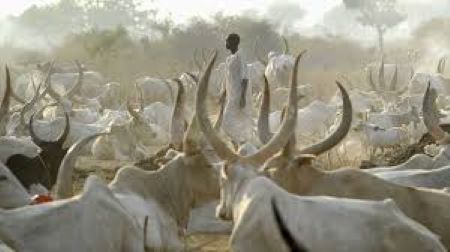
The Cross River Government says it is transforming the livestock sector into a commercially driven economy to create jobs, attract private investment and strengthen food security.
Mr Liyel Imoukhuede, Special Adviser to Gov. Bassey Otu on Livestock Development, disclosed this in an interview with reporters in Calabar on Thursday.
Imoukhuede said the administration was moving livestock production beyond informal animal rearing to an integrated value chain covering production, processing, logistics, marketing and investment.
“We came into office with a clear understanding that Cross River’s livestock potential is enormous, but potential alone does not create jobs, income or food security.
“We are aware that it must be organised, financed, commercialised and connected to markets,” he said.
He said the blueprint for the sector would be implemented in phases, with the first phase focusing on livestock production systems, infrastructure and market gaps assessment.
According to him, the government is engaging farmers, producers, investors, academia, cooperatives, development partners and government institutions as part of the process.
He added that the state government was also documenting livestock assets, value chains and challenges facing farmers to establish baseline data for planning and investment.
Imoukhuede said his office had commenced work on the Cross River Livestock Development Roadmap 2027–2033.
The governor’s aide described the roadmap as a seven-year framework covering breeding, feed production, animal production, processing, logistics, marketing and export.
He further said the roadmap was being developed through stakeholder consultations to ensure its policies reflected realities across the sector.
The special adviser said his first 100 days in office produced a 10-point intervention framework, including a statewide livestock assessment, development of the seven-year roadmap, stakeholder engagement and stronger collaboration with the Federal Government.
He also listed participation in the Livestock Productivity and Resilience Support Project (L-PRES), review of strategic livestock assets, development of an investment pipeline, private-sector mobilisation and repositioning of livestock as a major economic sector.
Imoukhuede said the assets being assessed included Calachika, Songhai and the Obudu cattle and dairy corridor.
He added that investment opportunities were also being mapped in cattle, dairy, poultry, feed production, meat processing, cold-chain infrastructure, honey, breeding, livestock markets and agro-industrial clusters.
The official said the government was developing frameworks for public-private partnerships, joint ventures, concessions and other commercial arrangements to attract private capital into the sector.
He said the subsequent phase would focus on translating the foundation work into bankable projects, investment deals, partnerships and measurable production targets.
According to him, priority infrastructure will include feed mills, modern abattoirs, aggregation markets, cold-chain facilities and transportation networks.
“We want to see more animals produced, more milk and meat processed, more poultry enterprises established, and more young people and women entering the sector.
“We also want more private capital coming into Cross River and more value created within the state,” he said.
Imoukhuede said the focus on youths and women was intended to expand participation beyond traditional livestock rearing and backyard poultry.
He noted that investment in processing and cold-chain facilities would help producers preserve their products and reduce losses associated with the sale of raw livestock products.
According to him, livestock had largely been treated as a secondary economic activity in Cross River despite rising demand for meat, milk, eggs and other livestock products.
He said the administration was therefore treating the sector as a complete economic ecosystem involving production, processing, logistics, marketing and investment.
“Our ambition is simple: to build a livestock economy that works for the farmer, creates opportunities for our people, and makes Cross River a destination for livestock investment,” he said.
Imoukhuede said the sector could complement the state’s traditional economic activities, including tourism, cocoa and timber, while contributing to nutrition, rural incomes and industrial growth.
He added that progress would be measured by improved opportunities for farmers, increased private investment, stronger value chains and sustainable livelihoods.
