


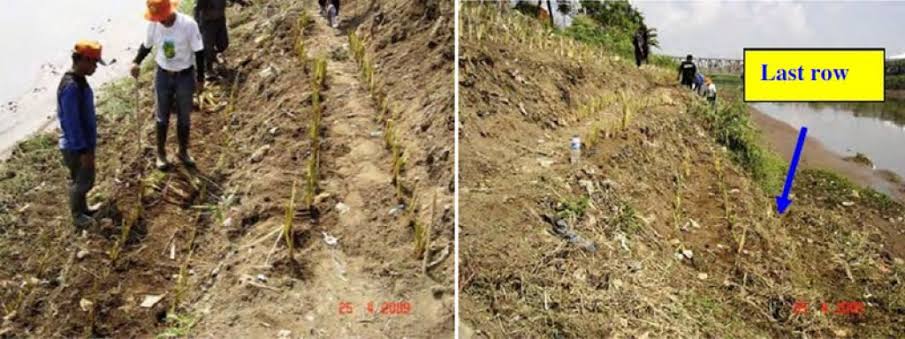
The Alimat Care Foundation (ACF) has introduced vetiver grass as a nature-based solution to combat soil erosion in Gella community, Mubi South Local Government Area of Adamawa.
The Executive Director of ACF, Mr. Ibrahim Bello, disclosed this on Tuesday at a knowledge management and project close-out workshop held in Mubi South.
Bello stated that vetiver grass would also help restore degraded land in the area.
He explained that the project, titled “Indigenous Erosion Control Through Climate-Smart Agricultural Practices,” aims to address soil erosion through sustainable, nature-based solutions in vulnerable communities.
According to him, the initiative is implemented under the United Nations Development Programme’s Global Environment Facility Small Grants Programme (UNDP-GEF SGP) to promote environmental sustainability and climate resilience.
He noted that vetiver grass has emerged as one of the most effective nature-based solutions for soil conservation, water management, and ecosystem restoration in erosion-prone communities.
Bello explained that vetiver develops deep vertical roots reaching three to four meters under favorable conditions, helping bind soil particles, stabilize slopes, and reduce land degradation.
“Unlike many grasses that spread horizontally, vetiver forms dense root networks that reduce the risk of soil erosion,” he said.
He added that vetiver is particularly effective in controlling gully erosion, landslides, and runoff-induced land degradation.
“It is also resilient to drought, flooding, and varying soil conditions, making it a climate-smart and cost-effective erosion control option,” Bello emphasized.
The executive director highlighted that soil erosion remains one of Nigeria’s most persistent environmental challenges, threatening agriculture, ecosystems, and the livelihoods of vulnerable communities.
He explained that increased rainfall intensity and extreme weather events linked to climate change have heightened the need for sustainable, affordable, and locally adaptable erosion control measures.
According to Bello, the foundation introduced vetiver grass because its extensive root system stabilizes soil, reduces surface runoff, and effectively controls erosion in vulnerable landscapes.
He attributed the worsening soil erosion in Gella to erratic rainfall, deforestation, overgrazing, and unsustainable land-use practices, which have exacerbated environmental degradation.
Bello said that land degradation has reduced soil fertility and available farmland, affecting agricultural productivity and the livelihoods of local farmers.
“This prompted the foundation to establish a community nursery and mobilize residents to cultivate and plant vetiver grass across erosion-prone sites,” he explained.
He concluded that the initiative aims to strengthen community resilience while promoting sustainable land management and ecosystem restoration.
