


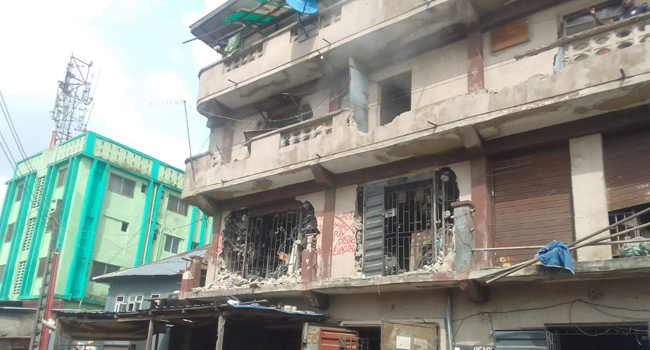
The Lagos State Government is worried about the low number of building permit applications in the state. Every year, the state needs about 40,000 to 45,000 permits, but only 12,000 were approved in 2024. This means there’s a big gap of around 22,000 permits.
At a press briefing in Alausa, Ikeja, the Commissioner for Physical Planning and Urban Development, Dr. Olumide Oluyinka, shared this information. He said the low number of permits is a serious issue because Lagos is growing fast in both population and construction.
Dr. Oluyinka warned that buildings without proper permits could be demolished. These structures are not legally approved and pose risks for future planning.
To fix this problem, the government has started a week-long program to talk to the public and raise awareness. The goal is to educate people, especially those in rural areas, about the importance of getting a building permit before starting construction.
The program, which started earlier in the week and ends on Friday, September 26, 2025, includes discussions with professionals like town planners, architects, engineers, builders, surveyors, and real estate developers.
Dr. Oluyinka said that many people, including market women and those living in remote areas, don’t know that building permits are required by law. This program is meant to close that knowledge gap and encourage people to follow the rules.
He compared building permits to birth certificates. Just like every child needs a birth certificate, every building should have a permit. This makes the building legal, properly documented, and easier to manage in the future.
The commissioner also explained that permits help with planning roads and other public infrastructure. They also prove ownership and can be used as collateral when applying for bank loans.
He added that permits help the government track how much land has been developed and make sure that growth happens in an organised way. Buildings without permits might be left out of future development projects, like road expansions.
The commissioner said the awareness campaign would continue and even include school children. The aim is to teach the next generation the importance of following planning rules from an early age.
He ended by saying that while the government prefers education and cooperation, it will not hesitate to take action, including demolishing illegal buildings, if people don’t follow the law.
