


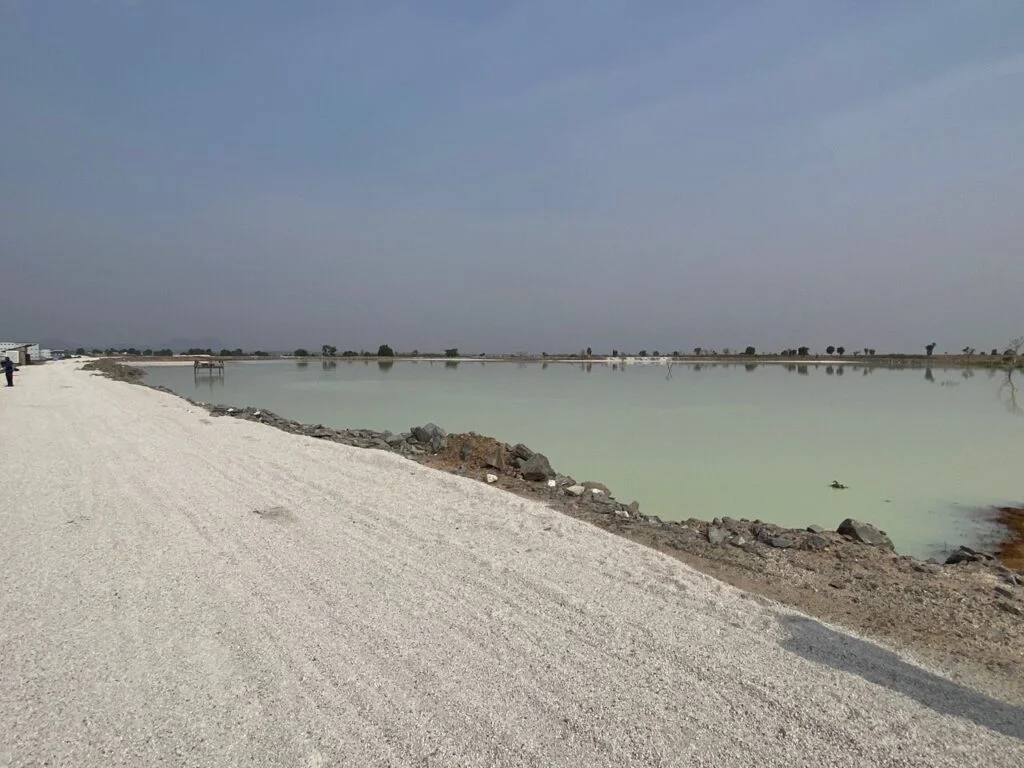
A cross-section of residents in KAMA community, Udege Development Area, Nasarawa Local Government Area, has raised serious concerns over alleged spillage from lithium mining operations affecting farmland, waterways, and the broader environment.
Lithium, a mineral-rich chemical essential for batteries in electric vehicles, smartphones, and renewable energy systems, holds significant economic value but can pose serious hazards if extraction and processing are poorly managed.
In interviews with reporters on Thursday, residents claimed that mining spillage had reduced agricultural yields and polluted local rivers, raising fears of long-term environmental damage and health risks.
They alleged that operations by Avatar New Energy Materials Co. Ltd. generate dust, wastewater, and chemical residues, creating uncertainty about air and water quality. Residents called for urgent Federal Government intervention to mitigate environmental risks.
Some noted that while lithium processing could benefit the national economy, unchecked contamination of soil and groundwater could create serious health hazards for nearby communities.
They urged the company to implement safeguards for community waterways and the environment, ensuring that lithium operations do not compromise residents’ safety or farmland viability.
Mohammed Amadu, a resident, said some people who previously bathed in the community river now experience feverish symptoms for up to two weeks after exposure, prompting many to avoid the river entirely.
Another resident, Ibrahim Suleiman, stated that signs of lithium contamination emerged in December 2025. Despite appeals to the Nasarawa State Government, no meaningful intervention has been made to address the pollution or protect community health.
An anonymous resident described vibrations from extraction as resembling landslides, while whitish substances from broken lithium ore have been observed floating in rivers and tributaries, raising fears of chemical contamination in water used for daily chores.
Civil society organization Corporate Accountability and Public Participation Africa (CAPPA) has called for stricter government regulation of industrial-scale lithium mining to safeguard residents’ health and prevent environmental hazards from unmanaged spillage.
CAPPA Executive Director Akinbode Oluwafemi warned that insufficient oversight of mining activities could lead to adverse effects on host communities, including water and soil contamination from indiscriminate disposal of lithium waste.
Environmental specialist Abang Johnson told reporters that lithium processing must be carefully managed to prevent airborne and wastewater pollution, which could contaminate soil, groundwater, and threaten kidney and thyroid health.
Johnson urged government intervention and public awareness campaigns to ensure residents living near lithium operations understand safe practices and how to mitigate potential chemical exposure risks.
Responding to the allegations, PR Manager Benny Modey of Avatar New Energy Materials denied the claims, calling them false and unfounded.
Modey asserted that the company’s Environmental Impact Assessments and routine regulatory inspections confirm full compliance with safety standards. He suggested that some individuals might be spreading propaganda to tarnish the company’s reputation and called for substantiated evidence from authorities before such allegations are made.
The dispute highlights growing tensions between industrial mining activities and host communities in Nasarawa State, where lithium’s strategic importance for the global energy transition is increasingly clashing with local concerns over environmental protection, public health, and sustainable land use.
