


Residents across FCT communities say persistent fuel price hikes have increased transportation, food and living costs, worsening economic hardship for households and businesses.
The residents spoke in interviews with reporters on Monday in Dei-Dei, Kubwa and Dutse.
They said the increase in petrol prices had pushed up transport fares, food prices and the cost of other essential goods and services.
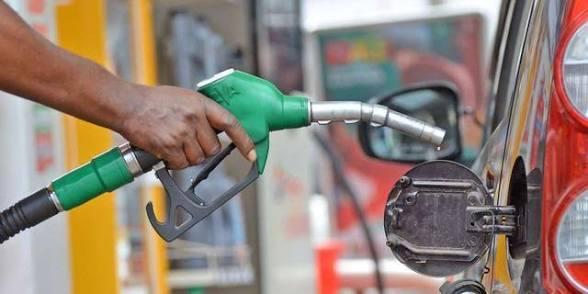
Checks by reporters indicate that petrol now sells between N1,450 and N1,500 per litre at many filling stations in Abuja, compared with about N1,200 to N1,280 per litre before the latest increases.
A commercial driver in Dei-Dei, Mr Sunny Peter, attributed the rise in transport fares to the increasing cost of petrol.
According to him, drivers have no option but to adjust fares because fuel now accounts for a greater share of their operating costs.
“Fare from Dei-Dei to Berger, which previously ranged between N900 and N1,000, now costs about N1,200 to N1,500, depending on traffic and demand,” he said.
Peter added that passengers commuting from Kubwa to Wuse now pay between N1,000 and N1,200, against N700 and N800 previously.
“We understand the challenges passengers face, but we also have to survive. Fuel is expensive, and maintaining our vehicles is becoming more difficult,” he said.
A civil servant in Kubwa, Mrs Adaeze Okoli, said the rising transport fares had made commuting to work increasingly difficult.
According to her, a significant portion of her monthly salary is now spent on transportation, leaving little for feeding, rent and other necessities.
“The cost of living keeps rising while our income remains the same. Every fuel increase affects everything we buy,” she said.
Another resident, Mr Abdullahi Sani, said commuting to work had become more challenging due to the steady rise in transport costs.
“My salary has remained the same, but transport costs continue to rise. I now spend far more than I did a few months ago just getting to work.
“Many families now struggle to meet their basic needs because a larger share of their income is spent on transportation and household expenses,” he said.
In Dutse, Mrs Esther Okeke, a mother of six, said the fuel price increase had affected virtually every aspect of family life.
“Food prices, school fees, transportation and electricity costs have all increased. Managing the family budget has become more difficult,” she said.
She appealed to the government to introduce measures that would cushion the impact of fuel price increases on transport operators and commuters.
Another resident, Mr Muhammed Lawal, said many families were finding it increasingly difficult to meet their daily needs.
He urged the government to improve public transportation and stabilise fuel prices to reduce hardship on residents.
Some respondents also called for the introduction of affordable mass transit buses on major routes within the FCT to ease the burden on commuters.
They expressed hope that measures to reduce transportation costs would also help lower the prices of food and other essential commodities.
It will be recalled that the Federal Government, in August, inaugurated 100 Renewed Hope Mass Transit electric buses for civil servants.
The buses are meant to provide safer, more affordable and reliable transportation for federal civil servants nationwide.
Former Head of the Civil Service of the Federation, Mrs Didi Walson-Jack, at the commissioning of the buses in Abuja, said the initiative represented a practical demonstration of the Federal Government’s commitment to the welfare and well-being of civil servants.
She said 37 of the 100 electric buses had been delivered as the first instalment of the project, while the remaining buses are expected to be deployed as planned.
It is hoped that the deployment of these buses will ease transportation costs for workers.
