


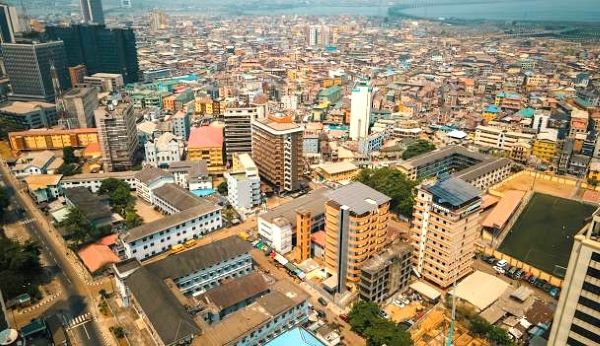
The Media Office of the De Renaissance Patriots Foundation has called for inclusive urban planning in Lagos State, cautioning that ongoing market redevelopment projects could displace traditional traders and erode the city’s historic mercantile identity.
In a press statement titled “Lagos Markets: Between Heritage and Modernity,” issued on Sunday, February 22, 2026, the group traced Lagos’ commercial evolution to its early barter system, long before the introduction of structured currency. It noted that commerce in the city grew organically from open squares where fishermen, farmers and merchants exchanged goods, laying the groundwork for what later became a vibrant trading hub.
“Lagos did not begin with glass towers and gated plazas. It began in open squares,” the statement said.
The foundation highlighted historic markets including Oja Ereko, Oke Arin Market, Ebute Ero Market, Ita-Balogun Market, Jankara Market, Pelewura Market and Sandgrouse Market as longstanding centres of commerce and culture.
According to the group, these markets fostered entrepreneurship, preserved traditions and enabled families to build generational wealth.
It listed prominent Lagos families and figures whose roots were linked to the city’s trading tradition, including Elias, Shitta-Bey, Issa Williams, Alli-Balogun, Animashaun Gbajabiamila, Herbert Macaulay, H. O. Davies and Candido Da Rocha, among others.
Describing the markets as “Lagos’ first economic universities,” the statement noted that they required modest capital and served as accessible entry points into commerce for low-income traders.
While acknowledging the need for improved sanitation, safety and infrastructure, the foundation expressed concern that redevelopment efforts across Lagos Island, Mainland, Badagry, Ikorodu and Epe have resulted in the demolition of open markets and their replacement with multi-storey complexes charging rents beyond the reach of traditional traders.
It argued that many of the new structures remain partially unoccupied due to high costs, while displaced traders resort to informal street trading to sustain their livelihoods.
“Markets are not shopping malls. They are social ecosystems sustained by affordability, accessibility and proximity to the people,” the group said, warning that redevelopment that excludes primary users risks fracturing the economic chain.
The foundation urged authorities to adopt phased redevelopment plans that guarantee traders’ return at affordable rates, incorporate open-air sections for low-capital merchants, and ensure consultations before demolition exercises.
It maintained that Lagos’ prosperity was built from grassroots commerce and called for development strategies that balance modernization with preservation.
“Modernize, yes — but modernize with memory,” the statement concluded.
