


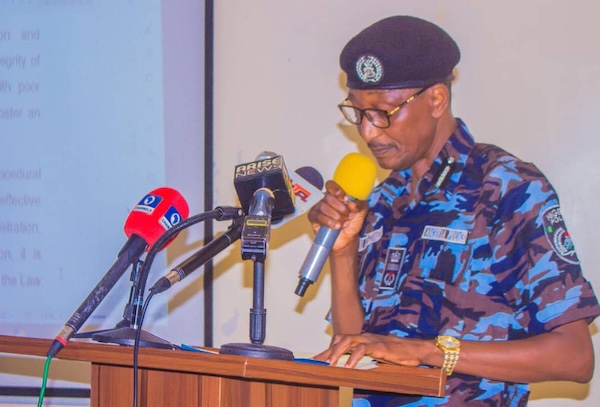
A retired Deputy Inspector-General of Police, Mohammed Usaini Gumel, has urged Nigerians to support the establishment of state police, arguing that fears rooted in the country’s past should not prevent reforms needed to address today’s security challenges.
In an article titled “State Police: Why Nigeria Should Not Be Held Back by Fear,” Gumel, who is also an expert in community policing, acknowledged concerns that decentralised policing could be abused by political leaders or undermine national unity. He, however, maintained that Nigeria’s democratic institutions have become significantly stronger than they were when regional police systems were abolished decades ago.
According to him, the country’s judiciary, legislature, media, civil society and public accountability mechanisms have all evolved, creating a more suitable environment for a well-regulated state policing system.
He argued that the mistakes associated with the former regional police structure should serve as lessons for designing stronger safeguards rather than as reasons to reject reform outright.
Gumel stressed that an effective state police framework should include clear constitutional provisions defining the powers and responsibilities of federal and state police services, while ensuring strong oversight to prevent abuse.
He also recommended independent police service commissions, transparent recruitment processes, professional training, judicial oversight, legislative accountability and guaranteed funding as essential components of any new policing arrangement.
The former DIG noted that security challenges such as banditry, kidnapping and communal violence have exposed the limitations of the country’s highly centralised policing structure, adding that locally accountable police formations would be better positioned to respond swiftly to security threats.
While acknowledging that no policing model is perfect, Gumel insisted that the success of state police would depend on the strength of institutions, professionalism and commitment to the rule of law.
He urged policymakers to focus on building a system with effective checks and balances rather than allowing fears of potential abuse to stall reforms, arguing that properly implemented state policing could significantly improve public safety and strengthen Nigeria’s internal security architecture.
