


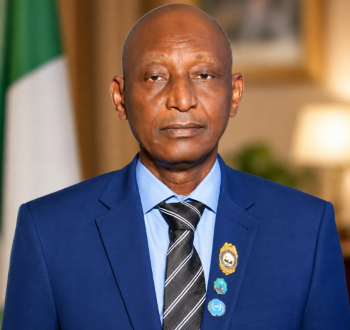
As Nigeria continues to grapple with terrorism, banditry, kidnapping and other forms of insecurity, the need for stronger collaboration between security agencies and citizens has become increasingly urgent. In this interview, the National Secretary of Project 774 Network, retired Deputy Inspector-General of Police (DIG) Mohammed Usaini Gumel, speaks on the need to expand Nigeria’s security conversation beyond Abuja and place communities at the centre of efforts to tackle insecurity.
Conducted against the backdrop of the National Citizens’ Stakeholders’ Engagement on Countering Terrorism and Insecurity, convened by Project 774 Network, with the theme: “Our Security, Our Duty: Citizens Standing with Our Troops to End Terrorism, Banditry and Kidnapping,” Gumel argues that sustainable security requires active participation from citizens, communities, traditional institutions, religious leaders, the private sector, civil society organisations and development partners. He also advocates stronger Local Government Security Councils, improved policing capacity, community-generated intelligence and a carefully regulated decentralised policing system, while positing that there is a link between insecurity and broader development challenges, including youth unemployment, drug abuse, poverty, inadequate educational opportunities and unresolved communal disputes.
ALSO READ Nigeria’s insecurity will be defeated in the 774 LGAs, not Abuja alone, by DIG M. U. Gumel (Rtd.)
Gumel explains why he believes the battle against insecurity will ultimately be won or lost at the grassroots, particularly across Nigeria’s 774 Local Government Areas. EXCERPTS:
Project 774 Network is convening a National Citizens’ Stakeholders’ Engagement on Countering Terrorism and Insecurity. Why is this initiative necessary at this time?
This engagement is necessary because, despite the tremendous sacrifices and achievements of our Armed Forces, the Nigeria Police Force, intelligence agencies, and other security institutions, insecurity remains one of Nigeria’s greatest national challenges. We believe the time has come to broaden the conversation beyond government alone and actively involve citizens, communities, traditional institutions, the private sector, civil society, and development partners. Security is everyone’s responsibility.
Your recent article argues that Nigeria’s insecurity can be defeated in the 774 Local Government Areas rather than in Abuja alone. What exactly do you mean?
ALSO READ State police bill bars governors from controlling commissions, guarantees direct funding
The point is quite straightforward. Abuja provides national leadership, policy direction, and coordination, but criminal activities occur within our communities. Terrorists, bandits, kidnappers, and other criminal elements recruit, hide, move, and operate within towns, villages, forests, border communities, and highways across the 774 Local Government Areas. If we truly want sustainable security, every Local Government Area must become an active security ecosystem where citizens, security agencies, traditional rulers, religious leaders, women, youth, and community organisations work together to identify threats early and prevent crime before it escalates.
Does this mean the current security architecture is inadequate?
I would rather say that our security architecture must continue to evolve. Today’s security threats are increasingly local, dynamic, and intelligence-driven. While our national security institutions remain indispensable, they need stronger community support and locally generated intelligence. National coordination must be complemented by community ownership of security.
What practical measures should the government prioritise?
First, every Local Government Area should develop a comprehensive security profile identifying its peculiar threats, vulnerable communities, criminal routes, illegal arms circulation, drug distribution networks, and emerging risks. Secondly, functional Local Government Security Councils should be established to bring together security agencies, traditional rulers, religious leaders, women, youth groups, farmers, herders, transport unions, and other credible stakeholders, and thirdly, Police Divisions must be strengthened with adequate personnel, logistics, mobility, communication equipment, and operational resources so they can respond effectively to emergencies.
You have consistently advocated decentralised policing. How does that fit into this conversation?
Nigeria’s size, diversity, and security realities require policing arrangements that are both nationally coordinated and locally responsive. A carefully regulated system in which Federal and State policing institutions operate under constitutional safeguards can improve operational effectiveness while maintaining professionalism, accountability, respect for human rights, and protection against political interference. The objective is to strengthen national security, not weaken it.
What role should communities themselves play?
Communities are the first line of defence. Neighbourhood watch groups, vigilante organisations, community development associations, and other local initiatives should operate within a clear legal and regulatory framework, with proper registration, training, vetting, and supervision. When communities trust security agencies and security agencies trust communities, intelligence improves significantly, and criminals find it much harder to operate.
Beyond security operations, what other factors must be addressed?
Security cannot be separated from development. Youth unemployment, drug abuse, poor educational opportunities, unresolved communal disputes, poverty, and inadequate public services create conditions that criminals exploit. We must therefore combine effective law enforcement with economic opportunities, education, infrastructure, and social development.
What should Nigerians expect from the National Citizens’ Stakeholders’ Engagement?
They should expect practical solutions, constructive dialogue, and actionable recommendations. The engagement will bring together government officials, security agencies, lawmakers, traditional and religious leaders, civil society organisations, academia, the organised private sector, youth and women groups, and development partners to strengthen collaboration in addressing insecurity. Our goal is to produce an Abuja Citizens’ Declaration and a Conference Communiqué containing practical recommendations for improving national security through stronger citizen participation and institutional collaboration.
Finally, what message would you like to leave with Nigerians?
My message is simple: security is not the responsibility of the government alone. Every citizen has a role to play. If we secure our communities, we secure our Local Government Areas. If we secure all 774 Local Government Areas, we secure Nigeria. The road to a safer Nigeria does not begin or end in Abuja. It begins in every ward, every village, every town, and every community. That is where trust is built, intelligence is generated, criminality is prevented, and lasting peace is sustained. Together, through responsible citizenship and collective action, we can build a safer, stronger, and more prosperous Nigeria.
