

• Home
  • Agric
  • Sci & Tech
  • Health
  • Environment
  • Hausa News
  • More
    • Business/Banking & Finance
    • Politics/Elections
    • Entertainments & Sports
    • International
    • Investigation
    • Law & Human Rights
    • Africa
    • ACCOUNTABILITY/CORRUPTION
    • Hassan Gimba
    • Column
    • Prof. Jibrin Ibrahim
    • Prof. M.K. Othman
    • Defense/Security
    • Education
    • Energy/Electricity
    • Entertainment/Arts & Sports
    • Society and Lifestyle
    • Food & Agriculture
    • Health & Healthy Living
    • International News
    • Interviews
    • Investigation/Fact-Check
    • Judiciary/Legislature/Law & Human Rights
    • Oil & Gas/Mineral Resources
    • Press Freedom/Media/PR/Journalism
    • General News
    • Presidency
  • About Us
    • Contact Us
    • Board Of Advisory
    • Privacy Policy
    • Ethics Policy
    • Teamwork And Collaboration Policy
    • Fact-Checking Policy
    • Advertising
  • Media OutReach Newswire
    • Wire News
  • The Stories
Facebook Twitter Instagram
Trending
  • Lagos cracks down on E-waste
  • Nigeria achieves 91% aviation safety rating
  • Nigeria must shift from reform to investment, NESG says
  • Naira holds steady at N1,582/€ as Euro weakens amid energy, growth pressures
  • Girls encouraged to lead in AI, digital economy
  • Experts call for boost in local snail production
  • FUTA MBBS programme secures MDCN accreditation, gets 100-student quota
  • West Africa advances lassa fever vaccine readiness
Facebook Twitter Instagram YouTube
AsheNewsAsheNews
  • Home
  • Agric

    Experts call for boost in local snail production

    April 23, 2026

    [EXPLAINER] Bottled water under the microscope: Why some brands stand out

    April 23, 2026

    Food prices remain elevated despite N7.65trn imports, FG interventions

    April 23, 2026

    Shettima inaugurates Kano grain facility

    April 23, 2026

    Lawmakers back post-harvest innovation

    April 23, 2026
  • Sci & Tech

    Girls encouraged to lead in AI, digital economy

    April 23, 2026

    RMRDC launches data-driven raw materials platform to boost investment, industrial growth

    April 21, 2026

    Apple names John Ternus as new CEO to lead $4trn tech giant

    April 21, 2026

    Tinubu appoints Fatima Zuntu as NBMA Director-General

    April 21, 2026

    LIFE-ND trains Abia workers in ICT, AI

    April 20, 2026
  • Health

    West Africa advances lassa fever vaccine readiness

    April 23, 2026

    ARD-KWASUTH begins 48-hour warning strike over assault on doctor

    April 23, 2026

    Nigeria strengthens response to SGBV

    April 23, 2026

    NMA suspends national president

    April 23, 2026

    Sightsavers trains health workers in sign language

    April 23, 2026
  • Environment

    Lagos cracks down on E-waste

    April 23, 2026

    Nigeria achieves 91% aviation safety rating

    April 23, 2026

    FG seeks $516m external financing for Sokoto–Badagry superhighway

    April 23, 2026

    NGE warns NBC over sanction threat

    April 22, 2026

    Don urges geographers to tackle forest crisis

    April 21, 2026
  • Hausa News

    Otti plans 250-room 5-star hotel in Umuahia

    April 11, 2026

    Anti-quackery task force seals 4 fake hospitals in Rivers

    August 29, 2025

    [BIDIYO] Yadda na lashe gasa ta duniya a fannin Ingilishi – Rukayya ‘yar shekara 17

    August 6, 2025

    A Saka Baki, A Sasanta Saɓani Tsakanin ‘Yanjarida Da Liman, Daga Muhammad Sajo

    May 21, 2025

    Dan majalisa ya raba kayan miliyoyi a Funtuwa da Dandume

    March 18, 2025
  • More
    1. Business/Banking & Finance
    2. Politics/Elections
    3. Entertainments & Sports
    4. International
    5. Investigation
    6. Law & Human Rights
    7. Africa
    8. ACCOUNTABILITY/CORRUPTION
    9. Hassan Gimba
    10. Column
    11. Prof. Jibrin Ibrahim
    12. Prof. M.K. Othman
    13. Defense/Security
    14. Education
    15. Energy/Electricity
    16. Entertainment/Arts & Sports
    17. Society and Lifestyle
    18. Food & Agriculture
    19. Health & Healthy Living
    20. International News
    21. Interviews
    22. Investigation/Fact-Check
    23. Judiciary/Legislature/Law & Human Rights
    24. Oil & Gas/Mineral Resources
    25. Press Freedom/Media/PR/Journalism
    26. General News
    27. Presidency
    Featured
    Recent

    Lagos cracks down on E-waste

    April 23, 2026

    Nigeria achieves 91% aviation safety rating

    April 23, 2026

    Nigeria must shift from reform to investment, NESG says

    April 23, 2026
  • About Us
    1. Contact Us
    2. Board Of Advisory
    3. Privacy Policy
    4. Ethics Policy
    5. Teamwork And Collaboration Policy
    6. Fact-Checking Policy
    7. Advertising
    Featured
    Recent

    Lagos cracks down on E-waste

    April 23, 2026

    Nigeria achieves 91% aviation safety rating

    April 23, 2026

    Nigeria must shift from reform to investment, NESG says

    April 23, 2026
  • Media OutReach Newswire
    • Wire News
  • The Stories
AsheNewsAsheNews
Home»Column»Prof. Jibrin Ibrahim»Solomon Arase and the Imperative of Police Reform in Nigeria, By Prof. Jibrin Ibrahim
Prof. Jibrin Ibrahim

Solomon Arase and the Imperative of Police Reform in Nigeria, By Prof. Jibrin Ibrahim

EditorBy EditorSeptember 5, 2025No Comments5 Mins Read
Prof. Jibrin Ibrahim
Share
Facebook Twitter LinkedIn Pinterest Email

Last week, Nigeria lost a remarkable progressive reformer, the former Inspector General of Police, Dr. Solomon Arase. He embodied what a Nigerian police officer should be—a visionary leader who dedicated his life to advancing the long-overdue reforms of the Nigeria Police Force.

Arase was deeply committed to promoting citizen-focused policing and embedding respect for human rights into the culture of the force. He pioneered the adoption of intelligence-led policing, a strategy designed to uphold the constitutional principle of presumption of innocence. Through this, he sought to humanise policing in Nigeria.

After his tenure as IGP, Arase continued to apply his expertise as Chairman of the Police Service Commission, where he championed further reforms and modernization. He worked closely with civil society and human rights groups, building bridges and constantly stressing that reforming the police is a shared responsibility. His central message was that the police must be transformed into a friend and protector of citizens—a task that remains unfinished.

I first met Dr. Arase at an Institute of Security Studies seminar in 2017, themed Unity in Diversity: Security and National Development. In his contribution, he lamented the absence of a comprehensive threat analysis to peaceful coexistence and called for proactive responses that would address threats before they overwhelmed the country.

He openly admitted that the Nigerian Police Force was dysfunctional and unfit for purpose. He recalled the extensive recommendations of the Danmadami Police Reform Committee, which the government accepted in its White Paper but never implemented.

Arase argued that the IGP’s role should focus on setting standards and ensuring quality control, while operational policing should be decentralised to the states. He highlighted a core problem: most of the operational budget was consumed at the IGP’s office, leaving little for state operations. Aware of this, state governors often step in with massive financial support just to keep minimal police functions running. This, he insisted, made the police structurally incapable of performing its core duties.

Over the past few decades, Nigeria has faced serious security challenges, from Boko Haram insurgents to secessionists, Niger Delta militants and bandit terrorists. In this context, Nigeria urgently needs a functional police force—and the starting point is tackling corruption within it.

The police are expected to prevent trouble before it escalates, closely monitoring developments within society and investigating criminal activities. However, their capacity for intelligence and investigation was severely weakened after parts of the investigation department were carved out to form the National Security Organisation and later the State Security Service. The unchecked operations of kidnappers on certain roads for years illustrate this glaring gap.

I also served on the Judicial Commission of Inquiry into the clash between the Nigerian Army and the Islamic Movement in Nigeria (IMN). We heard numerous complaints about the police’s helplessness and neglect in monitoring the group.

For instance, the Gyallesu community in Zaria submitted a memorandum detailing how the police consistently failed to arrest IMN members despite cases of murder, arson, and destruction of property. Instead, complainants were often told to defend themselves.

The police were fully aware of IMN’s excesses, including murders, but failed to act. They admitted that the group defied authority, ignored police invitations, and resisted arrest, yet took no steps to protect innocent citizens. They even avoided confronting IMN members during blatant violations such as road blockades or illegal occupation of public spaces. Inevitably, the army was called in to manage law-and-order situations that the police could not—or were not empowered—to handle.

The truth is that Nigeria has not been properly policed for decades, and the evidence is all around us. Both rural and urban areas are under constant siege from terrorists, criminals, kidnappers, and bandits. No one is safe—not even a presidential convoy, as shown during an attack under President Buhari. Now, as insecurity creeps into Abuja, members of the ruling elite are beginning to feel the vulnerability ordinary citizens have endured for years.

One fundamental issue is manpower. The police force has not expanded in line with population growth. Out of Nigeria’s 350,000 police officers, about 150,000 are on VIP guard duty, often arranged through private payments. These VIPs include politicians, businesspeople, and anyone wealthy enough to pay. When combined with officers on official guard duty, very few are left for core policing functions.

This shortfall explains why the army is deployed across virtually all states, performing duties that should ordinarily fall under the police. Efforts since 1999 to increase police numbers have failed due to corruption, turf wars between the Police Force and the Police Service Commission, and disputes over the Ministry of Police Affairs.

Globally, effective policing relies on well-equipped and resourced local police stations. Unfortunately, in Nigeria, resources rarely reach the station level, as most of the budget is consumed at national, zonal, and state headquarters.

Building a functional police force in Nigeria is not impossible. The reform roadmap already exists, with its details well understood. What has been missing is the political will to implement it. The greatest obstacle remains powerful interest groups who view an effective, professional police force as a threat to their personal interests.

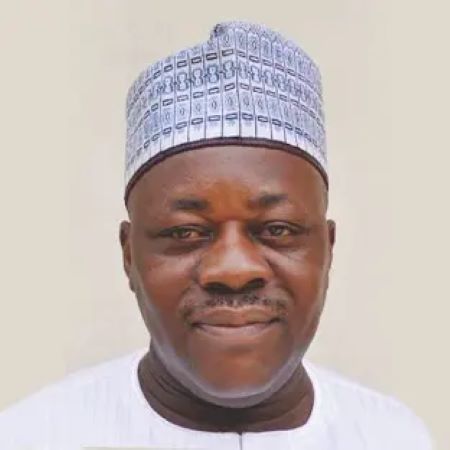
Police reformer Solomon Arase
Share. Facebook Twitter Pinterest LinkedIn WhatsApp Reddit Tumblr Email
Editor
  • Website

Related Posts

Tinubu is unravelling the nation, By Prof. Jibrin Ibrahim

April 17, 2026

The Tinubu regime seeks to deny the opposition party platform, By Prof.Jibrin Ibrahim

April 3, 2026

Credible 2027 elections and national security, By Prof. Jibrin Ibrahim

March 27, 2026

Leave A Reply Cancel Reply

Lagos cracks down on E-waste

April 23, 2026

Nigeria achieves 91% aviation safety rating

April 23, 2026

Nigeria must shift from reform to investment, NESG says

April 23, 2026

Naira holds steady at N1,582/€ as Euro weakens amid energy, growth pressures

April 23, 2026
About Us
About Us

ASHENEWS (AsheNewsDaily.com), published by PenPlus Online Media Publishers, is an independent online newspaper. We report development news, especially on Agriculture, Science, Health and Environment as they affect the under-reported rural and urban poor.

We also conduct investigations, especially in the areas of ASHE, as well as other general interests, including corruption, human rights, illicit financial flows, and politics.

Contact Info:
  • 1st floor, Dogon Daji House, No. 5, Maiduguri Road, Sokoto
  • +234(0)7031140009
  • ashenewsdaily@gmail.com
Facebook Twitter Instagram Pinterest
© 2026 All Rights Reserved. ASHENEWS Daily Designed & Managed By DeedsTech

Type above and press Enter to search. Press Esc to cancel.