


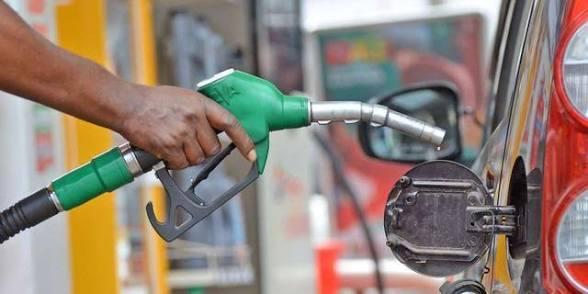
The National Bureau of Statistics (NBS) has reported that the average retail price of a litre of petrol increased from N1,051.47 in February to N1,288.54 in March 2026.
The NBS disclosed this in its Premium Motor Spirit (Petrol) Price Watch for March, released in Abuja on Tuesday.
According to the report, the March price represents a 22.55 per cent increase compared to February.
On a year-on-year basis, the average price rose by 2.13 per cent from N1,261.65 recorded in March 2025 to N1,288.54 in March 2026.
At the state level, Anambra recorded the highest average retail price at N1,441.22 per litre, followed by Sokoto at N1,377.55 and Borno at N1,375.16.
Conversely, Lagos had the lowest price at N1,162.71 per litre, followed by Ogun at N1,169.78 and Kaduna at N1,193.40.
By zone, the North-East recorded the highest average petrol price at N1,336.50 per litre, while the South-West had the lowest at N1,232.46.
The NBS also reported a 16.05 per cent month-on-month increase in the average retail price of diesel, from N1,420.17 per litre in February to N1,648.08 in March.
Year-on-year, diesel price rose by 3.05 per cent from N1,599.30 in March 2025 to N1,648.08 in March 2026.
Ebonyi State recorded the highest diesel price at N2,262.29 per litre, followed by Akwa Ibom at N1,895.72 and Osun at N1,872.15.
Kogi had the lowest diesel price at N1,383.40 per litre, followed by Katsina at N1,438.25 and Enugu at N1,480.06.
By zone, the South-East recorded the highest average diesel price at N1,730.14 per litre, while the North-Central had the lowest at N1,593.11.
Experts attribute the month-on-month increase in both petrol and diesel prices largely to geopolitical tensions in the Middle East.
Economist Mr Opeyemi Alabi told reporters that the US-Iran war had disrupted global supply chains and significantly pushed up Brent crude oil prices.
“The closure of the Strait of Hormuz and the conflict in Iran have disrupted energy supply, with direct ripple effects on Nigeria,” he said.
“Petrol now sells for as high as N1,600 in some parts of the country, while diesel has exceeded N2,000 per litre. This surge is driving up transportation costs and putting significant strain on individuals and businesses.
“If this trend continues, it will inevitably lead to higher inflation across the country,” Alabi warned.
