


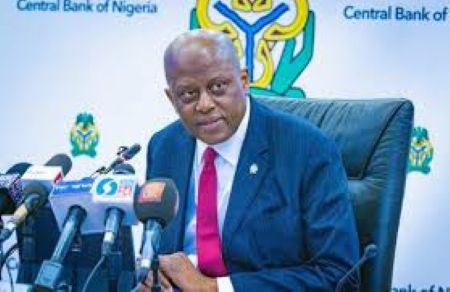
Nigeria’s Central Bank Governor, Mr. Olayemi Cardoso, has welcomed the decision of the African Union to approve Nigeria’s permanent membership on the Board of the African Monetary Institute (AMI).
The decision was reached at the 39th Ordinary Session of the Assembly of Heads of State and Government held in Addis Ababa during the February 2026 Summit, following earlier adoption by the AU Executive Council at its 48th Ordinary Session.
The AMI — established under the AU’s financial institutions agenda — serves as a precursor to the planned African Central Bank, which will be headquartered in Abuja.
Cardoso said hosting the AMI and, subsequently, the continental central bank holds strategic value for Nigeria and Africa, positioning the country at the core of the continent’s emerging monetary union and strengthening its influence in shaping Africa’s single-currency architecture.
ALSO READ Borrowing strain deepens as Nigerians seek rate relief — CBN
He also hailed the decision granting Nigeria permanent membership of the Convergence Council.
“This historic decision marks a significant milestone in Africa’s financial integration journey and further emphasises Nigeria’s strategic role in shaping the continent’s evolving financial architecture,” he said.
He added that implementation of the decision represents a key step toward macroeconomic convergence, deeper monetary cooperation, and the long-term goal of financial sovereignty and economic integration across Africa.
AU leaders reaffirmed the pathway by endorsing Nigeria’s standing representation on the AMI Board throughout the transitional phase leading to the formal establishment of the African Central Bank.
The CBN — alongside the Ministries of Foreign Affairs, Justice, and Finance — played a strategic role in securing the milestone. The bank led technical work on the Draft AMI Statute, later approved at the Fifth Extraordinary Meeting of the Specialised Technical Committee on Finance in Abuja, and provided initial hosting facilities and logistics for the institute’s launch.
It also participated in inter-ministerial engagement involving the Finance Ministry, Foreign Affairs Ministry, Justice Ministry, and the Presidency to sustain advocacy at the highest political level.
According to Cardoso, the outcome reflects sustained reforms, strategic diplomacy, and technical consistency.
“These efforts have led to improved monetary stability, stronger external reserves management, enhanced banking supervision, and modernised payment systems. Nigeria’s credibility and influence across the continent continue to strengthen,” he said.
He added that collaboration would continue with the AU Commission, the Association of African Central Banks, member states, and development partners to lay a firm foundation for the African Central Bank and eventual single currency.
The permanent seat granted to Nigeria is limited to the AMI’s transitional phase and includes a sunset clause upon establishment of the continental bank — a framework designed to respect AU principles of rotation, equity, and regional balance while ensuring host-country continuity during formative years.
Cardoso thanked President Bola Ahmed Tinubu and Vice-President Kashim Shettima for their strategic guidance, describing the development as both a national achievement and a broader advance for Africa’s integration and monetary sovereignty.
