

• Home
  • Agric
  • Sci & Tech
  • Health
  • Environment
  • Hausa News
  • More
    • Business/Banking & Finance
    • POLITICS
    • Entertainments & Sports
    • International
    • Investigation
    • Law & Human Rights
    • Africa
    • ACCOUNTABILITY/CORRUPTION
    • Hassan Gimba
    • Column
    • Prof. Jibrin Ibrahim
    • Prof. M.K. Othman
    • Defense/Security
    • Education
    • Energy/Electricity
    • Entertainment/Arts & Sports
    • Society and Lifestyle
    • Food & Agriculture
    • Health & Healthy Living
    • International News
    • Interviews
    • Investigation/Fact-Check
    • LAW & HUMAN RIGHTS
    • Oil & Gas/Mineral Resources
    • PRESS FREEDOM/JOURNALISM/PR
    • General News
    • Presidency
  • About Us
    • Contact Us
    • Board Of Advisory
    • Privacy Policy
    • Ethics Policy
    • Teamwork And Collaboration Policy
    • Fact-Checking Policy
    • Advertising
  • Media OutReach Newswire
    • Wire News
  • The Stories
Facebook Twitter Instagram
Trending
  • DSN CEO: Data classification key to Nigeria’s data sovereignty
  • Nigeria’s national metering rate rises to 57%
  • Lagos to increase investment in tech, innovation
  • Fulani group urges herders to support security efforts, expose criminals in Southwest
  • Nigeria’s local petrol production hits 48m litres daily
  • Kano suspends water scheme manager over alleged sabotage
  • DRC Ebola outbreak surpasses 1,000 cases, spreads to 3rd camp
  • Lagos joins global under2 climate coalition
Facebook Twitter Instagram YouTube
AsheNewsAsheNews
  • Home
  • Agric

    Nigeria’s neem advantage: Unlocking a strategic bioeconomy industry for climate, agriculture and industrial growth, Dr Fakunle Aremu

    June 22, 2026

    AFAN predicts drop in food prices after fertiliser distribution

    June 22, 2026

    Northern Nigeria’s poultry economy: Unlocking a multi-billion dollar investment opportunity across the value chain, By Dr. Fakunle Aremu

    June 19, 2026

    Association trains farmers on agroforestry, carbon opportunities

    June 18, 2026

    IWMI, IFPRI link Kano farmers to solar irrigation support

    June 17, 2026
  • Sci & Tech

    DSN CEO: Data classification key to Nigeria’s data sovereignty

    June 23, 2026

    Lagos to increase investment in tech, innovation

    June 23, 2026

    ALTON supports CBN’s local data hosting mandate

    June 20, 2026

    NDPC seeks INEC data records over breach allegations

    June 20, 2026

    SGF urges Galaxy Backbone to boost cybersecurity, broadband

    June 20, 2026
  • Health

    RCCG freedom court parish holds community cleanup for 18th anniversary

    June 23, 2026

    NAFDAC holds workshop on medicine safety in Karu

    June 22, 2026

    Expert urges focused use of N10bn for Ebola preparedness

    June 22, 2026

    From Sokoto to Bulgaria: Dr. Dange’s mission to transform pediatric care

    June 21, 2026

    Nigeria’s Fathers face silent mental health crisis

    June 21, 2026
  • Environment

    Nigeria’s national metering rate rises to 57%

    June 23, 2026

    Nigeria’s local petrol production hits 48m litres daily

    June 23, 2026

    Lagos joins global under2 climate coalition

    June 23, 2026

    FAAN considers extending airport taxi upgrade deadline to October

    June 23, 2026

    Floods, Windstorm devastate Ebonyi farmlands, shops

    June 22, 2026
  • Hausa News

    UNA signs MoU to launch air Bissau in Guinea-Bissau

    June 15, 2026

    Otti plans 250-room 5-star hotel in Umuahia

    April 11, 2026

    Anti-quackery task force seals 4 fake hospitals in Rivers

    August 29, 2025

    [BIDIYO] Yadda na lashe gasa ta duniya a fannin Ingilishi – Rukayya ‘yar shekara 17

    August 6, 2025

    A Saka Baki, A Sasanta Saɓani Tsakanin ‘Yanjarida Da Liman, Daga Muhammad Sajo

    May 21, 2025
  • More
    1. Business/Banking & Finance
    2. POLITICS
    3. Entertainments & Sports
    4. International
    5. Investigation
    6. Law & Human Rights
    7. Africa
    8. ACCOUNTABILITY/CORRUPTION
    9. Hassan Gimba
    10. Column
    11. Prof. Jibrin Ibrahim
    12. Prof. M.K. Othman
    13. Defense/Security
    14. Education
    15. Energy/Electricity
    16. Entertainment/Arts & Sports
    17. Society and Lifestyle
    18. Food & Agriculture
    19. Health & Healthy Living
    20. International News
    21. Interviews
    22. Investigation/Fact-Check
    23. LAW & HUMAN RIGHTS
    24. Oil & Gas/Mineral Resources
    25. PRESS FREEDOM/JOURNALISM/PR
    26. General News
    27. Presidency
    Featured
    Recent

    DSN CEO: Data classification key to Nigeria’s data sovereignty

    June 23, 2026

    Nigeria’s national metering rate rises to 57%

    June 23, 2026

    Lagos to increase investment in tech, innovation

    June 23, 2026
  • About Us
    1. Contact Us
    2. Board Of Advisory
    3. Privacy Policy
    4. Ethics Policy
    5. Teamwork And Collaboration Policy
    6. Fact-Checking Policy
    7. Advertising
    Featured
    Recent

    DSN CEO: Data classification key to Nigeria’s data sovereignty

    June 23, 2026

    Nigeria’s national metering rate rises to 57%

    June 23, 2026

    Lagos to increase investment in tech, innovation

    June 23, 2026
  • Media OutReach Newswire
    • Wire News
  • The Stories
AsheNewsAsheNews
Home»Environment/Climate Change»What you should know about the single-use plastic ban in Lagos
Environment/Climate Change

What you should know about the single-use plastic ban in Lagos

What you should know about the single-use plastic ban in Lagos
EditorBy EditorJanuary 28, 2024Updated:January 28, 2024No Comments6 Mins Read
Share
Facebook Twitter LinkedIn Pinterest Email

A study considered to be the first continental analysis of mass importation and consumption of different polymers and plastics in Africa observed that 17 percent of all polymers and plastics were imported into Nigeria.

The study which also examined the associated pollution potential stated that urgent solutions are needed to tackle this global challenge. 

The study observed that over 117.6 million tonnes (Mt) of polymers were imported into Africa.

The study also predicted that by 2030, approximately 235.3 Mt of polymers and plastic in these forms would be consumed in some 33 African countries except if policy changes are made to address the challenge.

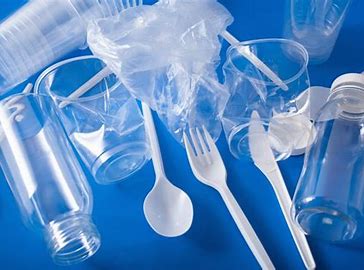
In light of this, a ban on the usage and distribution of styrofoam and single-use plastics was announced by the Lagos State government last week.

Speaking through the state’s Ministry of Environment and Water Resources, the government cited the effect of single-use plastic on the environment as a major reason for the ban.

Tokunbo Wahab, the state’s commissioner for environment and water resources who took to his X handle to announce the ban said that the duo was causing a menace to the environment.

“Following the menace which single-use plastics especially non-biodegradable Styrofoam are causing on the environment, the Lagos State government (@followlasg ) through the Ministry of the Environment and Water Resources (@LasgMOE ) is hereby announcing a ban on the usage and distribution of Styrofoam and other single-use plastics in the State with immediate effect,” his post said.

Speaking when he met with representatives of the Manufacturers Association of Nigeria and the Restaurant and Food Services Proprietor Association of Nigeria shortly after announcing the ban, Wahab maintained that the state government was not going back on its decision.

The government even went ahead to issue a deadline for the parties to clear out the stock they had in their stores.

“You will all agree with me that for over three years, this conversation has been ongoing, waiting for when the big bold step of enforcement will be taken,” he reminded them.

Styrofoam is a lightweight plastic mostly used to make food containers and cutleries in Nigeria.

Popularly known in its form as “take-away” packs, styrofoam food containers are popular for their affordability in Nigeria.

The downside to it however is that it is not reusable just like many other plastic products.

Mixed reactions

While this decision has been hailed for its significant potential to promote environmental sustainability, many also expressed concern over its potential impact.

Not only is this expected to significantly reduce waste and improve its management, but it is also expected to reduce the hazard to the environment.

Known as the epicenter of commercial activities and a hub for millions of businesses, the ban on styrofoam and single-use plastic can be viewed by many as a decision long overdue.

The state has a waste disposal problem, despite efforts by the government.

Some parties have called for a re-evaluation of the ban by the government, identifying a burden on small and medium businesses.

Stakeholders including the U.S.-Nigeria Trade Council USA have faulted the government’s ban on styrofoam, citing the economic effect of the ban especially on businesses.

Similarly, the Nigerian Youth Biodiversity Network (NYBN), the official youth constituency of the United Nations Convention on Biological Diversity, (UNCBD-GYBN), Nigeria chapter, and the Sustainable Environment Food and Agriculture Initiative (SEFAAI), a UNEP and UNCBD accredited environmental NGO despite lauding the initiative faulted the state government for not providing alternatives.

“A ban on single-use plastic and Styrofoam packs must come with practical alternatives that will make consumers and businesses (especially the big multi-corporations that produce plastic drinks, bottled water, and plastic packaging materials) easily tag along with the ban, most importantly when they are to go entirely without plastic,” the groups said.

Instead, it said that “a phased approach to plastic ban should have been better, with consistent and clear messaging on what material is banned and the time-frame for such material to be phased-out.”

Dangers of plastic waste 

Plastic waste in Nigeria has become a major issue for stakeholders given the lack of proper management of such products.

This is evident in the way plastic waste is disposed.

A lack of proper waste disposal mechanisms leads to pollution of the environment. 

The United Nations Environment Programme (UNEP) estimates that 400 million tonnes of plastic are produced annually.

If the world keeps up with this pace, the global production of primary plastic is forecasted to reach 1,100 million tonnes by 2050, the UNEP says.

More worrisome is the fact that the world has been able to recycle only 10 percent of the nearly seven billion tonnes of plastic waste generated globally.

This points to a huge challenge.

Also, a report published by the Organization for Economic Co-operation and Development (OECD) on plastic leakage and greenhouse gas emissions observed that emissions from the plastics lifecycle may reach 4.3 billion tonnes of GHG emissions.

Unlike other materials, plastics do not decompose. Instead, they transform into microplastics, which are just smaller pieces that are found everywhere.

When they end up in our oceans and rivers, fish and other water creatures mistake them for food. The intake of such microplastics affects their health and may be transferred to humans when consumed.

Millions of these animals are estimated to die from microplastics. This poses another challenge to food security for human beings.

Furthermore, when plastic waste is disposed of by way of burning, it releases dioxin, a harmful chemical that causes cancer as well as other serious health challenges.

Groundwater pollution is also an adverse effect of the toxins released by plastics. When they get into the soil, they can contaminate drinking water, another source of health challenges for humans and animals.

These toxins also linger in the environment, further polluting it.

In addition, Single-use plastic not only lacks second-hand value, they are not recyclable or reusable nor do they have economic value. 

Way out

Currently, Nigeria’s environment is threatened by an inefficient recycling and waste management system.

In this case, despite being a large producer of plastic products, the country has failed to among other things promote recycling, an action meant to slow down the rate at which we use plastic in the country.

Various stakeholders have for a long time advocated for a ban on single-use plastic by the federal government. 

Others have advocated for taxation on plastic products to reduce their usage in the country. 

Lagos State has taken the lead in issuing an outright ban on styrofoam and other single-use plastic products. How well and far the government can implement this ban will be a template for replicating the ban across Nigeria.

environment Lagos state SEFAAI Single-use plastic ban UNCBD-GYBN
Share. Facebook Twitter Pinterest LinkedIn WhatsApp Reddit Tumblr Email
Editor
  • Website

Related Posts

Nigeria’s national metering rate rises to 57%

June 23, 2026

Nigeria’s local petrol production hits 48m litres daily

June 23, 2026

Lagos joins global under2 climate coalition

June 23, 2026

Leave A Reply Cancel Reply

DSN CEO: Data classification key to Nigeria’s data sovereignty

June 23, 2026

Nigeria’s national metering rate rises to 57%

June 23, 2026

Lagos to increase investment in tech, innovation

June 23, 2026

Fulani group urges herders to support security efforts, expose criminals in Southwest

June 23, 2026
About Us
About Us

ASHENEWS (AsheNewsDaily.com), published by PenPlus Online Media Publishers, is an independent online newspaper. We report development news, especially on Agriculture, Science, Health and Environment as they affect the under-reported rural and urban poor.

We also conduct investigations, especially in the areas of ASHE, as well as other general interests, including corruption, human rights, illicit financial flows, and politics.

Contact Info:
  • 1st floor, Dogon Daji House, No. 5, Maiduguri Road, Sokoto
  • +234(0)7031140009
  • ashenewsdaily@gmail.com
Facebook Twitter Instagram Pinterest
© 2026 All Rights Reserved. ASHENEWS Daily Designed & Managed By DeedsTech

Type above and press Enter to search. Press Esc to cancel.