


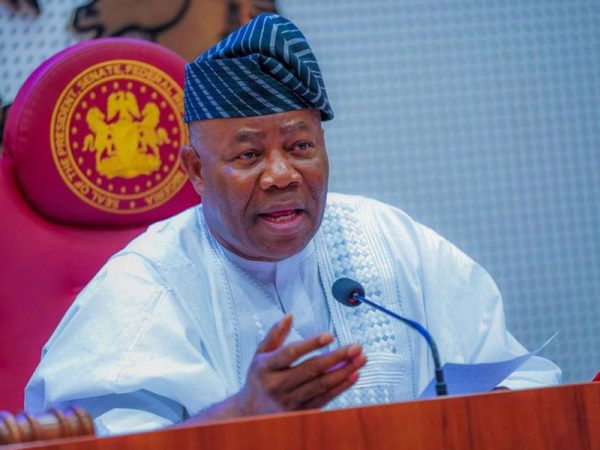
Sokoto and 29 other states have endorsed the proposed constitutional amendment seeking to establish state police in Nigeria, Senate President Godswill Akpabio has disclosed.
Akpabio said the endorsements represented significant progress towards decentralising the country’s policing structure, expressing optimism that Nigeria could adopt the new system within weeks.
He spoke on Wednesday when members of the Arewa Revival Project, a northern youth organisation with membership across the 19 northern states, visited him at his office in Abuja.
According to him, the proposed amendment would strengthen national security by bringing policing closer to communities and improving law enforcement agencies’ capacity to respond to local security threats.
He said the establishment of state police would complement existing security structures and enhance efforts to tackle the country’s growing security challenges.
“As I speak with you now, for the first time in the history of Nigeria, it may not take us a month before we have a state police system, a decentralised policing in the country, because about 30 states have endorsed the amendment to the Nigerian Constitution to bring about a state police system, which will further increase the security of the nation,” Akpabio said.
The development marks a major step in the long-running debate over decentralising Nigeria’s policing system, which currently operates largely under the federal government.
Under the proposed constitutional amendment, states would be empowered to establish and manage their own police services while the Nigeria Police Force would retain its federal responsibilities.
The constitutional amendment requires approval from at least two-thirds of the 36 state Houses of Assembly, representing 24 states, in addition to the necessary legislative approvals at the National Assembly.
Akpabio expressed confidence that the process was nearing completion, arguing that decentralised policing would improve intelligence gathering, strengthen community-based security and enable faster responses to criminal activities.
He also urged Nigerian youths to intensify grassroots mobilisation for President Bola Tinubu’s re-election in 2027, arguing that continuity would allow the administration’s economic reforms and security policies to yield results.
The Senate President also called on youths to rise above what he described as paid social media propaganda against the administration, claiming that the President had taken significant steps towards economic diversification, tax reforms and addressing longstanding structural challenges.
He maintained that the country would overcome its security difficulties, urging young Nigerians to remain confident and support efforts to restore peace and stability.
Akpabio further advised the visiting group to organise grassroots engagements to explain government policies and counter misinformation, rather than attempting to compete constantly with critics on social media.
