


Revenue generation is very critical to the survival of a country or otherwise all over the world. It is non-debatable that most poor countries of the world are poor because they have a problem of revenue.
To fix the problem of revenue generation in most developing and emerging markets, the national and sub-national governments of such countries pay more than a passing interest in the operations and management of the countries’ internal or inland revenue bureaus/services/boards which supervise revenue collection, aside from placing other programmes and policies to shore up their revenue base.
In Nigeria, the Federal Inland Revenue Service (FIRS) is the body statutorily saddled with the responsibility of managing the nation’s revenue collection. Established in 1943, the service became autonomous via the passing of the FIRS (Establishment) Act 13 of 2007. The core functions of the service are to assess, collect, remit, and account for the federation’s taxes and revenues.
Over the years, the FIRS has undergone several transformations under various leadership and management. However, its phase between 2020 and 2022 has been of striking relevance and importance given the declarations of unprecedented revenue collected on behalf of the federal government by the service.
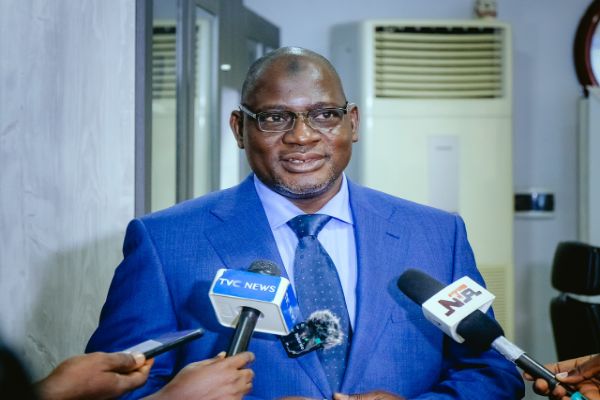
According to multiple industry experts familiar with the issues, the turnaround in the revenue collection credential of the service is substantially due to the efforts of the leadership headed by Muhammad Nami, its Executive Chairman.
It did not, therefore, come as a surprise to a lot of people when the Federal Inland Revenue Service (FIRS) announced on Monday that it collected over N10 trillion in tax revenue in the year 2022, the highest tax collection ever recorded in its history. The Service declared this in its “FIRS 2022 Performance Update,” report signed by its Executive Chairman, Mr. Nami, after his briefing with President Muhammadu Buhari.
It is the first time the FIRS would cross the 10-trillion Naira mark in tax revenue collection after several decades of existence. And that’s a milestone in a struggling economy like Nigeria’s. In the Performance Update made known to the public, the service said it collected a total of N10.1 trillion in both oil (N4.09 trillion) and non-oil (N5.96 trillion) revenues as against a target of N10.44 trillion in 2022.
The report further noted that Companies’ Income Tax contributed N2.83 trillion; Value Added Tax N2.51 trillion; Electronic Money Transfer Levy N125.67 billion and Earmarked Taxes N353.69 billion while non-oil taxes contributed 59% of the total collection in the year, oil tax collection stood at 41% of the total collection. One interesting takeaway from this is that the non-oil sector is beginning to live up to expectations especially now that there are so many uncertainties in the global oil market.
The Performance Update Report further clarified that included in the total revenue sum is the sum of N146.27 billion which is the total value of certificates issued by the Service to private investors and NNPC for road infrastructure under the Road Infrastructure Development Refurbishment Investment Tax Credit Scheme created by Executive Order No. 007 of 2019.
The report also stated that the N10.1 trillion is exclusive of tax waived on account of various tax incentives granted under the respective laws, which amounted to N1,805,040,163,008.
HOW THE FEAT WAS ACHIEVED
Like the saying that nothing good comes easy, finance specialists, especially in the public sector, say the FIRS could not have achieved the feat without putting in place some reforms and mechanisms to actualise the feat. Essentially, the deployment of technology through the instrumentality of the automation of the service’s administrative and operational processes in tax collection played a crucial role in the massive turnover.
True to the experts’ assertion, while providing perspective to the unprecedented tax collection, the service noted in the performance report that the Muhammad Nami-led management upon assumption of office came up with a four-point focus, namely: administrative and operational restructuring; making the service customer-focused; creating a data-centric institution; and improving its stakeholder relations. It further noted that throughout 2020 to 2022, the management had introduced reforms bordering around these four-point focuses which were producing results.
“The reforms introduced at different times from 2020 are gradually yielding fruits. By the close of 2022, the Service had fully restructured the administration of the Service for maximum efficiency and achieved internal cohesion such that all functional units are working in unison towards the achievement of set goals.
“As a result of a conducive environment created for staff, officers of the Service are pulling their weight on the global stage with international recognitions and awards;
“The Service had also automated most of the administrative and operational processes. A major leap was the full deployment of the TaxPro Max for end-to-end administration of taxes in June 2021. The module for the automated TCC went live 1st January 2023 while taxpayers had already downloaded over 1,000 TCCs this year without having to visit FIRS office,” the report read.
The report also noted that the Service had operationalised its data mining and analysis system thereby allowing for data-backed taxpayer profiling. This is particularly good as taxpayers’ metrics and analytics will always assist the Service to know what it’s getting from each and every tax-paying entity based on credible data gathering and assessment.
Other reforms the Service introduced in the period under review focused on the detoxification of the tax environment by ridding it of mutual mistrust, negative tax morale, and tax evasion, through effective taxpayer education, open engagement with stakeholders, and improved services. It noted that it is courtesy of these reforms, framed around the four-focal points that the Service was able to achieve the collection.
The man of the moment, Mr. Nami, while commenting on the N10.1 trillion record tax collection achieved under his leadership, stated that it was made possible through “dogged implementation of strategic reforms over the past two years; a renewed commitment by officers of the Service, accompanied with a boosted morale; as well as the innovative deployment of technology for automation of both tax administration and operational processes.
“This collection was possible through collaboration with our stakeholders, from our colleagues at the Executive branch of government to the members of the judiciary, to our brothers and sisters at the National Assembly, as well as the tax advisory committee, professional bodies, unions, and most crucially our taxpayers.”
AND THIS IS NOT THE FIRST TIME
2022 is not the first year the FIRS made a giant leap in revenue collection. In fact, 2022 is the second consecutive year that the Service will be recording unprecedented tax collection. In 2021, the Service achieved a record tax collection of N6.405 trillion, over a hundred percent of its collection target for the year, as well as the first time that the Service will cross the 6–trillion mark.
In 2022, building on the success of the preceding year, the Service achieved a record collection of N10.1 trillion, being over 96% of its collection target for the year, and the first time the Service will cross the 10–trillion mark. This collection represents an over one hundred percent leap from the tax collected by the Service in 2020—the first year of the current management of the Service.
PROJECTIONS FOR 2023
As for 2023, Mr. Nami stated that the Service would build on the current reforms, achieve full automation and continue to establish a resilient Service that would continue to provide sustainable tax revenue to fund the government.
The government truly needs all it can to generate revenue this year and borrow less because of the burgeoning debt profile of the country, which has become a source of worrying concern to Nigerians. There’s no whiff of doubt that the FIRS will double down on revenue collection to help the government meet its revenue target. “We intend to maintain, and even improve on the momentum in 2023,” Mr. Nami stated.
“We have peaked, but this is not certainly our peak. In fact, my hope is that this would be the least sum the Service would ever collect going forward. Our goal is to identify more areas where we can improve on, in the delivery and efficiency of our collection; and plug loopholes, while deploying innovative reforms in data and artificial intelligence.
“Ultimately, we believe that the FIRS can shoulder the responsibility of providing revenue needed for the governments across the Federation to cater for the needs of the Nigerian people through taxes.
“This is feasible once we get the much-desired support from the three tiers and arms of government, as well as all stakeholders.”
CHALLENGES
Perhaps the greatest challenge the FIRS may face in its quest to rake in more revenue for the government in 2023 will be a seeming lack of cooperation from taxpayers who are facing existential threats from galloping inflation, insecurity, increasing lending rates and the rising cost of power, among others.
The perceived absence of transparency and lack of accountability in the management of the country’s revenue is also a snag. Although FIRS is not to blame for this, the taxpayers’ understanding is that it is the body that collects the taxes for the country. Going forward, the government has to be more accountable to the people and deploy the revenue judiciously to fund critical infrastructures, improve the standard of living of Nigerians, provide jobs, create access to quality healthcare, e.t.c.
Of course, FIRS also needs to block more leakages in its operations and loopholes which could be leveraged by unscrupulous staff and taxpayers to game the system and thus criminally divert what should accrue into the Service’s purse into their personal accounts or that of their allies. This is where technology, as hinted by the Executive Chairman, will help minimise waste and potential for fraud to the bare minimum.
APPRECIATION
The FIRS’s feat in the N10.1 trillion tax collection did not come alone via the Service’s solo efforts. It received multi-spectral collaboration and support from the political leadership of the country.
In the performance update report, FIRS appreciated President Muhammadu Buhari for his support, as well as the Minister of Finance, Budget and National Planning, Mrs. Zainab Ahmed, the Minister of State, Mr. Clem Agba, and the National Assembly (NASS).
Importantly, the service commended all patriotic taxpayers who paid their taxes correctly, stakeholders for their support, and officers of the Service for their dedication to duty.
Wuruola iis the media aide to FIRS boss, Nami
