


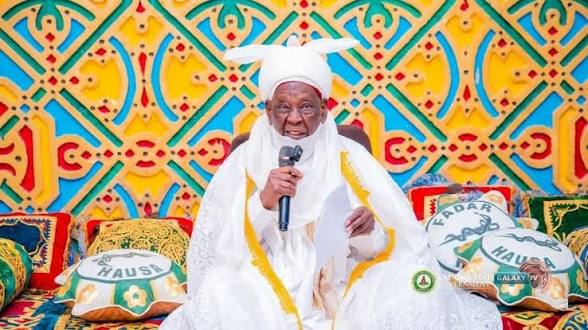
The Emir of Daura, Faruq Umar-Faruk, has called on the National Assembly (NASS) to introduce the death penalty for anyone convicted of trafficking in hard drugs.
The traditional ruler said tougher punishment was necessary to tackle the growing menace of drug trafficking and its damaging effects on society, particularly in Northern Nigeria.
Umar-Faruk made the call on Tuesday during a town hall meeting organised by the National Orientation Agency (NOA), in collaboration with the Speaker of the House of Representatives, Tajudeen Abbas, in Daura, Katsina State.
The meeting was organised to sensitise residents to the dangers of drug abuse, drug trafficking and domestic violence.
Addressing the gathering, the Emir urged Abbas to work with the Senate to enact legislation prescribing capital punishment for convicted drug traffickers.
“I want you to convey my message to my son, Tajudeen Abbas, to collaborate with the Senate and enact a law prescribing the death penalty for anyone convicted of drug trafficking,” he said.
He pledged his support for initiatives aimed at eliminating drug abuse and trafficking, describing the campaign as critical to the future of Northern Nigeria and the country at large.
Earlier, the Director-General of NOA, Lanre Issa, represented by the agency’s Director of Special Duties, David Akoji, appreciated the Emir for his support and assured him of the agency’s commitment to tackling drug abuse and other social vices.
He said the agency would sustain public enlightenment campaigns and strengthen collaboration with relevant stakeholders to address the challenges.
Also speaking, the Katsina State Director of NOA, Haruna Ibrahim-Malumfashi, said the state was selected to host the programme because available statistics indicated a high prevalence of drug-related problems across the Northwest.
He explained that the engagement was designed to mobilise communities and relevant stakeholders towards addressing the menace through collective action, awareness creation and sustained public enlightenment.
The meeting was attended by government officials, traditional and religious leaders, personnel of the National Drug Law Enforcement Agency (NDLEA), civil society organisations and community members.
