


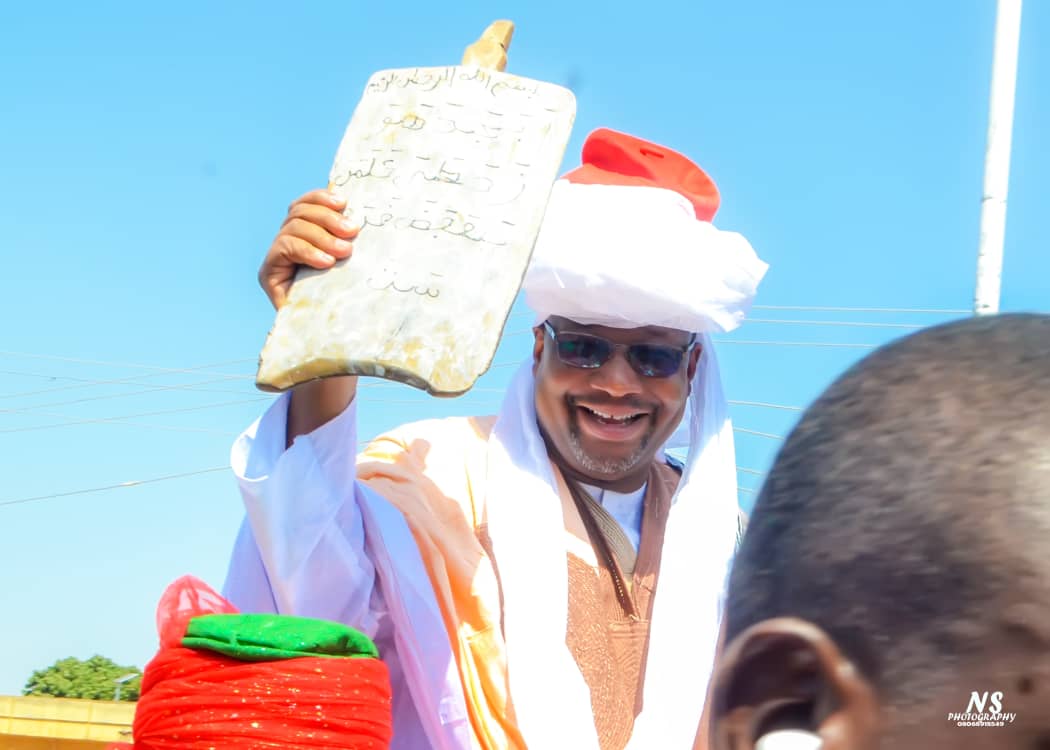
Dr. Balarabe Shehu Kakale, newly turbaned as the first Wakilin Makaranta Daular Usmaniyya by the Sultan of Sokoto, has called on state and local governments—especially across Northern Nigeria—to urgently domesticate, fund and implement Nigeria’s Almajiri, Tsangaya and Makarantun Allo education reforms. He said the Federal Government had laid the policy foundation, but implementation now rests “squarely” with states and local councils.
Kakale, an advocate for “Skillsficate“, who delivered the position in a speech marking his turbanning by Sultan Muhammad Saad Abubakar, described the reform agenda as a “new dawn for inclusive education in Nigeria,” arguing that children in Almajiri, Makarantun Allo, Islamiyya and Tsangaya systems must receive the same quality, functional education as other Nigerian children. He said the revised National Policy on Education now recognises traditional, indigenous, alternate and faith-based education systems within and outside formal schooling.
He cited Section 18 of the 1999 Constitution, which directs government policy towards equal and adequate educational opportunities and the eradication of illiteracy, including through free, compulsory and universal primary education. Despite these provisions, he said, learners outside the formal school system had been excluded for more than a century.
Federal reforms
The new Wakilin Makaranta praised recent federal education measures, including the National Policy on the Enhancement of Almajiri Education, the National Policy on Alternate Learning Pathways, the National TVET Policy, and policies on non-state schools, inclusive education, school feeding and digital literacy.
He also acknowledged the establishment of the National Commission for Almajiri and Out-of-School Children Education (NCAOOSCE), whose enabling Act was signed into law by former President Muhammadu Buhari after passage by the 9th National Assembly. Kakale, who represented Bodinga, Dange-Shuni and Tureta Federal Constituency, said he sponsored the Almajiri education reform bill during that Assembly.
Skills over certificates
A central theme of Kakale’s address was the Federal Government’s “Makaranta Masana’anta” technical and vocational education policy, which he summarised as “skills, not degrees” and “skillficates, not certificates.” He said the initiative seeks to embed entrepreneurship, innovation and practical skills into education so that students can create businesses and jobs before graduation.
Under the tertiary component, known as EIBIC, fresh students would undertake a mandatory entrepreneurship programme alongside their academic studies and receive an additional entrepreneurship certificate with their degree. Kakale argued that similar pathways should link Almajiri and Tsangaya education to literacy, numeracy, digital learning, civic education and vocational training.
“No more excuses”
Kakale warned that policy documents alone would not change the condition of Almajiri children. He urged states to domesticate the NCAOOSCE Act, implement the National Almajiri Policy, fund the reforms through budgets, and operationalise Section 15 of the UBEC Act 2004 relating to Almajiri and out-of-school children.
“We must not, cannot and should not allow children to roam our streets and beg for food instead of being in functional quality schools, learning centres, Tsangaya or Makarantun Allo,” he said, adding that learners and their teachers deserve dignity, respect and protection.
17-point action plan
The speech outlined a 17-point advocacy agenda for Northern states, including:
Establishing state-level standing committees to monitor implementation and sustain advocacy.
Using mosques, sermons, madrasas and traditional institutions to sensitise communities on the reforms.
Mapping and registering Almajiri schools, learners, infrastructure, water and sanitation, feeding, health, protection and skills gaps to guide planning.
Recruiting and training Alarammas and Tsangaya teachers, with emphasis on welfare, literacy, numeracy, digital skills and transition into formal education.
Diversifying funding through zakat, waqf, philanthropists, businesses and community fundraising, rather than relying solely on federal allocations.
Fully establishing the National Almajiri and Out-of-School Children Education Fund under Section 17 of the NCAOOSCE Act.
Creating old students’ associations for Almajiri and Makarantar Allo graduates to serve as mentors and reform advocates.
Strengthening coordination among NCAOOSCE, NCNE, UBEC, NERDC and other agencies to avoid fragmented interventions.
Sokoto’s role
Kakale also urged the Sokoto State House of Assembly to give accelerated consideration to a bill making compulsory the teaching of the history and contributions of the founders of the Sokoto Caliphate to Islam, peace, economic, social and human development.
He traced his interest in Almajiri reform to a 2019 working visit to Indonesia, undertaken during Senator Aminu Waziri Tambuwal’s tenure as Sokoto governor, to study the country’s Pondok Pesantren system. He said its combination of Quranic education, character development, literacy and numeracy, digital education, and vocational-entrepreneurship training showed that reform of Nigeria’s Tsangaya system was possible.
Kakale said his new title should be seen not as an honour alone, but as “a great responsibility and call to selfless service” to advance quality education for all children in communities, states, the nation and beyond.
