


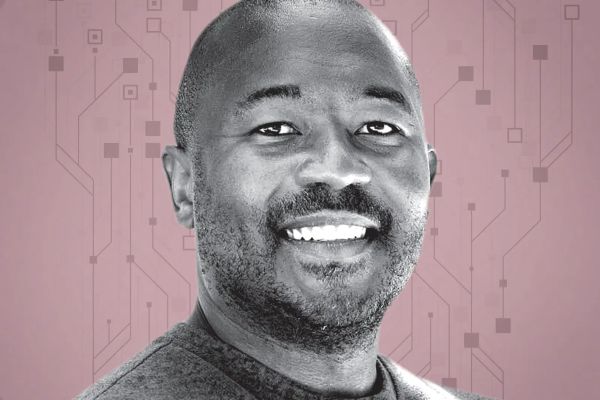
Nigerian artificial intelligence (AI) researcher and entrepreneur Professor Sanmi Koyejo has been named among the influential figures on the TIME100 AI 2026 list, recognising his contributions to making AI systems more reliable, secure, and trustworthy.
Koyejo, co-founder of AI security startup Virtue AI, has built his career around examining the capabilities and limitations of artificial intelligence systems, particularly how they perform when deployed in real-world environments.
His growing influence in the sector was underscored in June when Meta announced that it had hired Koyejo and his Virtue AI co-founders, Dawn Song and Bo Li, to join its Superintelligence Labs.
At Meta, Koyejo is expected to contribute to artificial intelligence security and research, including work within the company’s Fundamental AI Research (FAIR) division.
His appointment followed years of research into a central challenge facing the AI industry: how to determine whether increasingly sophisticated AI models can be trusted to perform consistently outside controlled laboratory conditions.
Koyejo also serves as director of Stanford University’s Trustworthy AI Research Lab (STAIR), where he leads research into AI measurement science.
The research focuses on developing better methods for evaluating AI models and determining how reliably they perform in the environments where they are actually used.
While AI systems commonly undergo benchmark tests and evaluations before being released, Koyejo has argued that strong performance on a laboratory test does not necessarily guarantee comparable results in real-world applications.
An AI model that performs well on a benchmark, for instance, may behave differently when deployed by a hospital, school, business or government agency.
Koyejo’s approach therefore emphasises evaluation standards that can provide a more realistic picture of an AI system’s reliability and limitations in specific operating environments.
He has drawn parallels with established practices in areas such as medicine and auditing, where performance is assessed against real-world outcomes, and uncertainty is taken into account.
The issue has become increasingly significant as AI systems move into sensitive sectors including healthcare, education, finance, government and cybersecurity.
Beyond his research and entrepreneurial activities, Koyejo has also helped broaden participation in the AI industry. He served for five years as president of Black in AI, an organisation working to increase the representation of Black researchers in artificial intelligence.
His inclusion in the TIME100 AI 2026 list adds to a career that has increasingly focused on a fundamental question surrounding the rapid development of artificial intelligence: not merely what AI systems are capable of doing, but whether they can be trusted to do it safely, accurately and consistently.
With his move to Meta’s Superintelligence Labs, Koyejo is now positioned within one of the technology industry’s major efforts to develop increasingly capable AI systems while addressing the security and reliability risks associated with the technology.
Originally published by Vanguard
