


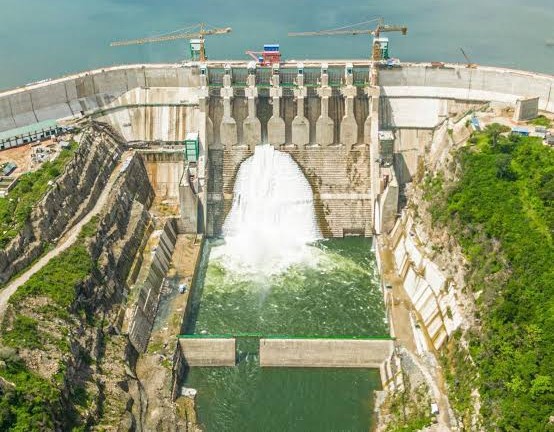
The inauguration of the Julius Nyerere Hydropower Plant in Tanzania has been described as a major demonstration of Egyptian-Tanzanian cooperation and evidence of Egypt’s contribution to Africa’s development through technical expertise and strategic infrastructure projects.
Anthropologist and founder of the Pan African Initiative on media and journalism, Afromedia, Hassan Ghazaly, said the project represents a model of African cooperation built on partnership, exchange of expertise and shared development interests.
According to him, the true nature of relations between African countries is best assessed through tangible projects that improve citizens’ lives rather than media narratives that seek to distort existing realities.
Ghazaly said the project demonstrates that African expertise and resources could be harnessed to deliver strategic infrastructure capable of supporting economic growth and creating opportunities for future generations.
He stressed that cooperation based on mutual interests and respect for national sovereignty remained essential to achieving sustainable development across the continent.
The Julius Nyerere Hydropower Plant, located in Tanzania’s Rufiji region, was inaugurated by President Samia Suluhu Hassan and has an installed generation capacity of 2,115 megawatts.
Reports monitored by Afromedia from Tanzanian media outlets said the facility is expected to significantly increase Tanzania’s electricity generation capacity, strengthen the stability of the national grid and support the industrial, commercial, mining, agricultural and investment sectors.
President Hassan also underscored the need to protect the plant’s infrastructure, water resources and surrounding environment to guarantee its long-term sustainability and operational efficiency.
Egyptian Prime Minister Mostafa Madbouly attended the inauguration and described the project as a major example of cooperation between Egypt and Tanzania in energy, infrastructure and investment.
Madbouly praised the role of Egyptian companies in delivering major infrastructure projects to international standards, saying the success of the hydropower project could further deepen bilateral cooperation in trade, investment, construction, roads, ports, agriculture and energy.
Tanzanian Energy Minister Deo Ndejembi said the country was also expanding its high-voltage transmission network to connect power generation facilities with domestic demand centres and regional electricity markets.
He disclosed that Tanzania was negotiating electricity exports to Zambia while pursuing power-exchange arrangements with Kenya and other countries in the region.
According to him, the initiatives could strengthen Tanzania’s position as an emerging energy hub in East and Central Africa.
Former African Development Bank Group President, Dr Akinwumi Adesina, similarly described the Julius Nyerere project as an opportunity for Tanzania to become an energy and economic hub in the region.
Adesina urged Tanzania to deploy the additional electricity capacity to drive mineral beneficiation, agro-processing, industrialisation and employment creation.
“You have built the power. Now use it to build the future,” he said.
Ghazaly said the project demonstrated that Africa possessed the expertise and capabilities required to pursue an integrated development agenda when supported by political commitment and partnerships founded on trust and mutual benefit.
He called on African media organisations to give greater attention to successful development initiatives and projects capable of strengthening economic and social stability across the continent.
He said the Julius Nyerere project provided tangible evidence of the depth of Egyptian-African relations and cooperation, adding that major infrastructure projects could serve as stronger evidence of partnership than political rhetoric.
Ghazaly further maintained that Africa’s development would depend on collective action, practical cooperation and investments that directly benefit its people.
He argued that attempts to portray Egypt’s role in Africa negatively were contradicted by tangible projects such as the hydropower plant, which, he said, reflected cooperation based on partnership and mutual development.
“Truth is built through action, and achievements remain the strongest message,” he said.
