


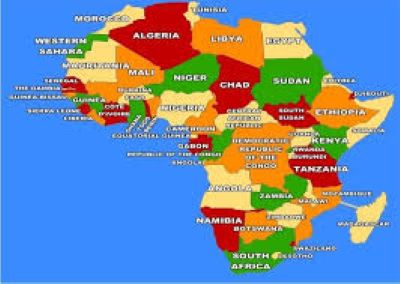
Africa’s greatest economic challenge may not be a shortage of natural resources, talent or opportunities, but the fragmentation of its 54 national economies.
Across the continent, countries often compete independently for investment, markets and global influence, even when their combined strengths could create powerful cross-border industries capable of competing on a global scale.
Rather than expecting every African country to develop all the capabilities required for economic transformation, the continent could pursue a deliberate strategy of connecting the strongest assets of different markets into integrated production systems.
Nigeria, for instance, has a vast consumer market and significant energy resources. Ghana has developed a strong financial ecosystem, while Côte d’Ivoire combines agricultural capacity with growing industrial strength. Kenya is widely recognised for its technology and innovation capabilities, and South Africa has extensive logistics, manufacturing and trade networks.
If these capabilities were connected more effectively, capital could be raised in one country, raw materials sourced in another, technology developed elsewhere and manufacturing distributed across several markets. Finished products could then move through integrated African trade and transport corridors to consumers across the continent and beyond.
Such an arrangement would go beyond the creation of another political or regional bloc. It would represent a new economic architecture designed to make African scale possible.
The model could support the development of continent-wide value chains in sectors such as agriculture, energy, manufacturing, technology, pharmaceuticals and financial services. It could also help African businesses reduce production costs, attract larger pools of investment and compete more effectively with companies from other regions.
Africa’s first economic superpower may therefore not need to emerge as a single country. It could instead take the form of a connected system linking capital, technology, production, infrastructure and markets across national borders.
The task would not be simple. Differences in regulations, infrastructure, currencies, trade policies and political priorities continue to limit economic integration. But deliberate cooperation, supported by stronger institutions and improved implementation of continental trade agreements, could gradually overcome these barriers.
The objective should be to build one successful cross-border economic engine, then another, until cooperation becomes the foundation of Africa’s global competitiveness.
At that point, the question may no longer be whether Africa can compete in the global economy, but how much of that economy the continent intends to own.
With insights from Africa Investment Summit, a pan-African platform connecting SMEs, innovators and farmers with capital, expertise and strategic partnerships.
