


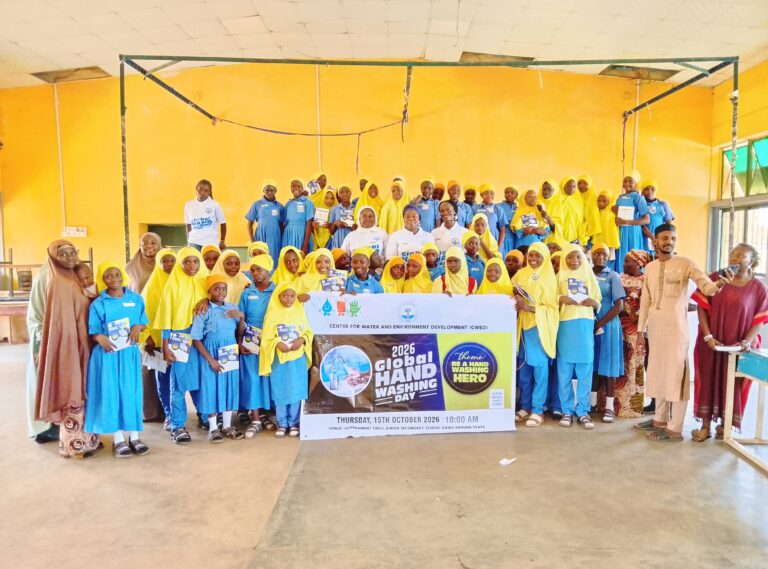
An NGO, the Centre for Water and Environment Development (CWED), has mobilised students to champion proper handwashing and promote hygiene to prevent diseases in schools and communities.
The initiative was part of activities marking the 2026 Global Handwashing Day at Government Girls Secondary School (GGSS), Kawo, Kaduna, on Thursday.
The event was held under the theme “Be a Handwashing Hero”.
Speaking at the event, CWED Programme Officer, Mrs Lydia Saleh, said the annual commemoration aimed to promote behavioural change and encourage handwashing at critical times.
She said the initiative sought to help students and community members understand the importance of proper handwashing in preventing the spread of diseases.
Saleh said effective handwashing required soap and clean running water, noting that washing hands in a bowl or without soap was less effective.
She, however, said indigenous materials such as ash and clean sand could also be used for handwashing.
“We promote handwashing with soap and running water as an effective practice,” she said.
She explained that CWED had adopted a participatory hygiene promotion and transformation approach to engage students through practical demonstrations and interactive activities.
She said involving students in the activities would help them retain the lessons and apply them in their daily lives.
Saleh expressed hope that selected students would become handwashing ambassadors by educating their colleagues, practising proper hygiene and identifying faulty sanitation facilities.
She urged the students to report defective hygiene facilities in their school for necessary repairs.
The programme officer also called on students to sustain the practice beyond the annual commemoration by making handwashing a lifestyle at home, in school and within their communities.
She stressed the importance of washing hands at critical times, particularly before eating and after using the toilet.
A teacher at the school, Mrs Jofinest Tanko, said teachers had a responsibility to ensure that handwashing facilities were available and functional in schools.
“Teachers should provide adequate time for handwashing, ensure water availability and guide newly admitted students on proper handwashing techniques,” Tanko advised.
Another teacher, Mr Ismail Abubakar, said children needed to be taught personal hygiene in classrooms, during play, before eating and after using the toilet.
He added that teachers should serve as role models by maintaining personal cleanliness, including regular bathing.
Abubakar encouraged students to maintain good hygiene practices both at home and in school.
The school’s Head Girl, Elizabeth Cyrus, said the programme had taught students practical ways to prevent cholera and other hygiene-related diseases.
Cyrus said she had learnt the importance of washing her hands regularly.
She pledged to encourage fellow students to practise proper handwashing and become hygiene ambassadors.
“Small hands can do big things. These small hands will one day be doctors, teachers, mothers and leaders of Nigeria.
“A leader with dirty hands cannot build a clean nation,” she said.
Cyrus urged participants to share the lessons with others when they returned home, adding that teaching a child proper handwashing could help save lives.
The event featured educational videos, drama, songs, poetry, classroom activities, debates and question-and-answer sessions on handwashing and personal hygiene.
