


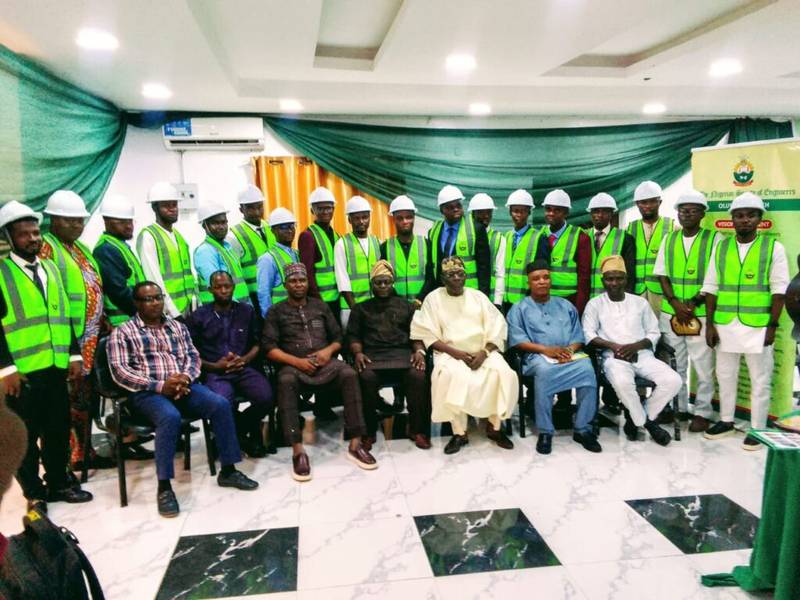
The Chairman of the Nigerian Society of Engineers (NSE), Oluyole Branch, Mr Saheed Busari, has stressed the need for urgent investment in engineering skills development to drive innovation and accelerate Nigeria’s economic growth.
He stated this at the 2026 NSE dinner and induction ceremony for new branch members on Saturday in Ibadan.
The event formed part of activities for the 2026 Engineering Week, which included an industrial visit, public lecture, outreach, career talk and other programmes.
Speaking on the theme “Building the Future: Engineering Innovation and Skills for Economic Growth”, Busari said the country’s industrial and infrastructural ambitions would remain a mirage without a workforce equipped with modern engineering competencies.
He noted that skills in renewable energy, smart infrastructure, artificial intelligence and local manufacturing remain critical to reducing reliance on imports.
The NSE Chairman identified the mismatch between university training and industry requirements as a major challenge. He called on the government, private sector and tertiary institutions to partner with professional bodies to review curricula, expand apprenticeships and fund research that translates into made-in-Nigeria solutions.
Addressing the new members, he reaffirmed the Oluyole Branch’s commitment to mentorship and capacity building for young engineers.
“We must build our engineers first before we can build our nation. With the right skills and innovation, engineering will be the engine room for jobs, industries and sustainable economic growth,” he said.
Guest speaker Dr Taiwo Oyedemi, a Fellow of the Nigerian Society of Engineers (FNSE), said engineering skills remain widely recognised as a central driver of industrialisation, innovation and sustainable economic growth.
He noted, however, that in many developing economies such as Nigeria, a wide gap exists between engineering education and industry requirements. This limits productivity, employability and competitiveness while aggravating poverty.
Oyedemi lamented that despite Nigeria’s abundant natural resources and a population of about 220 million, manufacturing contributes less than nine per cent to GDP. He added that industries consistently cite a shortage of work-ready engineers skilled in digital tools, project management and sustainable design.
He stressed the need for government and higher institutions to review curricula regularly, strengthen practical training, promote interdisciplinary research, encourage innovation and entrepreneurship, and establish stronger industry linkages to promote the commercialisation of research output.
“For Nigeria to achieve sustainable economic growth, government, academia, industry, professional bodies and individual engineers must work together to build a highly skilled engineering workforce capable of solving today’s challenges while creating tomorrow’s opportunities,” he said.
Also speaking, Mr Olayinka Alli (FNSE), Chairman of the Engineering Regulations Monitoring (ERM) for the Council for the Regulation of Engineering in Nigeria (COREN) in Oyo State, charged the new inductees to regard continuous skills development as an essential determinant of their career progression.
Alli, a special guest of honour at the event, reiterated that skills development remains essential in engineering and is a continuous process. He noted that engineering practice licensing is tied to members’ renewal, training and sharpening of skills.
“We urge new members to know that being inducted is not the end of their story. They have to continue to develop themselves.
“Engineering is dynamic. It continues to improve and change every time. So if they don’t upgrade their skills, such members will soon be left behind and become obsolete,” he said.
The event also featured the taking of the Oath of Allegiance, decoration of new members, lectures and awards presentations, among other activities.
