


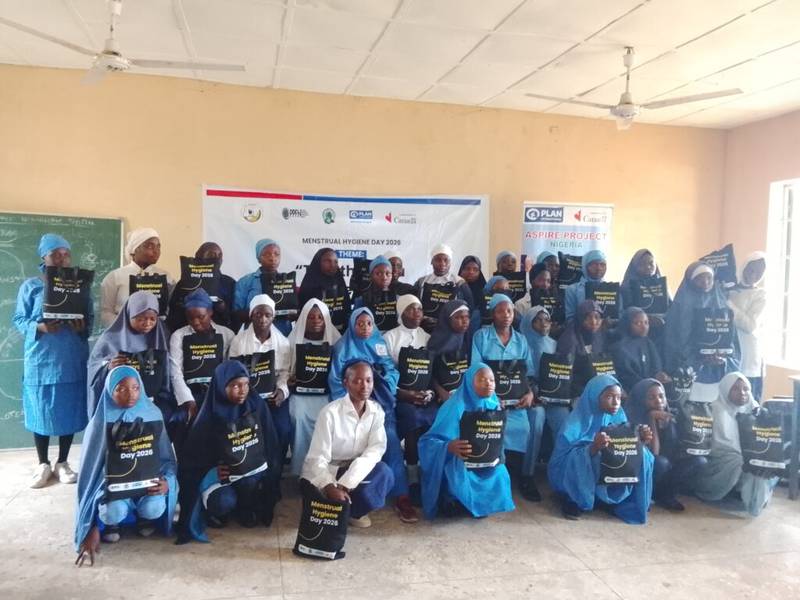
An international NGO, Plan International Nigeria, marked the 2026 Menstrual Hygiene Day with 30 students with disabilities at the Bauchi Special Education Centre.
The event was organized by Plan International, in partnership with the Nigeria Association of Women Journalists (NAWOJ) Bauchi State chapter, under its ASPIRE Project on menstrual health and hygiene, with funding from Global Affairs Canada.
The Special Education Centre serves students with visual and hearing impairments, who were engaged on topics such as menstrual hygiene, dignity, disability inclusion, and girls’ rights.
Mr. Nasiru Muhammed, Senior Project Coordinator of Plan International Nigeria, explained that the engagement aimed to strengthen knowledge and foster positive attitudes toward menstrual hygiene among adolescent girls with disabilities.
He stated that the programme sought to promote conversations on menstrual dignity, disability inclusion, and girls’ rights, while improving access to accurate menstrual health information, support services, and safe learning environments.
According to him, this intervention would help ensure that girls with disabilities have equal access to information, resources, and support systems needed to manage menstruation safely, confidently, and with dignity.
He added that the programme would also strengthen stakeholder commitment to menstrual health, disability inclusion, gender equality, and the sexual and reproductive health and rights of adolescent girls.
Nasiru emphasized that investing in menstrual health leads to better health outcomes, increased school participation, dignity, inclusion, and gender equality, while highlighting the importance of collectively addressing stigma and misinformation.
Mrs. Rashida Yusuf, Chairperson of NAWOJ in Bauchi State, noted that poor menstrual hygiene could threaten girls’ well-being if left unaddressed.
She said such engagements help reduce harmful traditional practices, myths, and misconceptions surrounding menstruation, and promote proper hygiene among adolescent girls.
Yusuf reaffirmed NAWOJ’s commitment to empowering women and girls through programs and raising awareness on reproductive health issues.
She also commended the Bauchi State Government for creating an environment conducive to development partners’ contributions to reproductive health and gender-related initiatives.
Mrs. Halima Ibrahim, a health practitioner from the Primary Healthcare Centre in Miri, educated participants on the signs and symptoms of menstruation and emphasized the importance of personal and environmental hygiene.
She cautioned against poor hygiene practices in managing and disposing of sanitary materials during and after menstruation.
Mrs. Sahura Mohammed, a reusable pad producer, demonstrated the process and materials used in making sustainable reusable sanitary pads.
Earlier, Mrs. Jamila Garba, Principal of the Special Education Centre, expressed appreciation to Plan International and its partners for selecting the school for this engagement.
She stated that the initiative demonstrated a strong commitment to ensuring every child, regardless of ability, has access to knowledge and resources for personal development.
Mrs. Garba assured that the information gained would be shared with other students to maximize its impact within the school community.
