


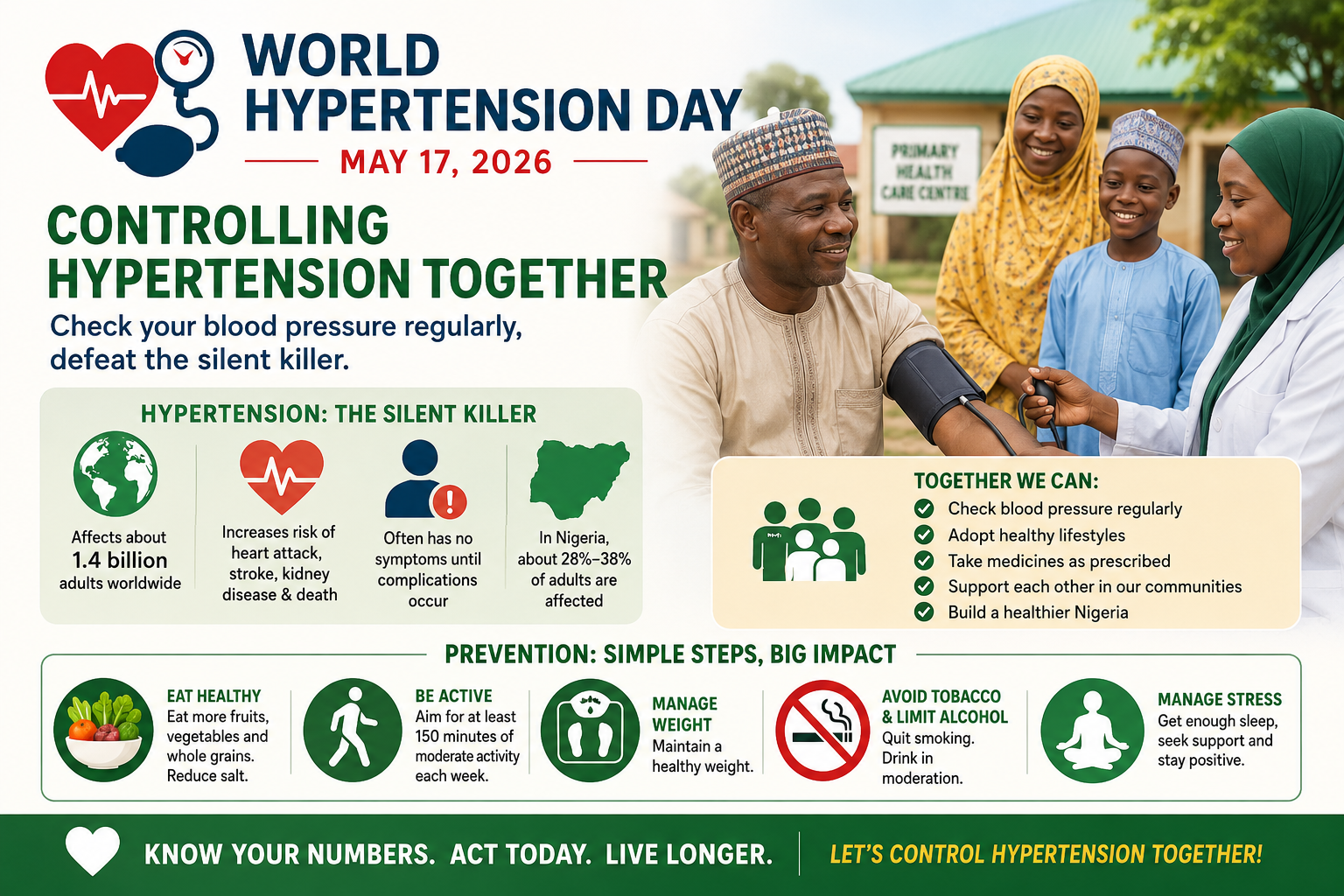
World Hypertension Day, observed annually on May 17, serves as a global platform to raise awareness about high blood pressure, also known as hypertension, often described as the silent killer.
In 2026, the theme “Controlling Hypertension Together: check your blood pressure regularly, defeat the silent killer” underscores that managing this condition requires collective effort from individuals, families, communities, healthcare providers, and health systems.
Hypertension is a major risk factor for heart attacks, strokes, kidney disease, and premature death. It usually presents with no obvious symptoms until complications arise.
Globally, about 1.4 billion adults live with hypertension, but only one in five or fewer have it adequately controlled. In low- and middle-income countries like Nigeria, the burden is particularly heavy due to rising urbanization, changing diets, physical inactivity, and limited access to screening and care.
Understanding hypertension and its impact in Nigeria
Hypertension is defined as blood pressure of 140/90 mmHg or higher. It contributes significantly to the growing epidemic of non-communicable diseases (NCDs) in Nigeria. Systematic reviews and meta-analyses indicate a pooled prevalence of hypertension among Nigerian adults ranging from approximately 28 per cent to 38 per cent, with some studies reporting figures around 30-34 per cent.
A large national survey found an age-standardized prevalence of 38.1 per cent. Prevalence increases markedly with age, from under 7 per cent in those 30 years and younger to over 60 per cent in those 70 and above. It affects both urban and rural populations, with some studies showing similar rates or slightly higher in urban areas, though rural areas also face substantial burdens.
In Northern Nigeria, data vary by state and community but confirm hypertension as a pressing issue. Studies in the North-West and North-East zones report prevalence around 25-32 per cent, with specific urban surveys in places like Kaduna recording high rates.
In Kano State, health authorities have cited prevalence figures around 28-35 per cent, with many new cases identified annually. Rural communities in the North also show notable rates, influenced by factors such as dietary patterns, increasing overweight and obesity, and limited healthcare infrastructure.
These statistics translate into thousands of preventable deaths and disabilities yearly from strokes, heart failure, and kidney problems. The economic impact includes high out-of-pocket costs for treatment and lost productivity, straining families and the healthcare system.
Why many Nigerians, especially in the North, do not seek testing
Despite the high prevalence, awareness, treatment, and control rates remain low across Nigeria. Awareness often hovers between 17 per cent and 60 per cent in various studies, with treatment and control even lower. Many people discover their condition only after a complication like a stroke.
Several interconnected barriers explain the low uptake of testing and care, particularly in Northern Nigeria.
There is limited knowledge and misconceptions as many view hypertension as a condition that only affects the elderly or those with obvious symptoms. Some attribute it to worrying too much or spiritual causes rather than modifiable risk factors. In a study of patients with hypertension, only about 23 per cent knew the consequences of poor control, and many expected a complete cure rather than lifelong management.
Regarding access and cost issues, in rural Northern communities, health facilities may be distant, understaffed, or lack functional blood pressure monitors. Screening is not routine in many primary health centers. Even when available, follow-up care and medications impose financial burdens. Forgetfulness, high pill burden, and medication costs contribute to poor adherence.
In parts of the North, cultural norms, gender roles, and preference for traditional remedies can delay modern healthcare seeking. Busy agricultural lifestyles leave little time for clinic visits. Stigma or normalization of symptoms like headaches as ordinary further reduces urgency.
Shortages of trained staff, inconsistent drug supply, and limited integration of NCD services into primary care exacerbate the problem. Opportunistic screening during other visits is underutilized.
Routine check-ups are uncommon, especially among asymptomatic adults. Men, in particular, often have lower awareness and screening rates compared to women, who may access services during antenatal care.
These barriers result in a large pool of undiagnosed cases, leading to advanced disease when patients finally present at hospitals.
The theme in action: Controlling hypertension together
The 2026 theme calls for shared responsibility. Individuals must check their blood pressure regularly. Families can support lifestyle changes and medication adherence.
Communities can organize screenings and awareness campaigns. Health professionals and governments must ensure accessible services, affordable medicines, and policies promoting prevention.
In Nigeria, initiatives like the Nigerian Hypertension Control Initiative (NHCI) in states such as Kano and Ogun demonstrate progress through standardized protocols, drug revolving funds for affordable medications, task-sharing with community health workers, and patient registries. Early results show high treatment rates and improving control.
On World Hypertension Day 2026, activities across Nigeria include free screenings, awareness walks, rallies in places like Kano, and online campaigns emphasizing know your numbers. These efforts align with the theme by fostering collective action.
Prevention: Practical steps for individuals and communities
Hypertension is largely preventable through lifestyle modifications, which are effective even in resource-limited settings.
There is need to always eat a healthy diet. Also, there is need for Nigerians to reduce salt intake to less than 5 grams per day, limit processed foods, increase consumption of fruits, vegetables, whole grains, and potassium-rich foods.
While there are a lot of hype about execeriae, several Nigerians still do not take physical activity serious. There is need to engage in at least 150 minutes of moderate exercise weekly, such as brisk walking, farming activities, or dancing. Regular activity helps maintain healthy weight and lowers blood pressure.
Overweight and obesity strongly correlate with hypertension. Achieving and maintaining a healthy body mass index through diet and activity is key.
Excessive alcohol raises blood pressure. Smoking damages blood vessels. Moderation or cessation benefits heart health. Chronic stress contributes to hypertension. Practices like adequate sleep, social support, and relaxation techniques help.
Adults need to check blood pressure at least thrice a year, and more frequently if at risk (family history, overweight, age over 40). Community pharmacies and primary health centers can serve as accessible points.
For those diagnosed, combine lifestyle changes with prescribed medications. Adherence is crucial, even when feeling well. Fixed-dose combination pills simplify treatment and improve compliance.
Broader strategies for northern Nigeria and the nation
Addressing hypertension in the North requires context-specific approaches. Strengthen primary healthcare with blood pressure monitors, trained staff, and consistent drug supplies via revolving funds. Integrate screening into existing programs like maternal health, immunization, and agricultural extension services.
Community engagement is vital. The use of local languages will bridge languaue gaps, involve traditional leaders, religious institutions, and youth groups in awareness drives. Mobile clinics and community health extension workers can reach remote areas.
Policy measures include regulating salt in processed foods, promoting physical activity through safe public spaces, and subsidizing essential medicines. Public-private partnerships can expand access.
Education campaigns should target misconceptions, emphasize early detection, and highlight success stories of controlled hypertension. Schools and workplaces offer opportunities for routine checks and health education.
A collective commitment
World Hypertension Day 2026 reminds us that controlling hypertension is possible when we act together. In Nigeria, particularly Northern regions where prevalence and gaps in care intersect with unique challenges, sustained efforts can reduce the silent toll of this condition.
Every individual knowing their numbers, every family supporting healthy habits, every community organizing screenings, and every level of government investing in primary care will make a difference. By checking blood pressure regularly, adopting preventive lifestyles, and ensuring accessible treatment, Nigeria can defeat the silent killer and build healthier futures.
