


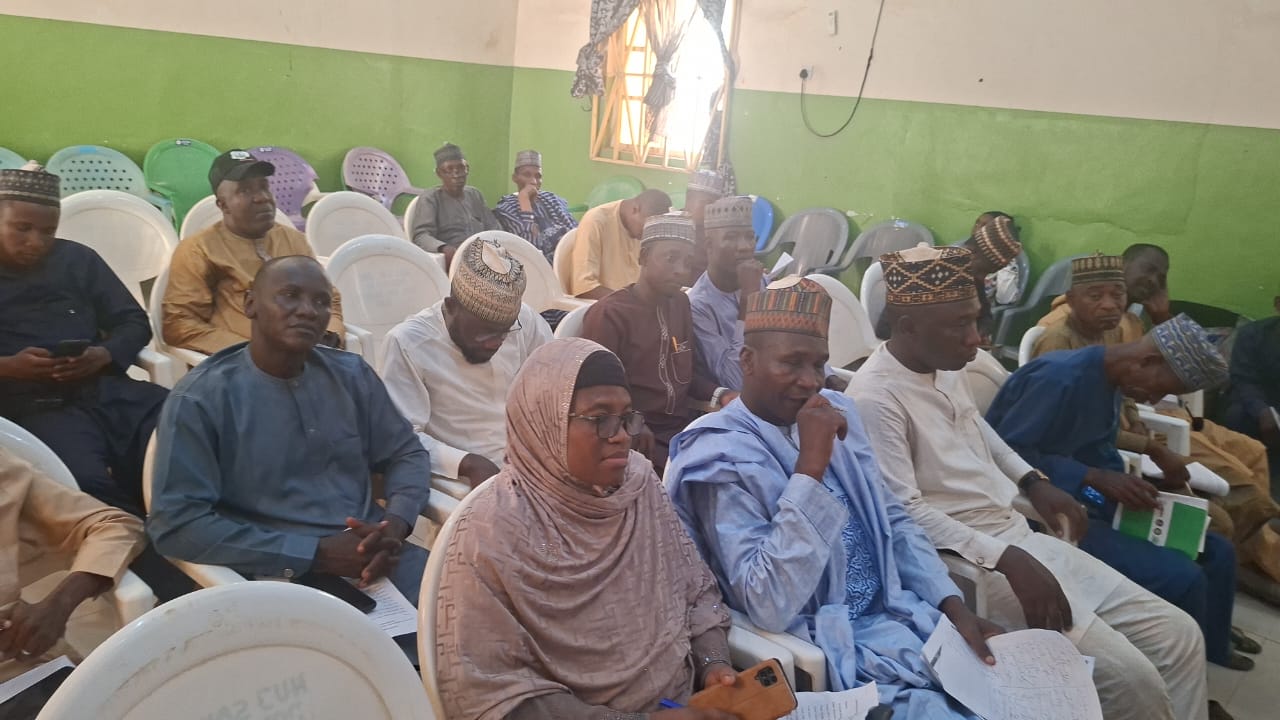
The Sokoto State Council of the Nigeria Union of Journalists, organised a one-day workshop aimed at strengthening journalists’ capacity in accurate court reporting and ethical news writing.
The workshop, held on Saturday, 9th May, 2026, at the NUJ Press Centre along Zuru Road in Sokoto, focused on the theme: “Accurate Court Reporting: A Pillar of Justice and Public Trust.”
Addressing the participants, in his welcome address, state chairman, Nigeria Union of journalists NUJ, Usman Muhammad Binji, said the training was organized to provide media practitioners with a basic knowledge on how to write fair, accurate and balanced judicial reports.
Binji highlighted that judicial Reporting is very paramount but also one of the neglected areas, stating that this is why they decided to come up with such a workshop for journalists to remind them of the need.
He expressed hope that with this development, judicial news desks will be revived with interest in legal reportage.
Commenting, state commissioner for information and orientation, Sambo Bello Danchadi, commended the NUJ for organizing the training workshop for working journalists in the state.
He urged the union to sustain with such an effort, noting that reporting judicial matters requires accuracy, fairness and understanding of the legal processes.
He also tasked journalists to make a proper utilization of the program in reporting legal matters while maintaining the core ethics.
The first paper presenter at the workshop, who is the Chief Registrar of the Shariah Court in Sokoto State, Fateema Dewa, in her paper titled “Understanding the Nigeria Judicial System, Court Structure, Procedures, Role of Judicial Officers and Legal Practitioners, Stages of Criminal Proceedings, Appeals and Key Legal Terminologies for Effective Court Reporting,” stressed the need for journalists to understand the judicial process in order to promote fairness, accountability and public trust in the justice system. She explained that the judiciary remains the third arm of government responsible for interpreting laws and safeguarding constitutional democracy through judicial review.
Dewa outlined the structure of the Nigerian court system, noting that the Supreme Court remains the apex court, while the Court of Appeal reviews decisions from lower courts including High Courts, Sharia Courts of Appeal and Customary Courts of Appeal. She further explained the stages of criminal proceedings such as arraignment, trial, judgment and appeal, warning journalists against declaring suspects guilty before the delivery of judgment. According to her, inaccurate or sensational reporting could amount to defamation and undermine justice delivery.
She also highlighted the responsibilities of judges, lawyers and court officials, describing judges as impartial arbiters whose duty is to interpret and apply the law without bias. She urged court reporters to respect the sub judice rule, verify facts before publication and protect the identities of minors and victims in sensitive cases. The author added that ethical and professional court reporting would strengthen democracy and public confidence in the judiciary, while careless reporting could damage reputations and erode justice.
Also, Bashir Rabe Mani, in his paper titled “Ethics and Legal Boundaries in Judicial Reporting,” warned journalists against actions capable of prejudicing court proceedings, stressing that judicial reporting must be guided by professionalism, fairness and respect for the law.
Mani, a retired Deputy Editor-in-Chief of the News Agency of Nigeria and former Secretary of the Nigeria Union of Journalists, Sokoto State Council, presented the paper at a one-day workshop on Accurate Judicial Reporting and Responsible Writing organised by the Sokoto NUJ Council in Sokoto.
He explained that journalists covering courts must avoid contempt of court, defamation and violations of the sub judice rule, noting that inaccurate or sensational reporting could undermine public confidence in the justice system. According to him, reporters should prioritise accuracy over speed, uphold the presumption of innocence and ensure balanced reporting by reflecting the positions of all parties involved in a case. He further cautioned against declaring suspects guilty before conviction and advised journalists to protect the identities of minors, victims of sexual offences and vulnerable witnesses.
Mani also highlighted relevant Nigerian laws and ethical frameworks guiding judicial reporting, including Section 36(5) of the 1999 Constitution, the Evidence Act 2011, the Cybercrime Act 2015 and the Nigerian Press Council Code of Ethics. He urged court reporters to attend proceedings personally, verify facts through official court records and avoid publishing materials capable of influencing active cases. The veteran journalist maintained that the role of the media in court reporting is to inform the public responsibly without inflaming tensions or interfering with the administration of justice.
Also speaking during the training, media expert and Founder/CEO of ASHENEWS, Abdallah ELKUREBE, described judicial journalism as one of the most sensitive areas of reporting, stressing that a single error in a court story could damage reputations, mislead the public, or expose journalists and media organisations to legal consequences.
He explained that judicial journalism plays a critical role in promoting transparency, accountability and public confidence in the justice system by helping citizens understand court proceedings and legal decisions.
According to him, court reporting covers criminal cases, civil disputes, election petitions, corruption trials, constitutional matters and human rights cases, adding that judicial journalists serve as the bridge between the courts and the public.
ELKUREBE identified key qualities required of a good court reporter to include accuracy, patience, neutrality, professionalism, strong listening ability, note-taking skills and a sound understanding of legal terminology.
He also highlighted the structure of Nigeria’s judicial system, including the Supreme Court, Court of Appeal, Federal High Court, State High Courts, Magistrate Courts, Sharia Courts and Customary Courts.
The trainer advised journalists covering court proceedings to understand basic legal terms such as plaintiff, defendant, counsel, conviction, acquittal, adjournment and appeal in order to avoid reporting errors.
He stressed the importance of the principle of presumption of innocence, warning journalists against describing suspects as criminals before conviction by a competent court.
“Using proper legal language protects journalists from defamation and contempt issues,” he said.
The presentation also addressed ethical and legal challenges in court reporting, including contempt of court, defamation, publication of unverified information and sensational headlines capable of prejudicing judicial proceedings.
ELKUREBE urged journalists to always verify names, dates and facts before publication and avoid emotional or biased reporting.
He further encouraged reporters to arrive early at court sessions, maintain detailed notes, study previous judgments and remain calm and professional while covering proceedings.
The workshop also examined the growing influence of digital and social media in judicial reporting, cautioning journalists against sacrificing accuracy for speed in online publications.
Participants were reminded that responsible court reporting remains essential to democracy because it promotes accountability, transparency and public trust in the legal system.
