


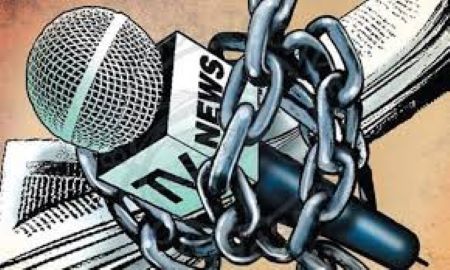
The International Press Centre (IPC) has expressed concern over an April 17 directive issued by the National Broadcasting Commission (NBC) to broadcasters, citing alleged breaches of the NBC Code in news, current affairs, and political programming.
In a statement by IPC, made available to ASHENEWS on Monday, the notice flagged issues relating to the professionalism of anchors and presenters, as well as the alleged misuse of broadcast platforms by political actors. It also placed stations on formal notice of stricter enforcement, warning of sanctions for violations.
IPC cautioned that the directive could signal a renewed attempt to limit the constitutional role of the media in promoting accountability and supporting a participatory electoral process.
Concerns over NBC code provisions
The organisation raised particular concern about Section 1.10.3 of the NBC Code, which bars presenters and anchors from expressing personal opinions on air. While the provision is intended to ensure neutrality, IPC argued that it may restrict journalistic analysis, interpretation, and contextual reporting, leading to overly rigid content.
It further noted that several provisions of the Code—including Sections 1.10.3, 3.3.1(b), 3.4.1(a), 5.3.3(b), 3.1.1, 3.11.1(a), 5.4.1(f), 3.11.1(b), and 5.5.1(b)—are broadly framed and open to restrictive interpretation. According to IPC, expansive application could limit legitimate criticism, investigative reporting, and public debate, while encouraging self-censorship among media practitioners.
IPC emphasised that freedom of expression is guaranteed under Section 39 of the 1999 Constitution, as well as international frameworks such as Article 19 of the Universal Declaration of Human Rights and the International Covenant on Civil and Political Rights, and Article 9 of the African Charter.
However, it warned that broad regulatory discretion by the NBC risks overreach, potentially undermining editorial independence and constraining the information space.
Balancing regulation and press freedom
While acknowledging the need for professional standards in broadcasting and efforts to curb hate speech and misinformation, IPC noted that some provisions of the NBC Code may conflict with globally accepted press freedom norms.
The organisation pointed out that sanctioning journalists or presenters solely for clearly identified opinions could infringe on their rights as media professionals.
It added that although the Code seeks to promote informed public discourse, overly strict interpretation may ultimately undermine that objective.
Implications for democracy
Speaking on the development, IPC Executive Director Lanre Arogundade stressed the importance of a free media in sustaining democracy.
“Journalists play a critical role in informing citizens, scrutinising power, and enabling the public to make informed democratic choices,” he said, warning that restrictions on opinion and analysis could weaken public discourse and heighten electoral tensions.
He added that Nigeria’s complex socio-political environment—including insecurity, poverty, infrastructure gaps, and electoral disputes—requires access to accurate information and independent journalism to help de-escalate tensions.
Recommendations
IPC called on the NBC to review and amend vague provisions of the Code, ensure that enforcement does not suppress legitimate journalism, and protect editorial independence.
It also urged the Commission and other stakeholders to strengthen safeguards for journalists, particularly during election periods, and to avoid actions that could criminalise journalism or weaken the democratic role of the media.
