


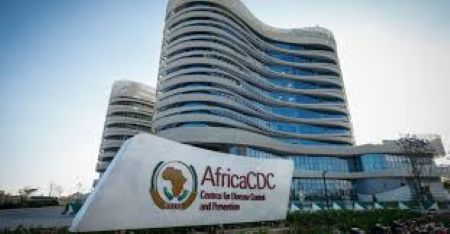
The Africa Centres for Disease Control and Prevention (Africa CDC) has called for increased investment in immunisation, warning that weak funding continues to undermine Africa’s health security and economic stability.
Dr. Tolbert Nyenswah, Director for Pandemic Prevention, Preparedness, and Response at Africa CDC, made the call on Thursday during the agency’s weekly high-level press briefing for epidemiological week 16.
Nyenswah said immunisation remains one of the most cost-effective health interventions, noting that every dollar invested yields up to 40 dollars in returns. He warned that underinvestment in immunisation costs Africa between $20 billion and $30 billion annually, stressing that “the price of inaction is far greater than the cost of prevention.”
He added that immunisation is not an expenditure but a strategic investment in Africa’s health sovereignty and security.
Nyenswah highlighted key continental health initiatives, including the launch of the Continental Immunisation Strategy at the World Health Summit Regional Meeting in Nairobi, aimed at closing equity gaps, reaching zero-dose children, and strengthening primary healthcare systems.
He noted progress in health financing reforms through a ministerial dialogue and the establishment of an African High-Level Ministerial Committee on Global Health Architecture Reform. Africa CDC has also strengthened its partnership with the Africa Frontline First initiative to scale up community health workforce development, targeting 200,000 of the two million community health workers planned by 2030.
Nyenswah said the initiative is critical to strengthening primary healthcare and improving preparedness against public health emergencies. He also highlighted intensified engagement with private sector actors, including Nigerian industrialist Aliko Dangote, to boost local pharmaceutical manufacturing and build resilient health systems.
On outbreak response, Africa CDC deployed teams to support health authorities in South Sudan after reports of a suspected viral haemorrhagic fever in Kapoeta East County. Initial laboratory tests for Ebola, Marburg, Yellow Fever, and Lassa Fever returned negative, but surveillance and response remain active due to cross-border risks and limited healthcare access. The Africa CDC Director-General is expected to visit South Sudan to assess capacity gaps and strengthen ongoing response operations.
Nyenswah provided an epidemiological update, noting that cholera, measles, Mpox, Lassa fever, and diphtheria remain top public health threats. Cholera has been reported in 15 member states, with 38,603 cases and 858 deaths. Measles cases have exceeded 78,000 across 21 countries, while Mpox continues to spread across 15 member states, with 217 suspected and 181 confirmed cases in epidemiological week 16. Madagascar, Guinea, Kenya, and Liberia accounted for most recent confirmed Mpox cases.
Over 2.97 million people have been vaccinated against Mpox, with more than 5.08 million vaccine doses delivered to 19 countries. Nyenswah stressed that coordinated continental action is urgently needed to curb outbreaks and strengthen health systems’ resilience.
He reaffirmed Africa CDC’s commitment to supporting member states through stronger surveillance, improved immunisation coverage, emergency response capacity, and sustainable health financing reforms.
